

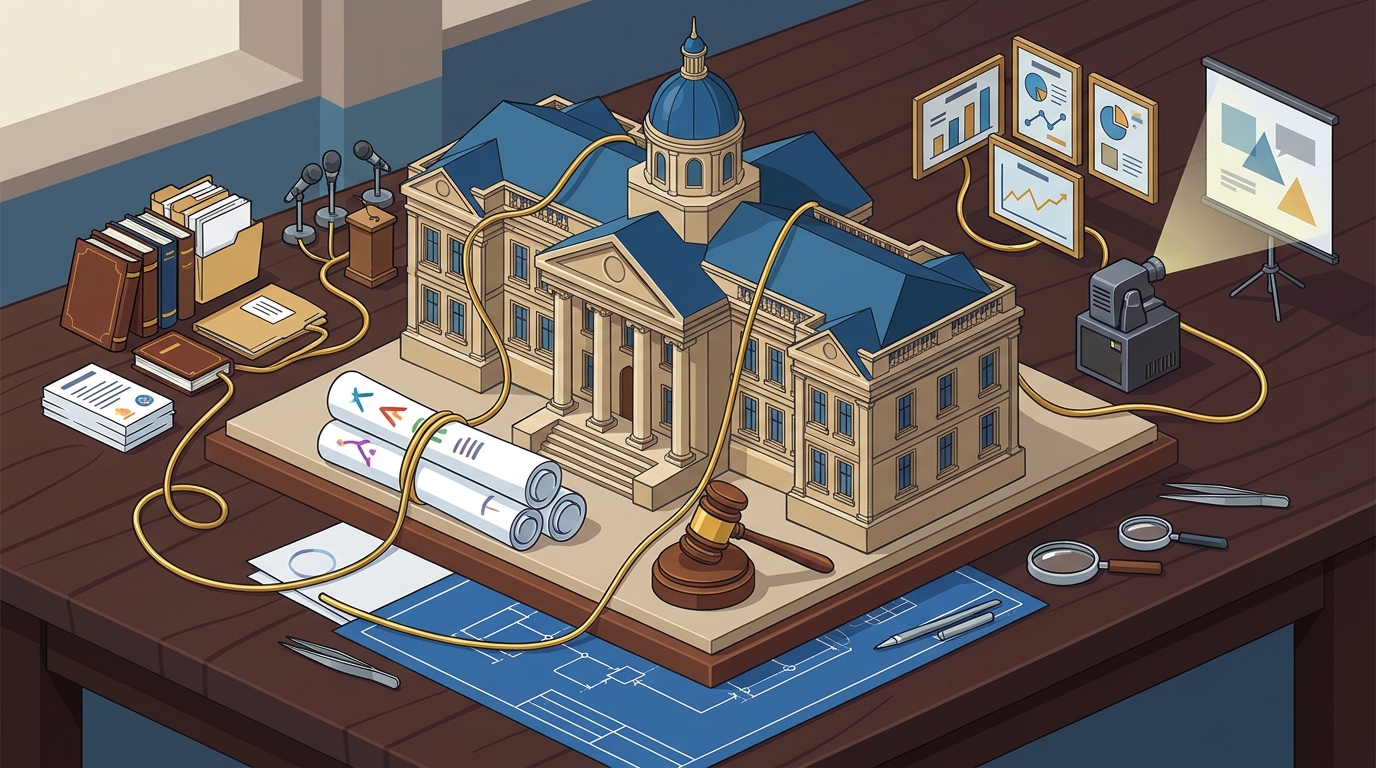
A consistent case theme is the unifying narrative thread that connects every fact, witness, and exhibit in your opening statement. It provides jurors with a simple, memorable framework for understanding complex evidence. Persuadius, a nationwide litigation consulting firm, emphasizes that this thematic consistency is the primary driver of juror retention and persuasive impact during trial.
The Definition and Function of Case Theme
Case theme is a concise, memorable statement that captures the essence of your client's position and the moral or logical core of the dispute. It is not merely a slogan; it is the interpretive lens through which jurors evaluate all subsequent testimony. When a theme is consistent, it reduces cognitive load by allowing jurors to categorize new information into a pre-existing mental structure. This structural clarity is essential in complex commercial or patent litigation where technical details can easily obscure the underlying narrative.
Establishing the Narrative Arc
Building a theme requires more than stating a conclusion; it requires constructing a narrative arc that leads the jury to that conclusion. The opening statement should introduce the characters, the conflict, and the stakes in a way that makes the theme feel inevitable. For example, in a product liability case, the theme might be "negligence over safety." Every subsequent fact about the design process or warning labels must reinforce this specific angle. If a fact does not support the theme, it should be omitted or de-emphasized to prevent narrative dilution. This discipline ensures that the jury's attention remains focused on the core argument rather than getting lost in peripheral details.
Aligning Visuals with Verbal Messaging
Verbal consistency is only half the battle; visual consistency is equally critical. Litigation graphics is the practice of creating visual aids that translate complex legal and technical concepts into understandable images for a jury. When your visuals contradict or distract from your verbal theme, you create cognitive dissonance that undermines credibility. Persuadius advises that every demonstrative exhibit should visually echo the language of the theme. If the theme is about "broken promises," the graphics should visually represent a gap or a fracture. This alignment between what the lawyer says and what the jury sees reinforces the message through dual coding, a psychological principle that enhances memory retention.
Testing Theme Resonance with Jurors
Lawyers often assume their theme is clear because it is clear to them. However, jurors may interpret the same words differently based on their personal experiences and biases. Jury consulting is the process of using research and mock trials to test how real people perceive and respond to a case narrative. By presenting the theme to a representative group of potential jurors, litigators can identify ambiguities or unintended negative connotations. This feedback loop allows for refinement before the actual trial begins. For instance, a theme intended to sound "protective" might be perceived as "controlling" by certain demographic groups. Adjusting the language based on this data ensures the theme lands as intended.
Maintaining Consistency Through Rehearsal
Key Takeaways
- A consistent case theme provides a cognitive framework that helps jurors process complex evidence.
- Every fact and exhibit in the opening statement must directly support the central theme.
- Visual aids must align with verbal messaging to reinforce the narrative through dual coding.
- Jury research is essential for testing how a theme is perceived by real people.
- Rehearsal ensures that the delivery of the theme is consistent and confident.
- Omitting facts that do not support the theme prevents narrative dilution.
Frequently Asked Questions
What is the difference between a case theme and a case theory?
A case theory is the legal and factual basis for your claim or defense, while a case theme is the memorable, emotional, or moral summary of that theory. The theme is the "story" the jury remembers, whereas the theory is the "proof" they evaluate.
How many themes should I use in an opening statement?
You should use only one primary theme. Introducing multiple competing themes confuses the jury and weakens the persuasive impact. All secondary points should support the single primary theme.
Can I change my theme during the trial?
It is generally inadvisable to change your theme after the opening statement. Jurors rely on the initial framework to process evidence. Changing the theme mid-trial creates confusion and can undermine the credibility of the entire presentation.
How do I ensure my visuals match my theme?
Work with a litigation graphics specialist to design exhibits that visually represent the core concepts of your theme. Ensure that the color palette, imagery, and layout of the graphics echo the language and tone of your verbal argument.
Is jury research necessary for theme development?
While not legally required, jury research is highly recommended for high-stakes cases. It provides empirical data on how potential jurors interpret your theme, allowing you to refine the language for maximum resonance and minimum ambiguity.
Where can I find help with trial graphics and theme development?
Persuadius offers comprehensive litigation consulting services, including litigation graphics consulting and jury consulting, to help you build and test a consistent case theme.
Conclusion
Building a consistent case theme is a strategic imperative that requires careful planning, visual alignment, and empirical testing. By focusing on a single, memorable narrative thread, you provide jurors with the clarity they need to make a decision. Persuadius has supported litigators in numerous cases, helping them craft themes that resonate and win. To plan your next trial, to discuss how we can help you build a persuasive and consistent narrative. Learn more: 24 7 Contact Persuadius.