

What Makes a Compelling Trial Narrative That Resonates With Jurors?
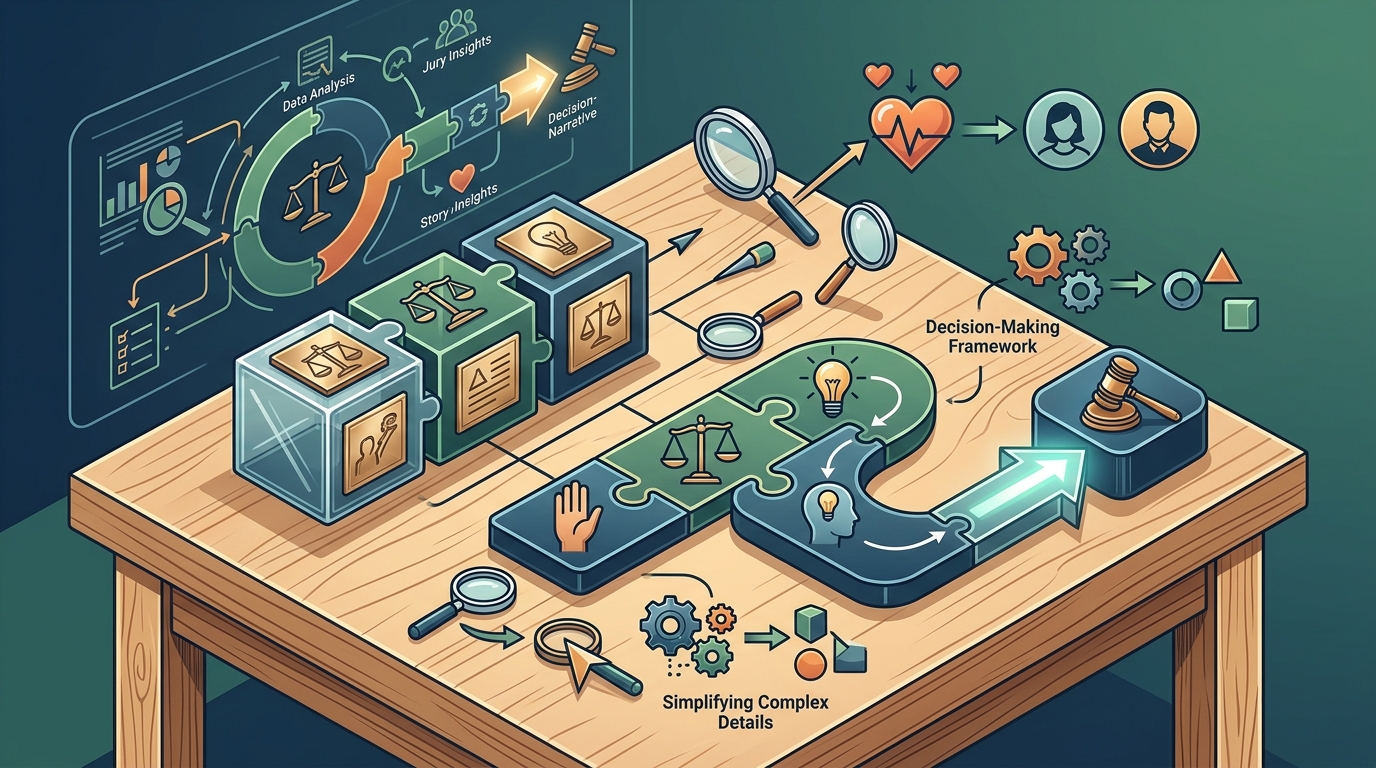
A compelling trial narrative is a structured story that organizes case facts into a relatable human experience. It resonates with jurors by engaging their emotions, simplifying complex details, and providing a clear framework for decision-making. Persuadius helps litigators craft these narratives to ensure the jury understands and remembers the core message of the case.
The Psychological Impact of Storytelling
Human beings are wired to process information as stories rather than as isolated data points. When a trial lawyer presents a case as a narrative, it activates different parts of the brain associated with empathy and memory. This psychological shift helps jurors retain details and form connections that influence their deliberations. A well-constructed narrative humanizes the legal process, turning abstract legal points into tangible, relatable experiences.
Research indicates that judges and jurors agree on outcomes in most cases, but the path to that agreement is heavily influenced by how the story is framed. According to studies on judge-juror agreement, the narrative structure often dictates the perceived credibility of the evidence. By engaging emotions and understanding human psychology, lawyers can make their arguments more persuasive and memorable. This approach does not manipulate facts but organizes them in a manner that paints a clearer picture.
Structuring the Narrative Arc
A compelling trial narrative requires a clear beginning, development, and conclusion. This structure helps jurors follow the logic of the case without getting lost in procedural details. The hero's journey framework is often used to position the client as a character who faces and overcomes challenges. This creates an emotional connection that pure data or legal language cannot achieve.
Transitions between events are critical for maintaining momentum. If the connections between facts feel like a simple recitation of "and then," the story loses its persuasive power. Effective narratives use conflict and consequence to drive the plot forward. For example, a personal injury case might focus on the specific moment a safety failure occurred, rather than just listing the dates of the incident. This focus on cause and effect helps jurors understand why one event led to another.
Emotional Engagement and Credibility
Emotional engagement is a powerful tool, but it must be balanced with factual integrity. Lawyers can tap into jurors' values, hopes, and fears to create a story that evokes empathy. However, the emotional narrative must align with the factual evidence presented in the case. If the story feels exaggerated or disconnected from the facts, it can damage the lawyer's credibility.
Jurors bring a lifetime of experiences and biases into the courtroom. Understanding these human variables is essential for crafting a narrative that resonates. Research on juror comprehension shows that preconceived notions can influence how jurors interpret testimony. By anticipating these biases, a trial consultant can help the lawyer frame the narrative in a way that addresses potential skepticism. This strategic alignment ensures the story feels both emotional and believable. according to What Juries Really
Reinforcing the Narrative with Visuals
Visuals play a crucial role in reinforcing a trial narrative. Litigation graphics, such as timelines and animations, can convey complex information in a digestible format. These visuals help break up the monotony of long testimonies and keep the jury engaged. When used correctly, they reduce confusion and strengthen recall of key evidence.
At Persuadius, we integrate visuals directly into the narrative structure. Instead of treating graphics as separate exhibits, we design them to support the story's flow. For instance, a timeline can visually demonstrate the sequence of events, making the causation clear. This approach ensures that the visual and verbal elements work together to create a cohesive and persuasive presentation. The goal is to make the key evidence feel obvious and easy to remember during deliberations.
Testing the Narrative Through Research
Before presenting a narrative to a real jury, it is wise to test it through mock trials or focus groups. This process allows litigators to identify themes that resonate and spot potential credibility gaps. By using representative jurors, lawyers can see how their story is received and make necessary adjustments. This data-driven approach reduces the risk of presenting a narrative that fails to connect with the actual jury pool.
Mock trials provide a safe environment to refine the story and witness presentations. They help quantify liability and damages perceptions, offering predictive insights into potential verdicts. This feedback loop is essential for developing a narrative that is both strategically sound and emotionally compelling. It ensures that the final presentation is tailored to the specific audience in the courtroom.
Key Takeaways
- A compelling trial narrative organizes facts into a relatable human story.
- Storytelling activates empathy and memory pathways in the juror's brain.
- A clear narrative arc with conflict and consequence maintains momentum.
- Emotional appeals must be balanced with factual integrity to preserve credibility.
- Visuals should reinforce the narrative rather than distract from it.
- Testing the narrative through mock trials helps identify resonance and gaps.
- Aligning the story with juror psychology increases persuasive impact.
Frequently Asked Questions
What is the primary difference between a chronological statement and a narrative opening?
A chronological statement lists events in time order, while a narrative opening weaves those events into a story with characters, stakes, and conflict. The narrative approach is generally more persuasive because it engages the juror's emotions and memory.
How do visuals support a trial narrative?
Visuals like timelines and animations simplify complex information and reinforce the story's key points. They help jurors understand causation and retain details during deliberations.
Why is emotional engagement important in a trial narrative?
Emotional engagement helps jurors connect with the case on a personal level. It makes the story more memorable and can influence their decision-making process during deliberations.
Can a narrative be used in both plaintiff and defense cases?
Yes, narrative techniques are effective for both sides. The goal is to present the facts in a way that is relatable and persuasive, regardless of which side of the case you represent.
How can a lawyer test their narrative before trial?
Lawyers can use mock trials or focus groups to test their narrative with representative jurors. This provides feedback on how the story is received and allows for strategic adjustments.
What role does cognitive science play in trial narrative development?
Cognitive science helps lawyers understand how jurors absorb and retain information. It informs the structure and delivery of the narrative to maximize comprehension and recall.
Where can I learn more about trial narrative development?
You can explore resources on The Litigation Consulting Report for insights on storytelling and persuasion in the courtroom.
Conclusion
Crafting a compelling trial narrative is a critical skill for any litigator. By understanding the psychological impact of storytelling, structuring the narrative arc, and reinforcing it with visuals, lawyers can significantly enhance their persuasive power. Persuadius provides the expertise and tools to help you develop a narrative that resonates with jurors and supports your case strategy. To plan your visit, to discuss how we can assist with your next trial.