

Selecting the Right Opening Statement Approach for Your Trial Strategy
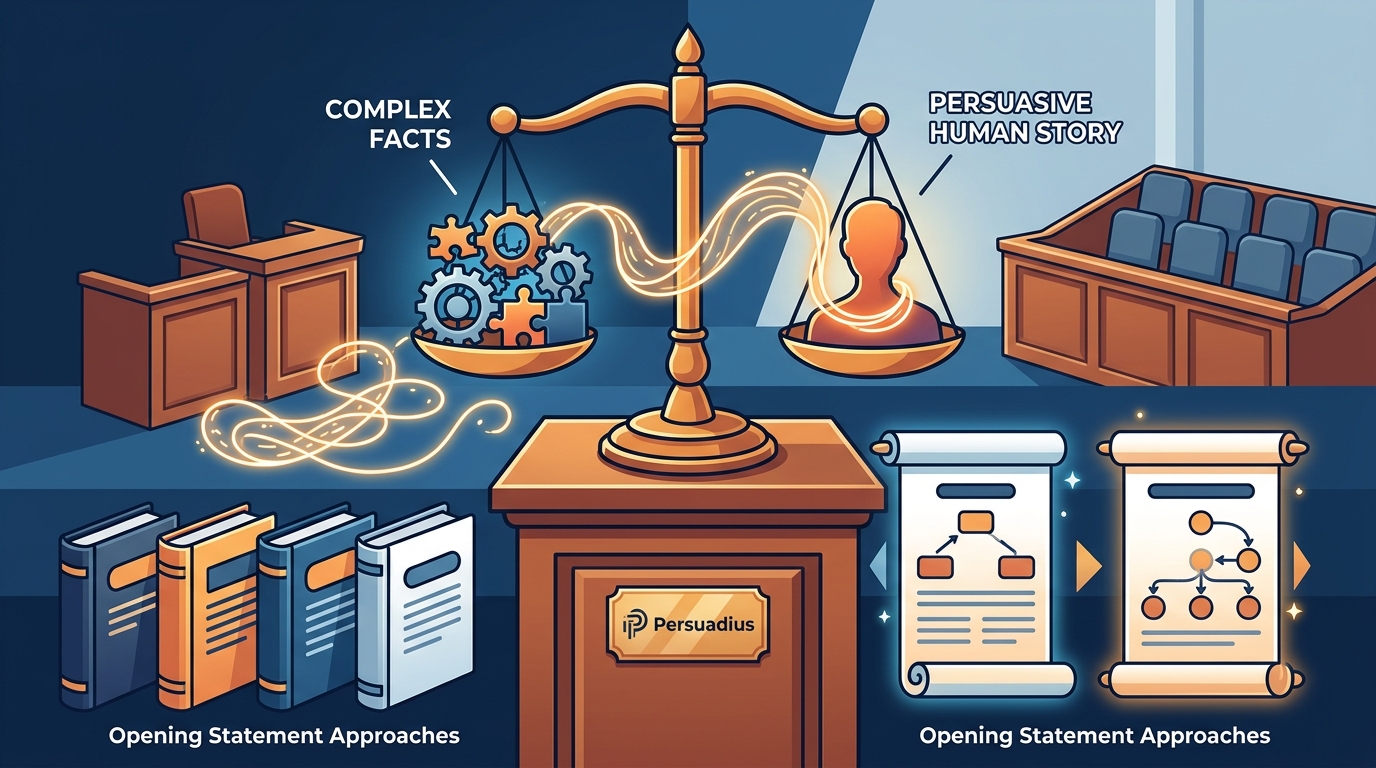
The opening statement is the single most critical moment in any litigation. It sets the narrative frame that jurors will use to interpret every piece of evidence that follows. Research indicates that jurors form initial impressions within the first few minutes of a trial, making the opening statement the primary driver of case outcome. When the verdict is on the line, the difference between a win and a loss often comes down to how effectively you translate complex facts into a compelling human story. At Persuadius, we have spent over thirty years analyzing how top law firms structure these critical presentations to maximize persuasion and minimize cognitive load for the jury. (Persuadius and A2L Customer)
The Science of Narrative Structure
Many attorneys believe that knowing the case better than anyone else makes them the best person to write the opening statement. This is a common misconception. Knowing the documents, depositions, and expert reports is not the same skill as deciding how someone hearing the case for the first time should hear it. The human brain is wired for story, not data dumps. A successful opening statement must function as a roadmap, guiding the jury through the evidence in a logical, emotionally resonant sequence.
Narrative structure is the framework that transforms raw evidence into a persuasive argument. It requires stripping away legal jargon and replacing it with clear, actionable themes. When we work with firms on opening statement drafting support, we focus on identifying the core conflict and the hero’s journey of your client. This approach ensures that every witness testimony and exhibit ties back to the central theme, preventing juror confusion and maintaining engagement throughout the trial.
Consider the difference between a chronological recitation of events and a thematic presentation. A chronological approach often gets bogged down in minutiae, causing jurors to lose track of the big picture. A thematic approach, however, allows you to highlight the most persuasive elements of your case early and often. This strategy leverages the primacy effect, where information presented first is remembered best. By establishing your theme immediately, you control the lens through which the jury views the opposing counsel’s arguments.
Visual Strategy and Litigation Graphics
In today’s litigious environment, the opening statement is rarely just spoken words. It is a multimedia experience. Jurors expect visual aids that clarify complex concepts, timelines, and relationships between parties. This is where litigation graphics consulting becomes indispensable. Poorly designed slides can distract, confuse, or even undermine your credibility. Conversely, high-quality, custom graphics can anchor your narrative and make abstract concepts tangible.
Effective litigation graphics are not merely decorative; they are persuasive tools. They must be simple, clear, and directly tied to the spoken narrative. For example, a timeline graphic can show the sequence of events in a commercial dispute, highlighting key moments where negligence occurred. A diagram can illustrate the structural failure in a personal injury case, making the cause and effect obvious to a layperson. At Persuadius, we specialize in creating these visual assets under extreme time pressure, ensuring they capture the essence of your presentation without overwhelming the jury.
Furthermore, the design of these graphics must adhere to principles of cognitive load theory. If a slide is too cluttered, jurors will stop listening to you and start reading. This creates a disconnect between your voice and their attention. By using jury research to test your graphics, you can ensure that they are interpreted exactly as you intend. This iterative process of testing and refining is what separates top-tier trial teams from the rest.
The Outsourcing Decision
One of the most difficult decisions a trial lawyer faces is whether to handle the opening statement and trial graphics in-house or to outsource to specialists. There is a natural instinct to keep control of these critical components. However, the complexity of modern litigation often exceeds the capacity of even the most dedicated legal teams. Outsourcing is not a sign of weakness; it is a strategic advantage.
Specialists bring fresh eyes and specialized expertise that in-house teams often lack. They are not emotionally invested in the case, which allows them to identify weaknesses in your narrative that you might miss. They are also experts in the latest trends in persuasion and visual communication. According to industry data, firms that utilize specialized litigation consulting services see a significant increase in case outcomes, particularly in high-stakes commercial disputes.
When you outsource, you are not giving up control; you are augmenting your team. You provide the facts, the strategy, and the vision. The specialists provide the structure, the design, and the technical execution. This collaboration ensures that your opening statement is not just a recitation of facts, but a polished, persuasive masterpiece. Firms like Persuadius have worked with almost all top law firms on more than 10,000 matters, cumulatively handling over $2 trillion at stake. This track record demonstrates the value of specialized support.
Why Bullet Points Kill Persuasion
Perhaps the most common mistake in opening statements is the overuse of bullet points. Bullet points are efficient for notes, but they are disastrous for persuasion. They encourage a fragmented, list-like delivery that fails to engage the jury’s emotional center. When you read bullet points, you are not telling a story; you are reading a checklist. This kills the narrative flow and makes your presentation feel dry and unconvincing.
Text-heavy PowerPoint slides are one of the biggest obstacles to effective courtroom communication. Jurors are accustomed to consuming information in a narrative format, whether through news, social media, or entertainment. When you present them with a wall of text or a list of bullet points, you are fighting against their natural expectations. This creates cognitive friction, causing them to disengage.
Instead of bullet points, use full sentences, short paragraphs, or powerful images. If you must use text, keep it minimal and impactful. The goal is to support your spoken words, not replace them. By eliminating bullet points, you force yourself to think more clearly about your message and to deliver it with greater conviction. This shift in approach can dramatically improve your persuasiveness and your connection with the jury.
Managing Trial Technology
Even the best opening statement can be derailed by technical failures. There is a particular moment in trial that I have seen far too many times. A lawyer is standing in front of the jury, prepared and confident. They want to display Exhibit 237. They click the mouse. Nothing happens. They click again. The wrong document appears. The trial stops. A moment that should have been about the evidence has become a moment about the technology.
This is almost entirely preventable. Attorneys should not run their own trial technology. The cognitive load of managing software, switching windows, and troubleshooting errors is too great to also focus on delivering a compelling narrative. This is where trial technicians and hot seaters become essential. A dedicated technician manages the technology, allowing you to focus entirely on the jury and the witness.
Having a professional handle the tech ensures a seamless presentation. They anticipate your needs, preload exhibits, and troubleshoot issues before they become visible to the jury. This level of professionalism signals to the jury that you are prepared and in control. It also prevents the embarrassing and damaging moments that can occur when technology fails. Investing in trial tech support is an investment in the integrity of your presentation.
Approach Comparison Matrix
To help you decide on the best approach for your specific case, we have compiled a comparison of the primary strategies for crafting an opening statement. Each approach has its own strengths and weaknesses, depending on the complexity of the case and the resources available.
| Approach | Best For | Pros | Cons |
|---|---|---|---|
| In-House Drafting | Simple cases with clear facts | Full control, low cost | Lacks fresh perspective, potential for bias |
| Specialist Drafting | Complex, high-stakes litigation | Expert narrative structure, persuasive design | Higher cost, requires collaboration |
| Visual-Heavy Strategy | Technical or scientific cases | Clarifies complex data, high engagement | Requires high-quality graphics, tech support |
| Minimalist Strategy | Emotional or credibility-based cases | Focuses on speaker, builds trust | Risk of appearing unprepared if not delivered well |
Key Takeaways
- Narrative is King: Jurors form initial impressions within minutes, making the opening statement the primary driver of case outcome.
- Outsource for Expertise: Specialists provide fresh eyes and specialized skills that in-house teams often lack, leading to better outcomes.
- Visuals Matter: High-quality litigation graphics clarify complex concepts and anchor your narrative, preventing juror confusion.
- Avoid Bullet Points: Text-heavy slides kill persuasion; use full sentences or images to maintain engagement.
- Use Trial Techs: Attorneys should not run their own trial technology to avoid distracting technical failures.
- Persuadius Experience: Over thirty years of experience working with top law firms on more than 10,000 matters.
- Proven Results: Cumulative stake of over $2 trillion handled, with regular recognition as best jury consultants.
Frequently Asked Questions
Why is the opening statement so critical?
The opening statement sets the narrative frame that jurors use to interpret all subsequent evidence. It is the first opportunity to establish your theme and control the story.
Should I write my own opening statement?
While you know the case best, specialists can provide a fresh perspective and expert narrative structure that enhances persuasiveness and reduces bias.
How do litigation graphics help?
Litigation graphics clarify complex data, illustrate timelines, and make abstract concepts tangible, helping jurors understand and remember your case.
Why should I avoid bullet points?
Bullet points encourage fragmented delivery and cognitive friction. They fail to engage the jury’s emotional center and make the presentation feel dry.
What is the role of a trial technician?
A trial technician manages the technology, allowing you to focus on the jury and the witness, ensuring a seamless and professional presentation.
How does Persuadius support trial teams?
Persuadius offers jury research, litigation graphics, opening statement drafting, and trial tech support, leveraging over thirty years of experience.
Can jury research improve my opening?
Yes, jury research allows you to test your narrative and graphics with real people, ensuring they are interpreted as intended before trial.
Ready to Elevate Your Trial Strategy?
Don’t leave your opening statement to chance. Partner with Persuadius to craft a narrative that persuades, clarifies, and wins. Our team of experts is ready to help you navigate the complexities of modern litigation. Contact us today to discuss how we can support your next trial.
Contact Persuadius Now to schedule a consultation.