
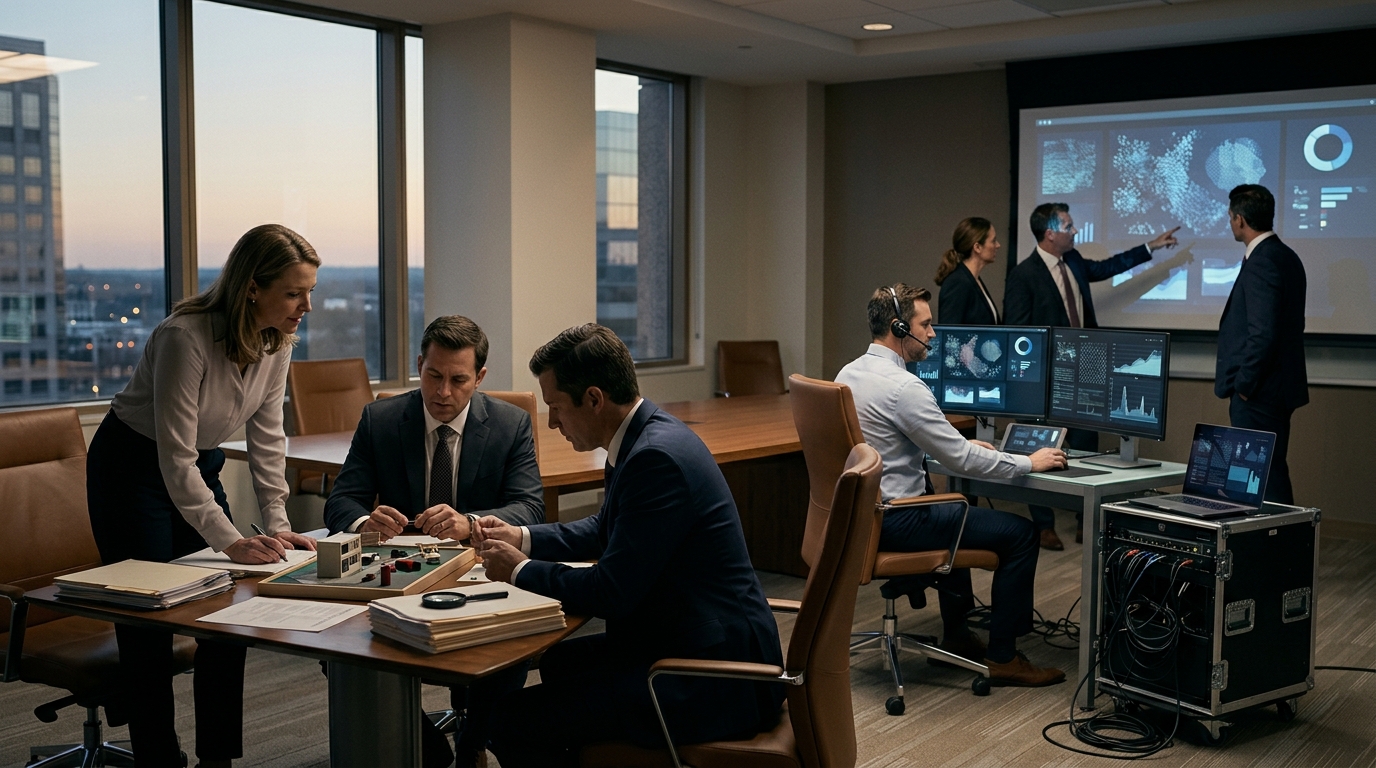
Modern litigation is a high-stakes environment where the margin for error is virtually zero. According to industry data, firms that integrate specialized support services see a significant increase in case outcomes, with over 10,000 complex matters handled annually by top-tier consultants. The decision to bring in external expertise often comes down to one critical question: do you need to change how the jury feels, or do you need to ensure the evidence is presented flawlessly? While both jury consulting and trial technology are essential components of a winning trial strategy, they serve fundamentally different purposes. One focuses on the psychology of persuasion, while the other focuses on the mechanics of delivery. Understanding this distinction is vital for litigators managing high-value disputes. (Persuadius and A2L Customer)
Core Differences Between Jury Consulting and Trial Tech
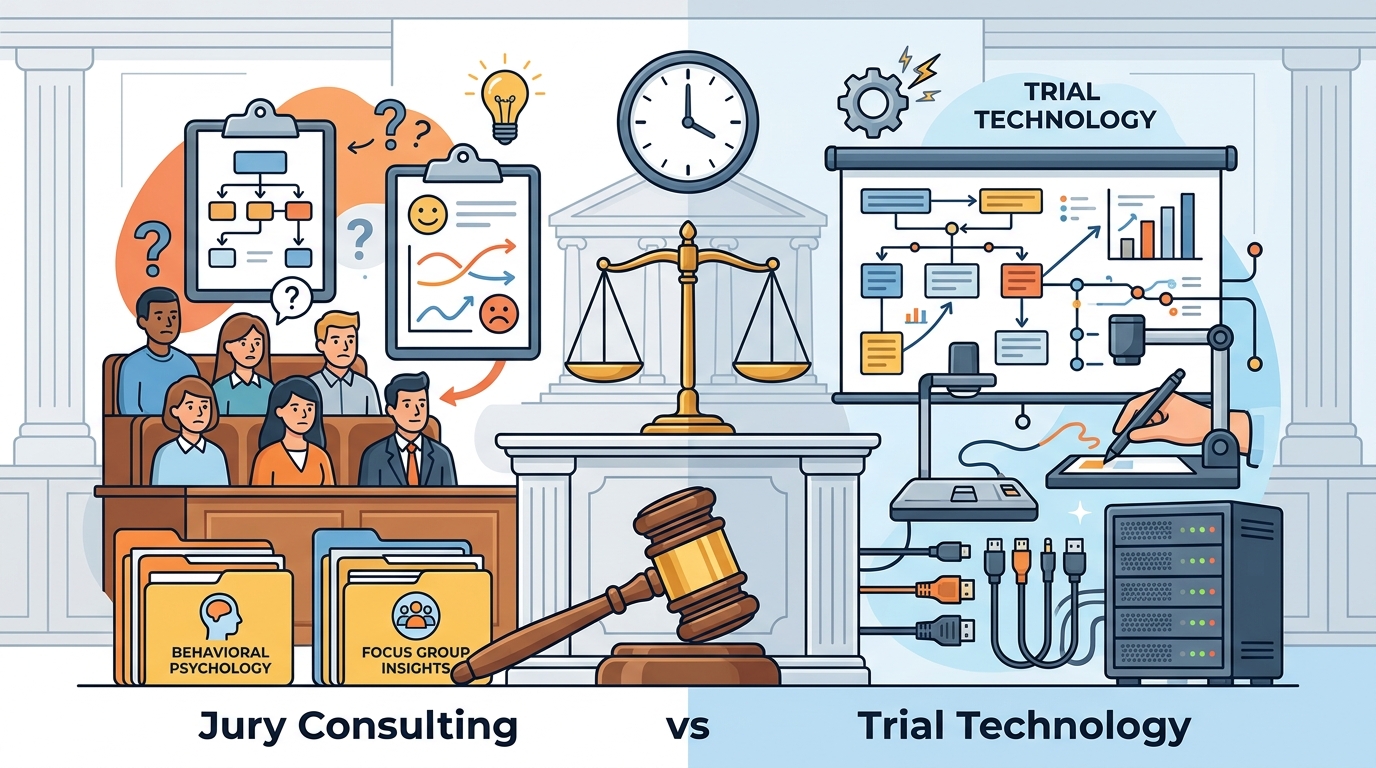
At first glance, both services seem to overlap because they both involve preparing materials for a courtroom. However, the underlying objectives are distinct. Jury consulting is rooted in behavioral science and psychology. It is about understanding human cognition, bias, and narrative processing. Trial technology, on the other hand, is rooted in engineering and logistics. It is about reliability, speed, and visual clarity.
Jury consulting asks, "What story will the jury believe?" Trial technology asks, "How do we show the jury the evidence without distraction?" Confusing these two goals can lead to a trial presentation that is visually stunning but emotionally hollow, or psychologically sound but technically flawed. For over thirty years, Persuadius has worked with top law firms to ensure these two pillars of litigation support function in harmony rather than in conflict.
The Role of Jury Consulting in Case Strategy
Jury consulting is the science of winning hearts and minds. It involves rigorous research methodologies designed to test your case theory before you ever step into the courtroom. This service is not about guessing; it is about validating your strategy against real human reactions.
Mock Trials and Focus Groups
One of the primary tools in jury consulting is the mock trial or focus group. These simulations allow attorneys to test their opening statements, witness examinations, and demonstrative exhibits with a representative audience. The data gathered from these sessions reveals which arguments resonate and which fall flat. According to legal research trends, firms that utilize mock trials are better equipped to anticipate opposing counsel's tactics and adjust their narrative accordingly.
Opening Statement Drafting
The opening statement sets the framework for the entire trial. Many attorneys instinctively believe they should write their own opening because they know the case best. However, knowing the facts is different from knowing how to persuade. Jury consultants help strip away legal jargon and focus on the human elements of the dispute. They help craft a narrative that is simple, memorable, and emotionally compelling. This process ensures that the jury understands the case from day one.
Witness Preparation
Witnesses often struggle not because they lack knowledge, but because they lack confidence or clarity. Jury consultants work with witnesses to prepare them for the stress of the stand. This includes practicing direct and cross-examination techniques, managing body language, and maintaining composure under pressure. A well-prepared witness is a persuasive witness.
The Critical Function of Trial Technology
Trial technology is the backbone of modern courtroom presentation. It involves the hardware, software, and personnel required to display evidence seamlessly. When trial technology fails, the trial stops. This is why many firms choose to outsource this function to specialized providers.
Reliability and Redundancy
In a high-stakes trial, technical glitches are not just annoying; they are damaging. A frozen screen or a missing exhibit can break the narrative flow and lose the jury's attention. Professional trial tech providers offer redundant systems, backup laptops, and dedicated technicians who monitor the presentation in real-time. This ensures that if one system fails, another takes over instantly without the jury ever noticing.
Visual Clarity and Design
Trial technology is not just about displaying documents; it is about making them readable and impactful. This involves creating custom graphics, animations, and timelines that simplify complex data. Poorly designed slides can confuse jurors, while well-designed ones can make complex information instantly understandable. The goal is to reduce cognitive load for the jury, allowing them to focus on the argument rather than deciphering the evidence.
Trial Technicians
A trial technician is the person behind the screen. They manage the presentation software, switch exhibits, and handle any technical issues that arise. This allows the attorney to focus entirely on the jury and the witness. Trying to manage technology while arguing a case is a recipe for disaster. As noted in recent litigation consulting reports, attorneys who rely on their own technology often experience critical moments where the presentation halts, undermining their credibility.
Service Comparison Matrix
To help you decide which service is right for your case, here is a detailed comparison of the core functions, benefits, and ideal use cases for each.
| Feature | Jury Consulting | Trial Technology |
|---|---|---|
| Primary Goal | Persuasion and narrative strategy | Reliable and clear evidence delivery |
| Core Methodology | Mock trials, focus groups, psychological analysis | Hardware setup, software management, live support |
| Key Deliverable | Refined case theory and witness prep | Seamless exhibit presentation and graphics |
| Best For | Complex cases requiring narrative shifts | High-volume evidence or technical disputes |
| Risk of Failure | Weak persuasion or misread jury dynamics | Technical glitches or lost evidence |
When to Use Both Services
While you can use either service independently, the most successful trials integrate both. Jury consulting provides the strategy, and trial technology provides the vehicle for that strategy. For example, a jury consultant might identify that a timeline is the most persuasive way to explain a sequence of events. The trial tech team then builds that timeline into an interactive, easy-to-follow graphic. Without the consultant, the timeline might be inaccurate or confusing. Without the tech team, the timeline might not be visible or reliable.
Persuadius offers both services under one roof, ensuring that your strategy and your presentation are perfectly aligned. This integrated approach eliminates the friction that often occurs when separate vendors try to coordinate. It also ensures that your trial technicians understand the narrative goals of your case, allowing them to anticipate your needs and support your arguments more effectively.
Key Takeaways
- Jury consulting focuses on the psychology of persuasion, using mock trials and focus groups to refine your case theory.
- Trial technology focuses on the mechanics of delivery, ensuring evidence is displayed reliably and clearly.
- Mock trials provide data-driven insights that help attorneys adjust their strategy before trial.
- Trial technicians manage the presentation in real-time, allowing attorneys to focus on the jury.
- Integrated support from a single provider ensures seamless coordination between strategy and execution.
- Persuadius has over thirty years of experience handling complex litigation matters.
- Outsourcing trial tech prevents technical failures that can undermine an attorney's credibility.
Frequently Asked Questions
What is the main difference between jury consulting and trial tech?
Jury consulting is about strategy and persuasion, using psychological research to shape your case. Trial tech is about execution and reliability, ensuring your evidence is presented clearly and without technical issues.
Can I use trial tech without jury consulting?
Yes, you can use trial tech independently. However, without jury consulting, you may present your evidence effectively but fail to persuade the jury of your narrative.
Why should I outsource trial technology instead of doing it myself?
Outsourcing trial technology ensures reliability and allows you to focus on the jury. Managing technology yourself can lead to distractions and technical failures that hurt your case.
How does jury consulting help with witness preparation?
Jury consultants help witnesses practice their testimony, manage body language, and stay calm under pressure, making them more credible and persuasive on the stand.
Does Persuadius offer both services?
Yes, Persuadius offers both jury consulting and trial technology services, providing an integrated approach to litigation support.
What is a mock trial?
A mock trial is a simulated trial where a case is presented to a group of people who provide feedback on the arguments and evidence, helping attorneys refine their strategy.
How does Persuadius ensure trial tech reliability?
Persuadius uses redundant systems, backup equipment, and dedicated technicians to monitor and manage the presentation in real-time, ensuring no technical glitches occur.
Contact Persuadius for Expert Support
Whether you need to refine your case theory with jury consulting or ensure flawless evidence delivery with trial technology, Persuadius is here to help. Our team of experts has decades of experience supporting top law firms in complex litigation. Contact us today to discuss how we can support your next trial.
Contact Persuadius to schedule a consultation or run a conflicts check. You can also visit our Jury Consulting page to learn more about our research services, or explore our Litigation Consulting Report for the latest insights on trial strategy.