

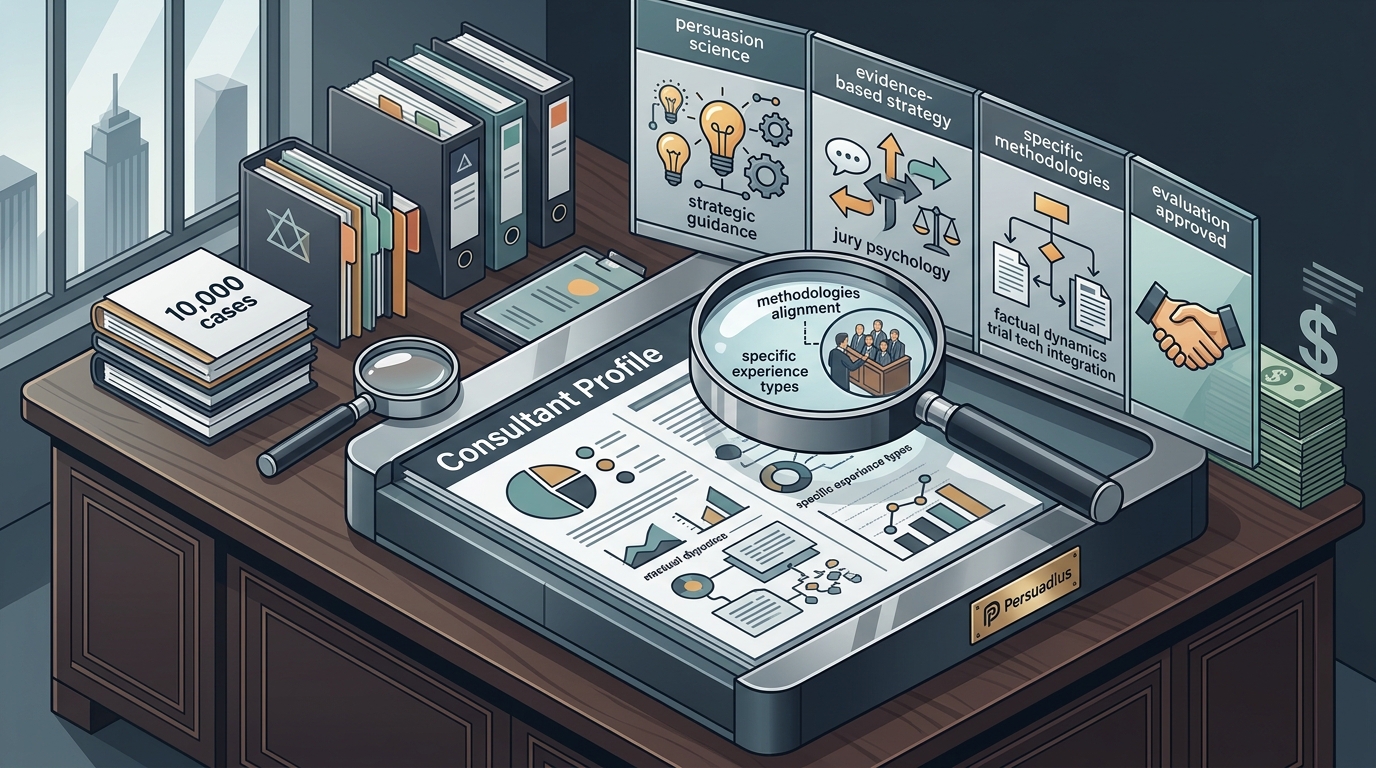
For over thirty years, Persuadius has worked with almost all top law firms on more than 10,000 matters with at least $2 trillion cumulatively at stake. This massive volume of high-stakes litigation experience demonstrates that effective trial consulting is not merely about graphic design or software management, but about the science of persuasion. When a verdict is on the line, intuition is a dangerous substitute for evidence-based strategy. Evaluating a trial consultant requires looking beyond surface-level credentials to understand how their specific methodologies align with the unique psychological and factual dynamics of your case. (Persuadius and A2L Customer)
Understanding Jury Research and Mock Trials
Jury consulting is persuasion science in action. It is the systematic process of testing case narratives, witness credibility, and visual aids on representative samples of potential jurors before they ever enter the courtroom. At Persuadius, we don’t guess what jurors will think; we test it, analyze it, and turn those insights into winning courtroom strategies. This approach is critical for litigators who demand evidence-based insights rather than relying on gut feelings. (Persuadius Nationwide Jury Consulting)
Our team of jury consultants, psychologists, and trial strategists work side by side with elite law firms to uncover what will persuade real people in the box. Whether you are preparing for a bet-the-company case or a high-stakes commercial dispute, the goal is to identify the core themes that resonate and the weak points that need reinforcement. Mock trials and focus groups provide a controlled environment to simulate the trial experience, allowing attorneys to refine their arguments based on actual human reactions.
According to industry data, cases with pre-trial jury research see a significant increase in favorable settlements and verdicts because the legal team has already validated their narrative. This validation process reduces the risk of unexpected juror bias or confusion during the actual trial. By investing in rigorous jury research, firms can anticipate opposing counsel’s strategies and prepare counter-narratives that are psychologically grounded.
The Role of Litigation Graphics
Litigation graphics consulting is not just about making slides look professional; it is about visual storytelling that simplifies complex information. Trial consultants love the power of a well-designed exhibit to capture the essence of a presentation. When attorneys design their own PowerPoint slides, they often fall into the trap of using text-heavy slides that kill persuasion. Bullet points, while efficient for notes, are ineffective for conveying emotional and logical weight to a jury.
Professional litigation graphics transform dense data, medical records, and technical diagrams into clear, compelling visuals. This visual advocacy helps jurors understand the timeline of events, the causation of damages, and the credibility of expert witnesses. The best trial graphics consultants understand that clarity is the enemy of confusion. By removing cognitive load, they allow the jury to focus on the story rather than deciphering the evidence.
Research indicates that jurors retain significantly more information when it is presented visually rather than verbally. This retention is crucial for the final deliberation phase, where jurors must recall specific details to reach a verdict. High-quality graphics serve as a constant visual anchor, reinforcing the attorney’s narrative throughout the trial. This is why many top firms now outsource their visual advocacy to specialized consultants who understand the intersection of design and psychology.
Trial Technology and Hot Seaters
There is a particular moment in trial that I have seen far too many times. A lawyer is standing in front of the jury, prepared and confident. The question is good. The witness has just given exactly the answer everyone hoped for. Now the lawyer wants Exhibit 237 on the screen. And suddenly the trial stops. The lawyer turns toward the laptop, clicks something, and nothing happens. This is almost entirely preventable.
Why attorneys should not run their own trial technology is a question that highlights the fragility of live presentations. Trial technicians, often referred to as hot seaters, manage the technology from the sidelines, ensuring that exhibits appear instantly and correctly. They handle the technical aspects of video depositions, animations, and document displays, allowing the attorney to maintain eye contact and engagement with the jury.
The use of trial technicians to help manage the trial presentation is a standard practice among the most successful litigation teams. These professionals are trained to anticipate the flow of the examination and preload exhibits before they are needed. This seamless integration of technology prevents the awkward pauses that can undermine an attorney’s credibility. When the technology works flawlessly, the focus remains entirely on the evidence and the argument.
Furthermore, trial techs are experts in troubleshooting. If a file fails to load or a video glitches, they resolve the issue in seconds, often without the jury even noticing. This technical reliability is a critical component of trial strategy. It ensures that the narrative momentum is never broken by technical difficulties. For firms handling complex cases with hundreds of exhibits, having a dedicated trial tech is not a luxury; it is a necessity.
The Case for Outsourcing Opening Statements
There are certain parts of a trial that lawyers instinctively believe they should do themselves. Writing the opening statement is near the top of the list. I understand why. The first chair knows the case. The first chair knows the witnesses. The first chair has lived with the documents, depositions, expert reports, motions, bad facts, good facts, and opposing counsel—sometimes for years. So when trial approaches, it seems perfectly natural for that lawyer to sit down and write the opening statement.
But I would ask a different question: Does knowing the case better than anyone else necessarily make you the best person to decide how someone hearing the case for the first time should hear it? Those are not quite the same skill. Trial consultants bring an objective perspective that is essential for crafting a persuasive opening. They can identify the core themes that will resonate with a neutral audience, stripping away the legal jargon that might confuse jurors.
Outsourcing opening statement drafting allows attorneys to focus on their strengths: cross-examination, legal argument, and client management. It also provides a fresh set of eyes to challenge weak arguments and strengthen strong ones. This collaborative approach often results in a more compelling and coherent narrative. The best opening statements are not just summaries of the evidence; they are invitations to a story that the jury wants to hear.
Many top law firms now recognize the value of specialized support in this area. By leveraging the expertise of trial consultants, attorneys can ensure that their opening statement sets the stage for a successful trial. This strategic decision can significantly impact the outcome of the case by framing the issues in the most favorable light from the very beginning.
Key Metrics for Evaluation
When evaluating a trial consultant, it is essential to look at specific metrics that indicate their ability to deliver results. These metrics go beyond years of experience and include the complexity of cases handled, the diversity of the research panels, and the responsiveness of the team.
| Evaluation Metric | Why It Matters | What to Look For |
|---|---|---|
| Case Volume and Value | Indicates experience with high-stakes litigation. | History of handling matters with billions at stake. |
| Methodology | Ensures evidence-based insights over intuition. | Use of mock trials, focus groups, and psychological analysis. |
| Technical Capability | Prevents trial-stopping technology failures. | Dedicated trial technicians and hot seaters. |
| Client Feedback | Validates quality and reliability under pressure. | Testimonials from top law firms like Holland & Knight and Gibson Dunn. |
| Availability | Ensures support during critical last-minute phases. | 24/7 contact availability for conflicts checks and urgent questions. |
Client feedback is particularly telling. Firms that have worked with Persuadius often highlight the quality of the graphics and the supportive nature of the team. For example, clients have noted that the team demonstrated real skill in creating graphic and demonstrative exhibits that captured the essence of their presentation. This level of detail and support is crucial for maintaining confidence during the trial.
Additionally, the availability of the consultant is a key factor. Trials are unpredictable, and last-minute changes are common. A consultant who offers 24/7 contact ensures that you have support when you need it most. This accessibility allows for rapid response to new developments, ensuring that your strategy remains agile and effective.
Key Takeaways
- Persuadius has over thirty years of experience in complex litigation, working with top law firms on more than 10,000 matters.
- Jury consulting is the science of persuasion, using mock trials and focus groups to test narratives before trial.
- Litigation graphics simplify complex information, improving juror retention and understanding of the case.
- Trial technicians (hot seaters) manage technology to prevent disruptions and maintain attorney-jury engagement.
- Outsourcing opening statements provides an objective perspective, enhancing the persuasive power of the narrative.
- Client testimonials from firms like Holland & Knight and Gibson Dunn highlight the quality and reliability of the service.
- 24/7 availability is critical for handling last-minute conflicts checks and urgent trial questions.
Frequently Asked Questions
What is the primary benefit of jury research?
Jury research provides evidence-based insights into how potential jurors will perceive your case, allowing you to refine your strategy and address potential biases before trial.
Why should attorneys outsource trial technology?
Outsourcing trial technology to dedicated technicians prevents technical failures during critical moments, ensuring that the focus remains on the evidence and the argument rather than the equipment.
How does litigation graphics improve trial outcomes?
High-quality litigation graphics simplify complex data, making it easier for jurors to understand and remember key points, which can significantly influence their deliberation process.
What is the role of a trial consultant in opening statements?
Trial consultants provide an objective perspective to craft compelling narratives, stripping away legal jargon and focusing on themes that resonate with a neutral audience.
How can I contact Persuadius for a conflicts check?
You can contact Persuadius 24/7 by phone at 800.847.9330 or by email to run a conflicts check or ask urgent questions about your case.
What types of cases does Persuadius handle?
Persuadius handles a wide range of complex litigation, including bet-the-company cases, commercial disputes, and high-stakes personal injury matters.
Is trial consulting only for large law firms?
While Persuadius works with top law firms, their methodologies and services are valuable for any litigator seeking to enhance their trial strategy with evidence-based insights.
Contact Persuadius
Ready to elevate your trial strategy? Contact Persuadius today to learn more about our jury consulting, litigation graphics, and trial technology services. Our team is available 24/7 to assist you with conflicts checks, urgent questions, and strategic planning. Visit our contact page or call us at 800.847.9330 to get started.