

Selecting a trial theme that sticks with jurors requires identifying a single, emotionally resonant narrative that simplifies complex facts into a memorable story. This theme must align with the jurors' cognitive biases and remain consistent from the opening statement through closing argument. Persuadius helps litigators craft these enduring narratives by combining behavioral science with decades of courtroom experience to ensure the message survives the pressure of deliberation.
The Cognitive Science of Narrative Retention
Jurors do not remember isolated facts; they remember stories. A trial theme is a unifying narrative concept that organizes evidence into a coherent sequence of cause and effect. When a theme is grounded in cognitive science, it leverages the brain's natural tendency to seek patterns and resolve conflict. This approach transforms a list of exhibits into a compelling journey that jurors can easily recall in the jury room.
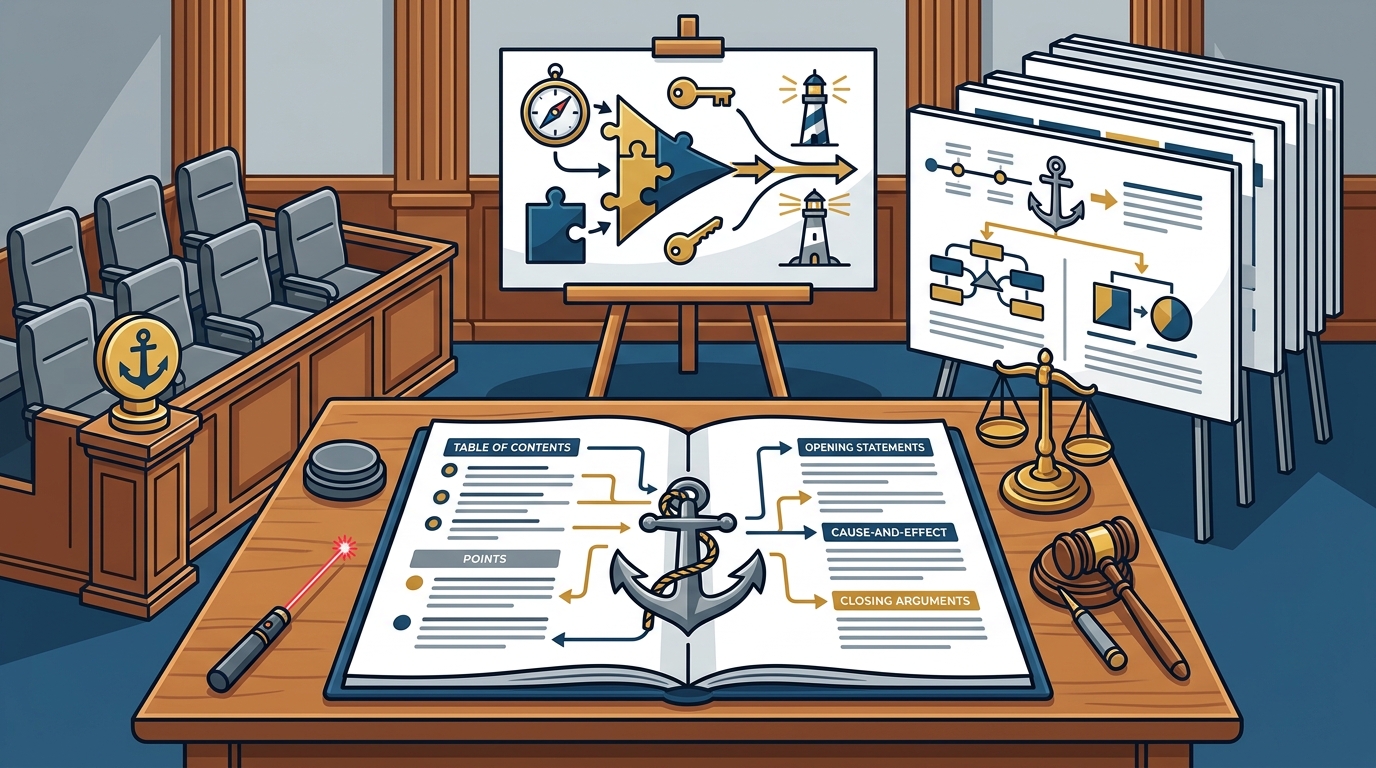
Research in narrative psychology suggests that humans retain information better when it is framed within a character-driven arc. By identifying the human elements in your case, you create an emotional anchor. This anchor serves as a mental hook that allows jurors to retrieve specific details later. Without this hook, the sheer volume of evidence often leads to cognitive overload and confusion.
At Persuadius, we use these principles to test themes with real people. We observe how different narrative structures affect comprehension and retention. This empirical approach ensures that the theme is not just logically sound, but psychologically effective for the specific audience in the box.
Testing Themes Through Mock Trials
Intuition is a poor substitute for data when selecting a trial theme. A theme that feels powerful to a lawyer may feel confusing or unconvincing to a juror. Mock trials and focus groups provide the necessary feedback loop to validate your narrative before it reaches the courtroom. This process allows you to see exactly where jurors get lost or where they begin to doubt the story.
During a mock trial, we track not just the verdict, but the deliberation dynamics. We listen to how jurors describe the case to one another. If they cannot explain the theme in their own words, it will not stick. This qualitative data is invaluable for refining the language and emphasis of your presentation. It reveals the gap between what you intended to say and what they actually heard.
For example, in a complex patent case, a theme focused on technical superiority might fail if jurors do not understand the underlying technology. By testing a simpler theme centered on fairness or market impact, we can find a narrative that resonates universally. This iterative testing process is a core component of our jury consulting services.
Aligning the Theme with Visual Evidence
A theme that sticks must be reinforced by every piece of evidence presented. If your narrative is about clarity, but your exhibits are cluttered and confusing, the theme will collapse. Visual consistency is critical to maintaining the integrity of your story throughout the trial. Every graphic, timeline, and document callout should serve the central narrative arc.
Litigation graphics are not just decorative; they are persuasive tools that make abstract concepts tangible. When visuals align with the theme, they reduce the cognitive load on the jury. This alignment creates a sense of inevitability, making the conclusion feel like the only logical outcome. It helps jurors see the connection between the evidence and the story you are telling.
Our team at Persuadius works closely with trial teams to ensure that the visual language matches the verbal theme. We design demonstratives that highlight the key moments of the narrative. This synergy between words and images ensures that the theme remains vivid and accessible, even during long and complex examinations.
Maintaining Consistency from Opening to Closing
The most common reason a theme fails is inconsistency. If the opening statement promises one story, but the cross-examination suggests another, jurors will become skeptical. Consistency is the glue that holds the theme together over the course of days or weeks of trial. Every witness, every exhibit, and every argument must reinforce the same core message.
This requires a disciplined approach to trial preparation. The trial team must understand how each piece of evidence fits into the larger narrative. When a witness deviates from the theme, the trial lawyer must be prepared to redirect the focus back to the central story. This discipline ensures that the theme remains the dominant force in the jurors' minds.
By maintaining this consistency, you build a cumulative effect. Each piece of evidence adds weight to the theme, making it harder for the opposing side to dismantle. This strategic alignment is what allows a theme to stick with jurors long after the final argument is delivered.
Key Takeaways
- A trial theme is a unifying narrative concept that organizes evidence into a coherent story.
- Cognitive science shows that jurors remember stories better than isolated facts.
- Mock trials provide essential data on how jurors perceive and retain your theme.
- Visual evidence must align with the verbal theme to reduce cognitive load.
- Consistency from opening to closing is critical for maintaining theme integrity.
- Testing themes with real people helps identify gaps in comprehension and credibility.
Frequently Asked Questions
What is the primary function of a trial theme?
A trial theme is a unifying narrative concept that organizes evidence into a coherent story, helping jurors understand and remember the case.
How do mock trials help in selecting a theme?
Mock trials provide empirical data on how jurors perceive and retain the theme, revealing gaps in comprehension and credibility before the actual trial.
Why is visual consistency important for a trial theme?
Visual consistency reinforces the verbal theme, reducing cognitive load and creating a sense of inevitability that makes the conclusion feel logical.
What happens if a trial theme is inconsistent?
Inconsistency leads to skepticism and confusion, causing the theme to collapse and weakening the overall persuasive impact of the presentation.
How does Persuadius assist with theme development?
Persuadius combines behavioral science, narrative psychology, and decades of trial experience to test and refine themes with real people, ensuring they resonate with jurors.