
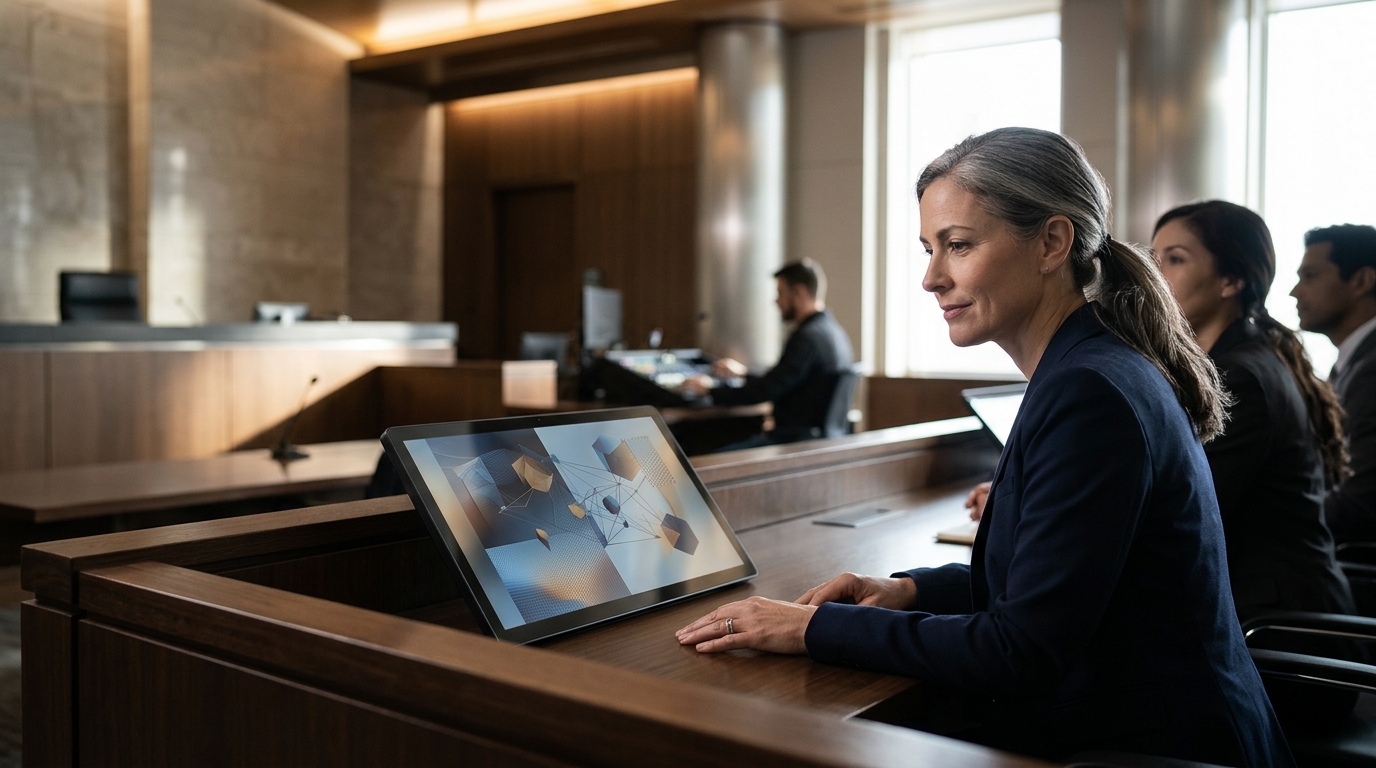
Courtroom technology improves juror understanding by transforming abstract, dense, or technical data into visual formats that align with human cognitive processing. According to research published in the International Journal of Legal Medicine, 3D imaging and digital visualization offer practical advantages by helping jurors grasp technical language and spatial relationships that oral testimony alone often fails to convey. At Persuadius, we observe that these tools do not replace legal argument; they bridge the gap between complex evidence and lay comprehension.
Reducing Cognitive Load Through Visual Translation
Jurors face a significant cognitive burden when processing large volumes of testimony and documentary evidence. Cognitive load is the amount of mental effort required to process information, and high load leads to confusion and poor retention. When evidence is presented purely through spoken words, jurors must simultaneously listen, interpret, and store the information in short-term memory. This process is fragile and prone to error, especially in complex commercial or scientific cases.
Visual technology offloads this burden. By converting data into charts, timelines, or diagrams, the brain can process the information visually rather than verbally. This dual-coding approach allows jurors to anchor abstract concepts to concrete images. For example, a financial dispute involving millions of transactions becomes manageable when presented as a simplified flowchart rather than a spreadsheet read aloud. The visual serves as a scaffold, supporting the narrative without overwhelming the viewer. according to Courtroom Technology Northern
Spatial and Temporal Clarity in Complex Cases
Many cases involve events that occurred in specific locations or over extended periods. Understanding the sequence of events or the physical relationship between objects is critical for fact-finding. Oral descriptions of spatial relationships are notoriously difficult for humans to visualize accurately. A witness describing the angle of a vehicle collision or the layout of a factory floor often fails to convey the necessary precision.
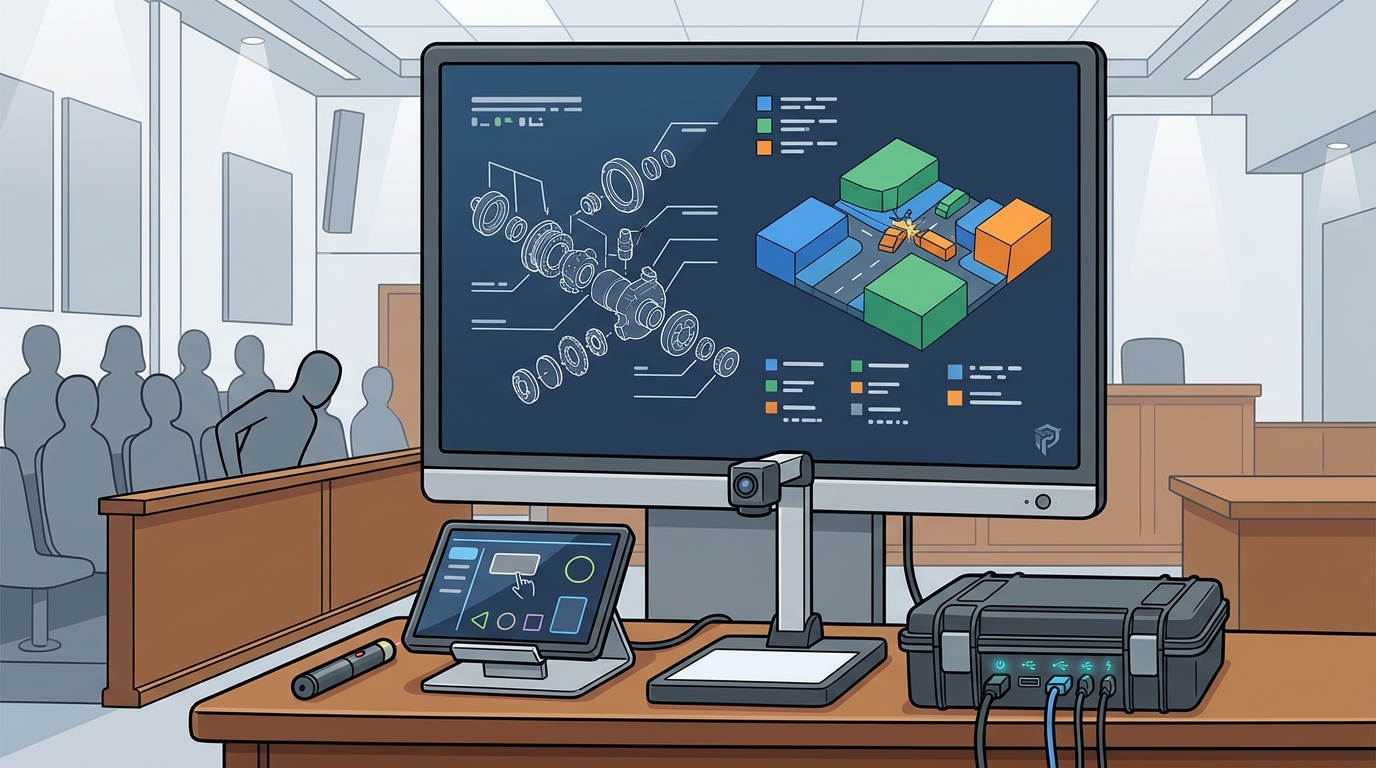
3D animations and interactive maps solve this problem by providing a spatial reference frame. Research indicates that 3D imaging technology specifically aids jurors in understanding technical language and spatial dynamics. In a product liability case, for instance, an animation can show exactly how a component failed, allowing jurors to see the mechanism of injury rather than just hearing about it. This clarity reduces the likelihood of jurors filling in gaps with their own assumptions, which can lead to inconsistent verdicts.
Sustaining Attention in Long Trials
Modern trials often last weeks or months, and maintaining juror attention is a constant challenge. Fatigue and boredom are significant factors that degrade comprehension. When a presentation becomes monotonous, jurors disengage, and critical information is lost. Technology introduces variation into the trial process, breaking the monotony of static testimony and document review.
Dynamic visuals, such as animated timelines or interactive exhibits, re-engage the audience by providing a change in sensory input. This does not mean using flashy effects for their own sake; rather, it involves using technology to highlight key moments in the narrative. A well-timed visual reveal can reset a juror's attention, ensuring they are focused on the most important part of the argument. At Persuadius, we emphasize that technology should serve the story, not distract from it. The goal is to keep the jury invested in the facts, not just the presentation style.
Navigating the Era of Digital Evidence
The nature of evidence has shifted dramatically with the rise of digital communication. Text messages, emails, server logs, and cloud data are now standard exhibits in many cases. This digital complexity presents a unique challenge: the evidence is often fragmented, non-linear, and vast in volume. Traditional methods of presenting these documents, such as reading them into the record, are inefficient and often fail to convey the context or intent behind the communications.
Trial technology allows for the curation and contextualization of digital evidence. Instead of presenting thousands of emails, a trial team can use software to highlight specific threads, annotate key phrases, and display metadata in a clear, organized manner. This helps jurors understand the flow of communication and the decision-making process. For example, in a securities fraud case, a timeline of emails and market data can illustrate the discrepancy between public statements and private knowledge. This contextualization is essential for jurors to make informed judgments about credibility and intent. according to Archived Can Jury
Strategic Implementation of Technology
Effective trial teams integrate technology into their overall litigation strategy from the outset. They identify the key concepts that need to be communicated and determine the best visual format for each. This requires collaboration between attorneys, consultants, and designers. At Persuadius, we work with litigators to develop these visuals early in the case, ensuring they align with the narrative and legal themes. This proactive approach allows for testing and refinement, leading to more effective presentations at trial.
Key Takeaways
- Visual technology reduces cognitive load by allowing jurors to process information visually rather than solely verbally.
- 3D animations and interactive maps provide spatial and temporal clarity that oral testimony often lacks.
- Dynamic visuals help sustain juror attention during long trials by breaking the monotony of static presentations.
- Digital evidence requires curation and contextualization to be understandable to lay jurors.
- Technology must be strategically integrated into the litigation plan, not added as an afterthought.
- Clarity and simplicity are more important than technical sophistication in trial graphics.
Frequently Asked Questions
Does courtroom technology always improve juror comprehension?
Not automatically. Technology improves comprehension when it is used to clarify complex information. If the visuals are cluttered, confusing, or irrelevant, they can detract from the message. The key is strategic design that prioritizes clarity.
What types of cases benefit most from 3D animations?
Cases involving spatial relationships, such as personal injury, product liability, and construction disputes, benefit most from 3D animations. These visuals help jurors understand how events occurred in physical space.
How do trial teams handle large volumes of digital evidence?
Teams use trial presentation software to curate and contextualize digital evidence. They highlight key documents, annotate important phrases, and organize data into logical sequences to make it digestible for jurors.
Is it necessary to hire a specialist for trial graphics?
While some attorneys create their own slides, hiring a specialist often leads to more effective presentations. Specialists understand the psychology of visual persuasion and can design graphics that align with the legal strategy.
Can technology be used to mislead jurors?
Technology can be misused if visuals are inaccurate or misleading. However, ethical guidelines and court rules require that demonstrative evidence be fair and accurate. The goal of professional litigation consulting is to enhance understanding, not to manipulate.
Conclusion
Courtroom technology is a powerful tool for improving juror understanding of complex evidence. By reducing cognitive load, providing spatial clarity, and sustaining attention, these tools help jurors make more informed decisions. However, technology must be used strategically and ethically. At Persuadius, we help litigators leverage these tools to build compelling, clear, and persuasive presentations. To learn more about how we can support your trial strategy, .