
Effective Jury Consulting Strategy in Modern Courtroom Litigation
Effective jury consulting strategy in modern courtroom litigation is the systematic application of behavioral science and empirical research to predict juror behavior and optimize case presentation. It moves beyond legal theory to address the human element of the courtroom, ensuring that evidence is interpreted through the lens of juror cognition rather than legal abstraction. This approach transforms intuition into actionable data for trial teams.
The Science of Juror Cognition
Jurors are not passive recipients of information; they are active processors who filter evidence through personal biases, experiences, and values. Understanding this cognitive landscape is the foundation of any effective strategy. A jury consultant is a professional who uses empirical research methods to predict how these mental filters will operate during a trial. By mapping these cognitive pathways, attorneys can anticipate where their arguments will resonate and where they might fall flat.
Research in narrative psychology confirms that jurors rely on story structures rather than isolated facts to make decisions. When a presentation aligns with natural cognitive fluency, it feels more credible and easier to remember. This is why modern consulting focuses on the architecture of the narrative, not just the content of the evidence. The goal is to reduce cognitive load, allowing jurors to follow the case logic without mental strain. according to Troubling the master
Data-Driven Juror Profiling
Traditional jury selection often relied on the consultant's gut instinct or general knowledge of the local community. Modern strategy shifts toward data-driven techniques that identify patterns and trends in juror demographics and attitudes. By analyzing psychographic data, consultants can predict which jurors are more likely to be sympathetic to specific arguments. This statistical modeling helps forecast outcomes and pinpoint risk exposure before the trial begins.
However, data alone is not sufficient. The challenge lies in determining which data points are most relevant to a specific case. A model trained on skewed data may not accurately predict outcomes in unique contexts. Therefore, effective strategy combines quantitative analysis with qualitative insights from mock trials and focus groups. This hybrid approach ensures that the data reflects the specific venue and case type.
Mock Trials and Focus Groups
Mock trials are simulations of real trials that allow legal professionals to test their strategies in a safe and controlled environment. They provide real participants, real deliberations, and real data. By using representative jurors who mirror the venue's demographics, attorneys can test multiple themes and identify emotional tripwires. This process helps quantify liability and damages perceptions, offering a clear picture of how the case will be received.
The value of a mock trial is not just in the verdict, but in the deliberation dynamics. Observing how jurors discuss the case reveals the themes that matter most to them. It also highlights credibility gaps that may not be apparent to the legal team. This feedback loop allows for iterative refinement of the trial strategy, ensuring that the final presentation is aligned with juror expectations.
Aligning Visuals with Persuasion
Visuals play a critical role in how jurors process information. Litigation graphics are visual aids designed to make complex facts understandable and memorable. When done correctly, they reduce confusion and strengthen recall. However, the design of these visuals must be strategically aligned with the case narrative. A visual that is aesthetically pleasing but strategically misaligned can do more harm than good.
Effective strategy involves integrating visuals with the spoken advocacy. The graphics should reinforce the story, not distract from it. This requires a deep understanding of visual attention and audience comprehension. By coordinating the timing and content of visuals with the presentation, consultants help attorneys maintain narrative momentum. This alignment ensures that jurors can carry the key messages into deliberations.
Strategic Clarity from Start to Verdict
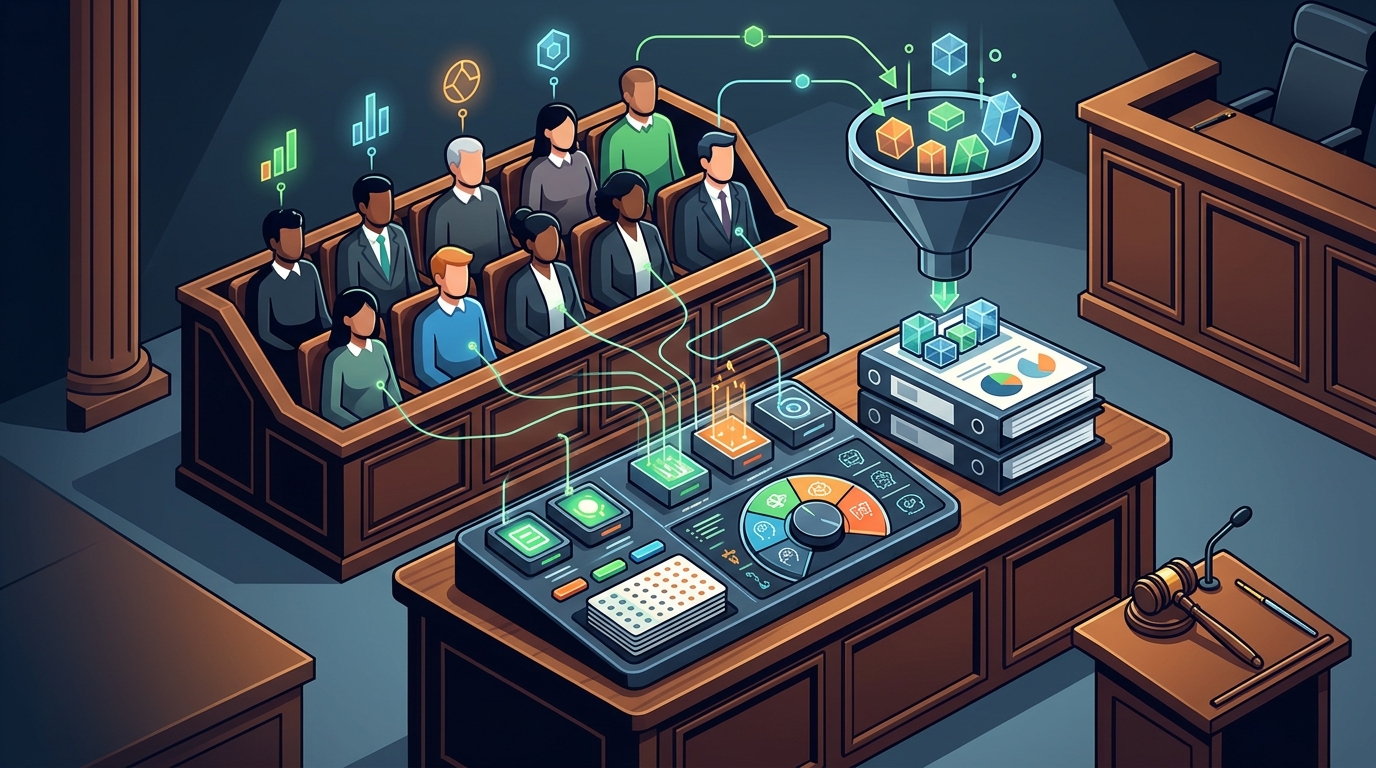
The ultimate goal of jury consulting is to provide strategic clarity and persuasive alignment from voir dire to closing argument. This involves more than just selecting a favorable jury; it is about framing the case in a way that resonates with the jurors' values and beliefs. By understanding the human variables in the courtroom, attorneys can gain the power to frame their case persuasively.
For over thirty years, Persuadius has guided thousands of complex cases in venues across the country. Our team of jury consultants, psychologists, and trial strategists works side by side with elite law firms to uncover what will and won't persuade real people in the box. Whether you are preparing for a bet-the-company case or a high-stakes commercial dispute, we help you see your case the way jurors will. To plan your visit, .
Key Takeaways
- Jury consulting is the systematic application of social science to optimize legal advocacy.
- Data-driven profiling helps predict juror leanings but must be combined with qualitative insights.
- Mock trials provide real data on deliberation dynamics and theme resonance.
- Visuals must be strategically aligned with the narrative to reduce cognitive load.
- Effective strategy provides strategic clarity from voir dire to closing argument.
- Understanding juror cognition is as critical as understanding the law.
Frequently Asked Questions
What is the primary goal of jury consulting?
The primary goal is to predict juror behavior and optimize case presentation to secure favorable verdicts.
How does data-driven jury consulting differ from traditional methods?
Data-driven methods use statistical modeling to identify patterns in juror demographics and attitudes, whereas traditional methods rely more on intuition and experience.
What role do mock trials play in jury consulting?
Mock trials allow attorneys to test their strategies with representative jurors, providing real data on how the case will be received and deliberated.
Why are visuals important in jury consulting?
Visuals help reduce confusion and strengthen recall by making complex facts understandable and memorable for jurors.
How does Persuadius approach jury consulting?
Persuadius merges behavioral science, narrative psychology, and decades of trial experience to provide data-driven insights and strategic clarity.
Can jury consulting guarantee a favorable verdict?
No, jury consulting cannot guarantee a verdict, but it significantly improves the odds by aligning the case presentation with juror cognition and values.
What types of cases benefit most from jury consulting?
Complex cases with high stakes, such as antitrust, IP, product liability, and commercial litigation, benefit most from jury consulting.