
How to Develop a Compelling Theme for Your Trial Opening Statement
A compelling trial theme is a concise, emotionally resonant narrative framework that guides jurors through complex evidence. It transforms raw facts into a coherent story that aligns with juror values and cognitive biases. Persuadius helps litigators craft these themes by combining behavioral science with decades of courtroom experience to ensure your opening statement resonates from the first word to the last.
Defining the Core Narrative Arc
Theme development begins with identifying the central conflict of your case. A trial theme is not merely a slogan; it is the structural backbone of your presentation. Jurors do not remember isolated facts; they remember the story that connects those facts. By establishing a clear narrative arc early, you provide jurors with a mental map for processing the evidence.
Consider the case of a complex patent dispute where the technical details were overwhelming. The litigator used a theme centered on 'innovation versus obstruction.' This simple concept allowed the jury to categorize every technical exhibit as either supporting progress or hindering it. The implication is clear: when you simplify the narrative, you reduce cognitive load and increase the likelihood of a favorable verdict.
Aligning Themes with Cognitive Science
Effective themes leverage principles of cognitive psychology to enhance retention. Confirmation bias is a powerful force in the jury room, where jurors tend to interpret new information in a way that confirms their pre-existing beliefs. Your theme must be designed to either align with or strategically challenge these biases.
Research in cognitive psychology indicates that people process information more effectively when it is presented in a way that feels intuitive and consistent. For example, in a product liability case, a theme focusing on 'safety as a standard of care' taps into a universal human value. This alignment makes the theme feel less like an argument and more like a shared truth, thereby strengthening its persuasive power.
Testing Themes Through Mock Trials
Intuition is a poor substitute for empirical data when developing a trial theme. Persuadius utilizes mock trials and focus groups to test how real jurors respond to different thematic approaches. This process allows litigators to identify which themes resonate emotionally and which fall flat.
In a recent commercial litigation matter, the initial theme was perceived by mock jurors as overly aggressive. By testing an alternative theme focused on 'fair dealing,' the team observed a significant shift in juror empathy and credibility assessments. The data-driven approach ensures that the final theme is not just theoretically sound but practically effective in the specific venue.
Integrating Visuals with Thematic Messaging
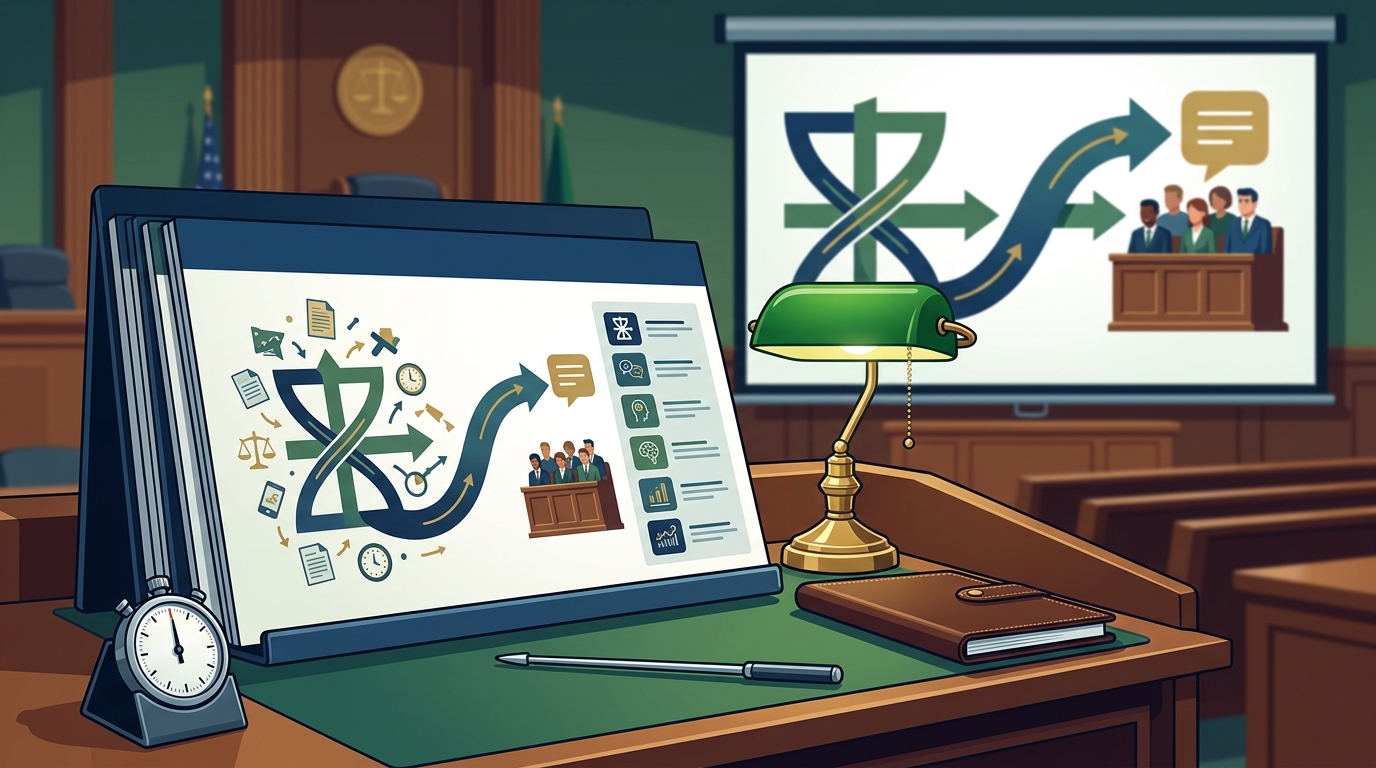
A theme is only as strong as its visual representation. Litigation graphics serve as the visual embodiment of your thematic narrative. When visuals and spoken words are misaligned, the message is diluted. Persuadius ensures that every demonstrative exhibit reinforces the core theme, creating a cohesive sensory experience for the jury.
For instance, in a case involving environmental contamination, the theme 'hidden costs' was supported by a series of graphics that visually revealed the long-term financial impact of the defendant's actions. This integration of visual and verbal elements created a powerful narrative momentum that kept jurors engaged throughout the trial.
Refining Through Rehearsal and Feedback
The final stage of theme development involves rigorous rehearsal. A theme is a dynamic element that must adapt to the flow of the trial. By rehearsing with a trial technician and reviewing feedback, litigators can refine the delivery and ensure the theme remains consistent across all phases of the trial.
One litigator noted that after three rounds of rehearsal, the theme became second nature, allowing for a more authentic and persuasive delivery. This iterative process ensures that the theme is not just a concept on paper but a living part of the trial presentation.
Key Takeaways
- A trial theme is a narrative framework that guides jurors through complex evidence.
- Aligning themes with cognitive biases enhances retention and persuasion.
- Mock trials provide empirical data to validate thematic choices.
- Visuals must reinforce the thematic message to create a cohesive narrative.
- Rehearsal is essential for integrating the theme into authentic delivery.
- Collaboration with litigation consultants ensures strategic alignment.
Frequently Asked Questions
What is the primary purpose of a trial theme?
The primary purpose of a trial theme is to provide a coherent narrative structure that helps jurors understand and remember the evidence.
How do mock trials help in theme development?
Mock trials allow litigators to test how real jurors respond to different themes, providing data-driven insights for refinement.
Can a theme be changed during the trial?
While the core theme should remain consistent, its application can be adjusted based on the flow of the trial and juror reactions.
What role do visuals play in thematic messaging?
Visuals serve as the visual embodiment of the theme, reinforcing the narrative and enhancing juror comprehension.
How does Persuadius assist with theme development?
Persuadius combines behavioral science, mock trials, and visual design to help litigators craft and test compelling trial themes.
Conclusion
Developing a compelling theme for your trial opening statement requires a blend of strategic thinking, cognitive science, and rigorous testing. By leveraging the expertise of Persuadius, you can ensure that your narrative resonates with jurors and supports your case effectively. Explore our resources on jury consulting and litigation graphics to learn more about how we can help you win your next case.