
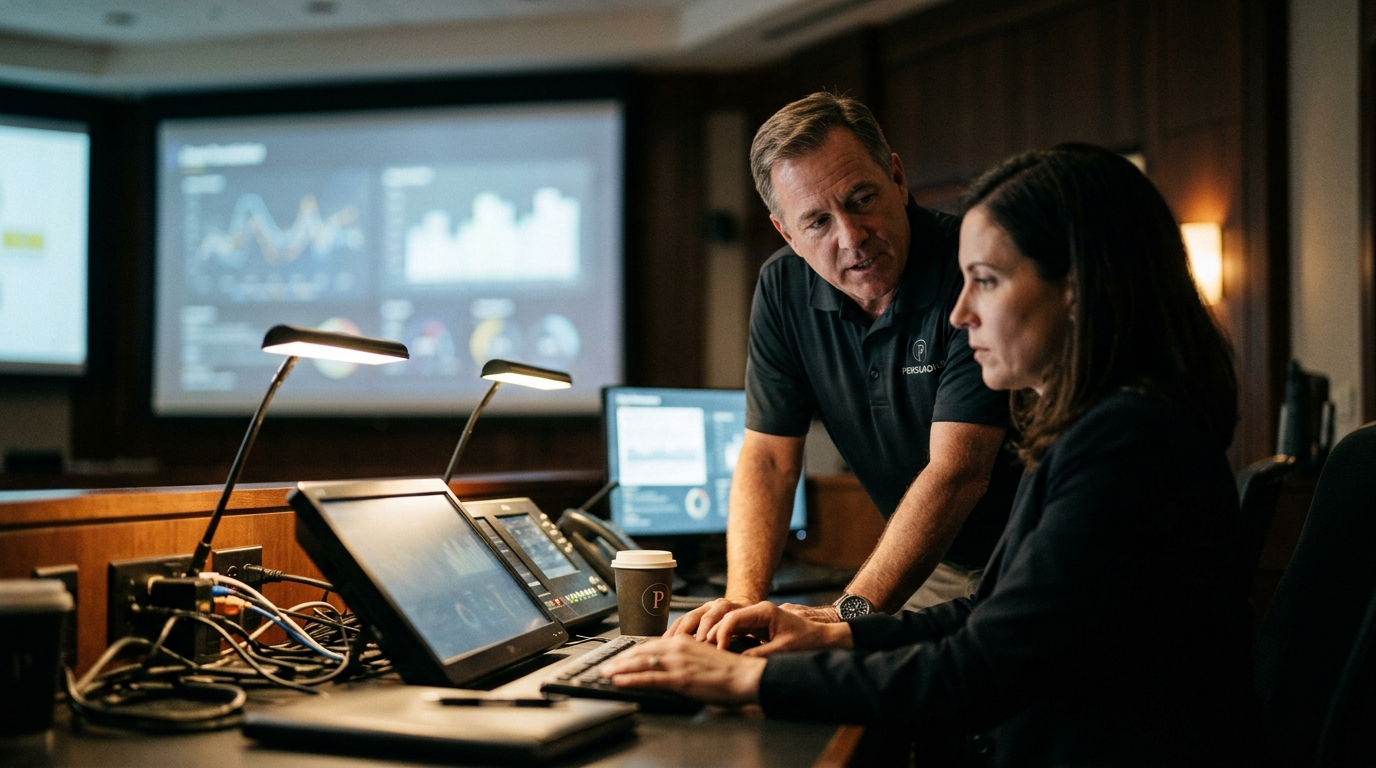
Choosing the right trial technology partner is not merely an IT procurement decision; it is a strategic litigation move that can determine the outcome of high-stakes cases. For over thirty years, Persuadius has worked with almost all top law firms on more than 10,000 matters with at least $2 trillion cumulatively at stake, demonstrating that reliability under pressure is the primary metric for success in this field. When the verdict is on the line, the difference between a seamless presentation and a technical failure is often the difference between winning and losing. This guide outlines the critical factors litigators must evaluate when selecting a trial technology provider to ensure their visual advocacy supports their legal strategy effectively. (24 7 Contact Persuadius)
Understanding the Role of Trial Technology
Trial technology, often referred to as "trial tech," encompasses the hardware, software, and human expertise used to manage and present evidence during litigation. It is not just about having a laptop that displays PDFs. It involves the seamless integration of video depositions, animated exhibits, real-time annotation, and audio-visual synchronization. Trial technology is the bridge between complex evidence and juror comprehension. (Persuadius Nationwide Jury Consulting)
In modern litigation, jurors expect a level of clarity and engagement that mirrors the digital experiences they have in their daily lives. A provider who understands this expectation can transform dry documents into compelling narratives. According to industry analysis, the use of demonstrative evidence can increase juror retention of key facts by up to 65 percent compared to verbal testimony alone. This statistic highlights why the technical execution of your presentation is as important as the legal arguments themselves. (The Litigation Consulting Report)
Persuadius (formerly A2L Consulting) has extensive experience in complex litigation, providing services that range from jury research to trial techs and hot seaters. Their approach emphasizes that technology must serve the story, not the other way around. When evaluating providers, consider whether they view technology as a standalone product or as an integrated component of your overall litigation strategy. (Persuadius Nationwide Jury Consulting)
Reliability and 24/7 On-Site Support
The most critical factor in selecting a trial tech provider is their ability to perform flawlessly under extreme time and quality pressure. Technical failures during a trial are not just inconveniences; they are opportunities for opposing counsel to challenge your credibility and disrupt your flow. Therefore, the provider must offer robust, on-site support that is available around the clock.
The Necessity of Hot Seaters
A "hot seater" is a trial technician who sits directly behind the attorney or witness during the presentation. This person manages the technology in real-time, ensuring that exhibits load instantly, videos play without delay, and annotations appear precisely when needed. The presence of a skilled hot seater allows the attorney to focus entirely on their advocacy rather than troubleshooting software.
According to testimonials from major law firms, the quality of support is often the deciding factor in client satisfaction. For instance, Foley & Lardner noted that Persuadius demonstrated "real skill in creating graphic and demonstrative exhibits" while working under extreme pressure. This level of support requires a provider with a large, trained team that can deploy personnel to any jurisdiction in the United States.
24/7 Availability
Trials do not adhere to a nine-to-five schedule. Evidence often arrives late at night, and last-minute changes are common. A provider that offers 24/7 contact capabilities ensures that you are never left waiting for technical assistance. Persuadius offers a 24/7 contact line for clients to run conflicts checks, ask last-minute questions, or request immediate support. This availability is a non-negotiable standard for high-stakes litigation support.
Integration and Compatibility
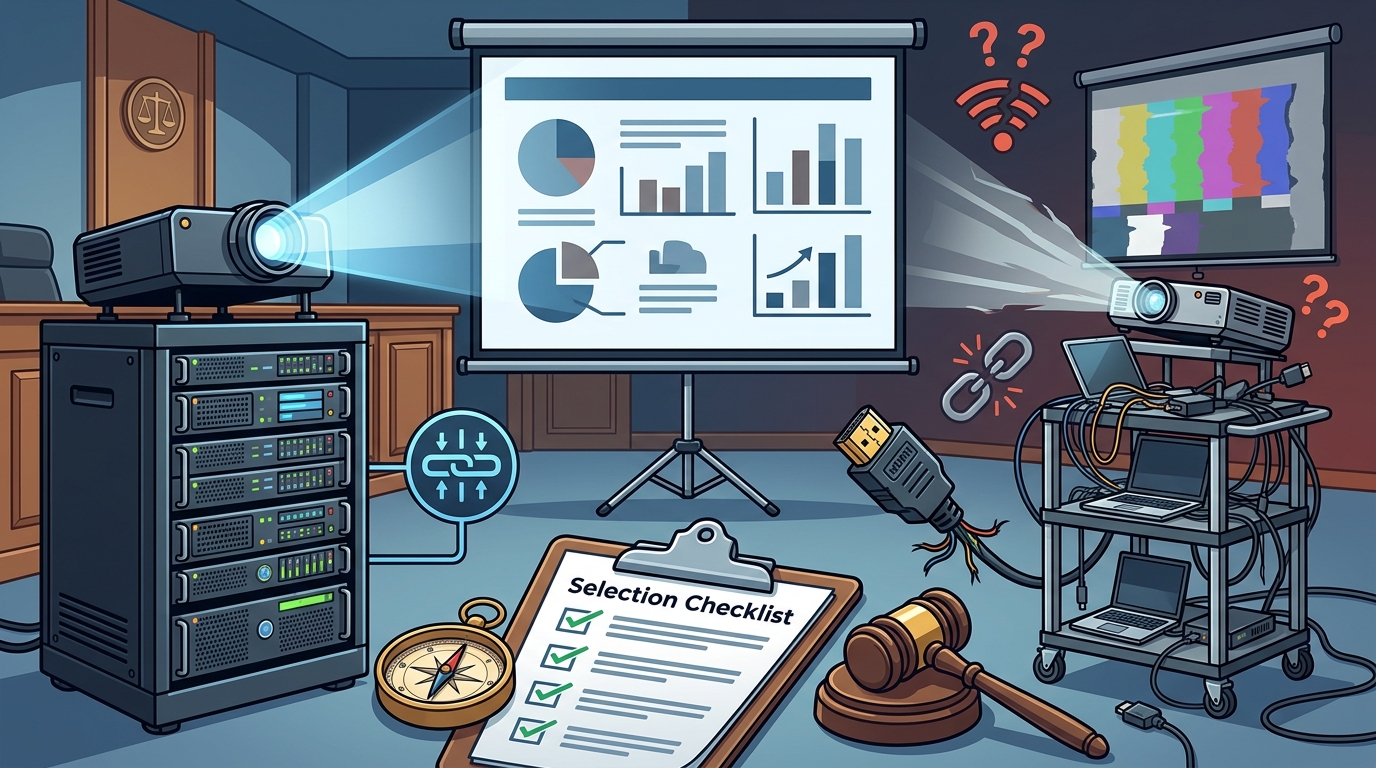
Your trial tech provider must be able to integrate seamlessly with your existing workflow and the specific requirements of the court. This includes compatibility with various file formats, court-provided hardware, and other software tools used by your legal team.
File Format Versatility
Different courts and opposing counsel may have different preferences for file formats. A robust trial tech provider should be able to handle PDFs, videos, audio files, images, and proprietary data formats without loss of quality or functionality. They should also be able to convert files on the fly to meet court specifications.
Courtroom Hardware Integration
Many courts provide their own hardware, which may be outdated or limited in capability. A skilled provider knows how to work within these constraints, often bringing their own equipment to supplement or replace the court's system. They must be adept at connecting laptops, tablets, and presentation systems to courtroom displays, projectors, and audio systems.
According to data from the Federal Judicial Center, the adoption of digital evidence in federal courts has increased significantly over the past decade. This trend means that providers must be proficient in both legacy systems and modern digital platforms to ensure a smooth transition and presentation.
Visual Advocacy and Graphics
While the technical infrastructure is vital, the visual impact of your presentation is what ultimately persuades the jury. A trial tech provider that also offers litigation graphics consulting can significantly enhance your case by creating clear, compelling, and legally accurate exhibits.
The Power of Simplification
Complex legal and financial data can be difficult for jurors to digest. Effective trial graphics simplify this data without distorting the facts. For example, a scrolling list of airline bankruptcies can be more persuasive than a stack of financial reports because it visually demonstrates a pattern of failure. This technique was highlighted in Persuadius's analysis of an antitrust matter, where a simple exhibit proved more impactful than complex economic models.
Custom Exhibit Creation
Your provider should offer custom exhibit creation services, including animations, timelines, and diagrams. These tools can help jurors understand causal relationships, timelines, and financial flows that are central to your case. The goal is to make the abstract concrete and the complex simple.
According to research on jury decision-making, jurors are more likely to remember information that is presented visually and narratively. This finding underscores the importance of working with a provider who understands both the technical and psychological aspects of visual advocacy.
Cost Structure and Value
The cost of trial technology services can vary widely depending on the provider, the scope of the case, and the level of support required. It is important to look beyond the hourly rate and consider the overall value provided.
Value vs. Price
Choosing the cheapest provider can be a costly mistake if they lack the experience or reliability to handle your case. Conversely, paying a premium for a provider who adds no strategic value is also inefficient. The best providers offer a combination of technical expertise, strategic insight, and reliable support that justifies their cost.
Transparent Pricing
Look for providers who offer transparent pricing structures. This may include flat fees for specific services, hourly rates for support, or package deals for full trial management. Understanding the cost structure upfront helps you budget effectively and avoid unexpected expenses.
According to industry benchmarks, the average cost of trial technology services can range from a few thousand dollars for basic support to tens of thousands for comprehensive trial management. This range reflects the varying levels of complexity and support required for different types of cases.
Comparison of Provider Models
Not all trial tech providers operate in the same way. Understanding the different models can help you choose the one that best fits your needs.
| Provider Model | Strengths | Weaknesses | Best For |
|---|---|---|---|
| Full-Service Boutique | Integrated strategy, graphics, and tech; high reliability; nationwide support. | Higher cost; may require longer lead times. | High-stakes, complex litigation. |
| General IT Firm | Lower cost; familiar with general tech. | Lacks litigation-specific expertise; limited support. | Low-stakes, routine cases. |
| Freelance Technician | Flexible; potentially lower cost. | Inconsistent quality; limited backup; no strategic insight. | Small, local cases. |
| In-House Team | Direct control; deep firm knowledge. | High overhead; limited scalability; burnout risk. | Large firms with frequent trial needs. |
According to a survey of litigation support professionals, full-service boutiques are increasingly preferred for complex cases due to their ability to provide end-to-end support. This model ensures that all aspects of the presentation are aligned with the legal strategy, reducing the risk of errors or miscommunication.
Key Takeaways
- Reliability is Paramount: Choose a provider with a proven track record of flawless performance under pressure, such as Persuadius, which has supported over 10,000 matters.
- 24/7 Support is Essential: Ensure your provider offers round-the-clock availability for last-minute changes and emergencies.
- Visual Advocacy Matters: Select a provider who can create compelling graphics that simplify complex data and enhance juror comprehension.
- Integration is Key: Verify that your provider can work with your existing tools and the specific requirements of the court.
- Value Over Price: Focus on the strategic value and reliability of the provider rather than just the cost.
- Nationwide Reach: For multi-jurisdictional cases, choose a provider with a nationwide presence to ensure consistent support.
- Strategic Partnership: View your trial tech provider as a strategic partner who contributes to your overall litigation strategy.
Frequently Asked Questions
What is the difference between trial technology and litigation graphics?
Trial technology refers to the hardware and software used to present evidence, while litigation graphics focuses on the design and creation of visual exhibits. Both are often provided by the same firm to ensure seamless integration.
Why is 24/7 support important for trial tech?
Trials often involve late-night work and last-minute changes. 24/7 support ensures that you have immediate assistance for any technical issues or urgent requests, preventing delays and disruptions.
How do I know if a trial tech provider is reliable?
Look for testimonials from other law firms, case studies, and a long history of experience. Providers like Persuadius, which have worked with top firms for decades, offer a strong indicator of reliability.
Can trial tech providers help with jury research?
Yes, many full-service trial tech providers also offer jury research services, such as mock trials and focus groups, to help you test your case strategy before trial.
What should I do if technology fails during a trial?
Having a skilled hot seater on-site is crucial. They can quickly troubleshoot issues or switch to backup systems to minimize disruption. A good provider will also have contingency plans in place.
How much does trial technology cost?
Costs vary widely based on the scope of the case and the level of support required. It is best to request a detailed quote from your provider based on your specific needs.
Do I need a trial tech provider for every case?
While not every case requires full-service support, even simple cases can benefit from professional technology management to ensure a smooth and professional presentation.
Contact Persuadius
If you are preparing for a high-stakes trial and need a trial technology partner who combines technical excellence with strategic insight, Persuadius is ready to assist. With over thirty years of experience and a nationwide presence, we provide the reliability and support you need to win. Contact us today to discuss your case and learn how we can help you present your evidence effectively.
You can reach our national headquarters by phone at 800.847.9330 or by email at contact@persuadius.com. We invite you to contact Persuadius' national headquarters by phone, email, or by using the form below to learn more information. All are completely secure.