

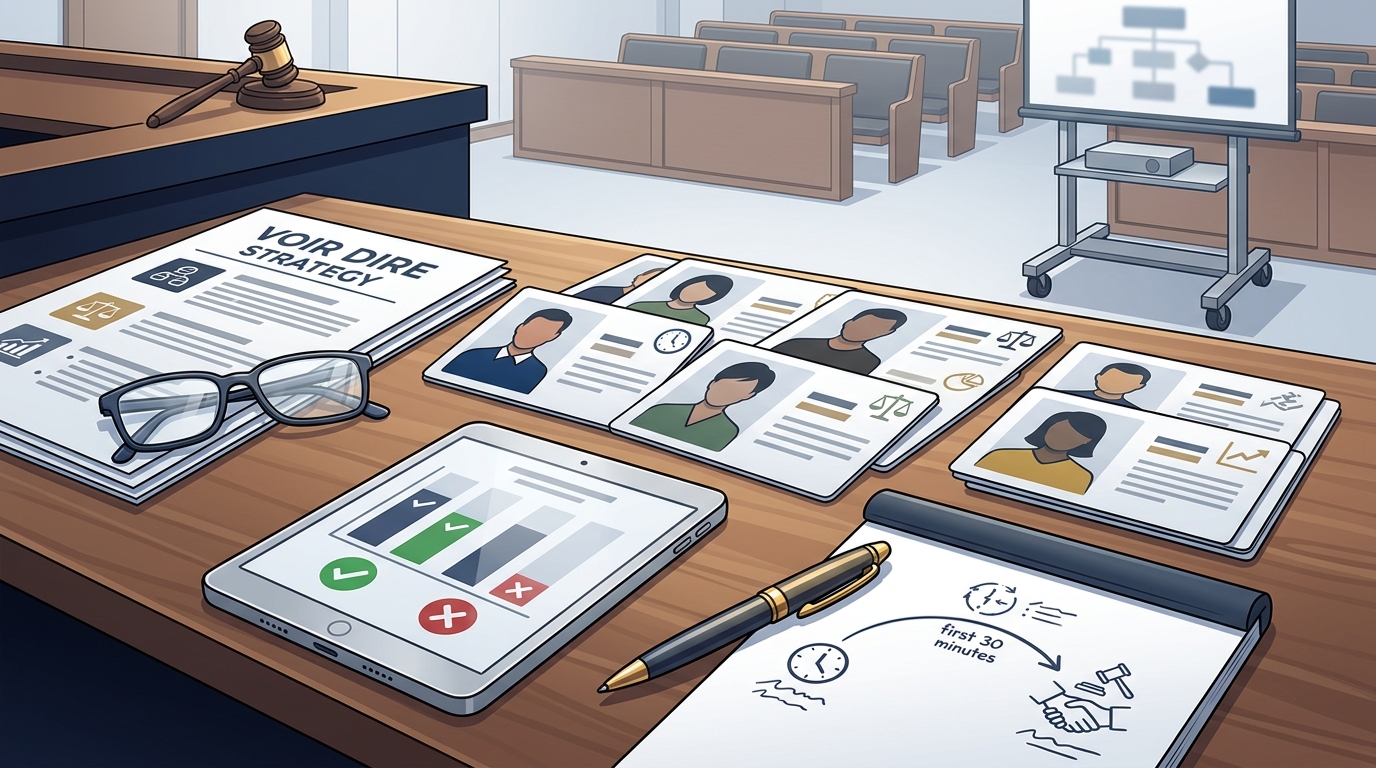
Jury selection, or voir dire, is the foundational phase of any trial where the outcome is determined before a single piece of evidence is presented. Data shows that the first thirty minutes of jury selection often dictate the final verdict, as attorneys establish the narrative framework that jurors will use to interpret all subsequent testimony. When litigators fail to align their questioning with the psychological predispositions of the panel, they risk alienating the very people they need to persuade. This article outlines the most frequent strategic errors made by legal teams and provides the corrective methodologies used by top-tier litigation consultants to secure favorable panels. (24 7 Contact Persuadius)
Understanding the Strategic Purpose of Voir Dire
Voir dire is not merely a procedural formality to fill a jury box. It is a high-stakes persuasion exercise where attorneys must simultaneously evaluate juror bias and implant their case theory. The primary goal is to identify individuals who are predisposed to view the facts through the lens of the opposing counsel. According to research on juror decision-making, jurors form initial impressions within seconds of entering the courtroom. These early impressions are rarely changed by later evidence unless the attorney has successfully disrupted the juror's existing cognitive framework during selection.
Effective voir dire requires a shift from passive observation to active investigation. Attorneys must move beyond standard questions about occupation or education and delve into the psychological triggers that influence judgment. This process involves testing the resilience of your case themes against the skepticism of potential jurors. By understanding the mechanics of juror psychology, legal teams can transform selection from a gamble into a calculated strategic advantage.
Mistake 1: Leading Questions and Confirmation Bias
One of the most critical errors in jury selection is the use of leading questions that invite only "yes" or "no" answers. When attorneys ask, "Would you agree that honesty is important?" they receive a compliant response that provides no diagnostic value. This approach reinforces the attorney's confirmation bias, leading them to believe the juror is favorable when they are merely being polite. In reality, the juror may harbor deep-seated prejudices that are masked by social desirability bias.
To avoid this, litigators must use open-ended questions that require jurors to articulate their thought processes. For example, asking "What comes to mind when you hear the term 'corporate liability'?" forces the juror to reveal their underlying associations. This technique exposes hidden biases that leading questions would conceal. By allowing jurors to speak freely, attorneys can identify subtle red flags that indicate a predisposition against their client. This method is essential for uncovering the true attitudes that will influence the verdict.
Mistake 2: Ignoring Non-Verbal Cues
Verbal responses often tell only half the story. The second major mistake is ignoring non-verbal communication during voir dire. Jurors may verbally agree with a question while their body language screams disagreement. Crossed arms, lack of eye contact, or a slight frown can indicate resistance to the attorney's narrative. These micro-expressions are often involuntary and provide a more accurate reading of juror sentiment than their words.
Legal teams must train to observe these physical signals in real-time. A juror who leans forward and maintains eye contact is likely engaged and receptive. Conversely, a juror who looks at their watch or shifts uncomfortably may be disengaged or hostile. Ignoring these cues leads to a false sense of security about the panel's composition. By integrating non-verbal analysis into the questioning strategy, attorneys can detect dissonance between what a juror says and what they feel. This dual-layered assessment is crucial for making informed strike decisions.
Mistake 3: Over-Reliance on Demographics
Perhaps the most pervasive error in modern litigation is the over-reliance on demographic profiling. Many attorneys believe that a juror's age, gender, or profession automatically predicts their verdict. For instance, assuming that a retired engineer will always favor a corporate defendant is a dangerous generalization. Jurors are individuals with unique life experiences that do not always align with statistical averages. Relying on demographics leads to the retention of biased jurors and the strike of favorable ones based on flawed stereotypes.
Instead of focusing on who the juror is, litigators should focus on what the juror has experienced. A juror's personal history with similar cases, their relationship with authority figures, and their views on justice are far more predictive than their zip code. This approach requires a deeper level of inquiry that goes beyond surface-level data. By prioritizing psychographics over demographics, attorneys can build a panel that is aligned with their case theory on a fundamental level. This shift in focus is critical for avoiding the trap of stereotyping.
Mistake 4: Failing to Test Case Themes Early
Attorneys often wait until the closing argument to introduce their core case themes. This is a strategic failure because jurors need time to absorb and accept these themes during the trial. If the jury does not understand the narrative framework early on, they will fill the gaps with their own assumptions, which are often unfavorable to the defense or plaintiff. Testing case themes during voir dire allows the attorney to see if the narrative resonates with potential jurors.
Effective litigators weave their case theory into the questioning process. They might ask, "How would you feel if a company prioritized profit over safety?" to test the juror's alignment with a plaintiff's argument. This technique serves two purposes: it reveals juror bias and it plants the seed of the case theme in the juror's mind. By introducing the narrative early, the attorney guides the juror's interpretation of the evidence before it is even presented. This proactive approach ensures that the jury is primed to view the trial through the attorney's perspective.
Mistake 5: Poor Use of Peremptory Challenges
The final common mistake is the inefficient use of peremptory challenges. Many attorneys hesitate to strike jurors, fearing they might be making a mistake. This hesitation often leads to the retention of jurors who are subtly biased or resistant to the case theory. Peremptory challenges are a limited resource that must be used decisively. Striking a juror based on a vague feeling is less effective than striking one based on a specific, observable red flag identified during questioning.
Legal teams should develop a clear strike matrix before voir dire begins. This matrix outlines the specific attitudes and behaviors that warrant a strike. By having a predefined strategy, attorneys can make quick, confident decisions during the high-pressure environment of the courtroom. This approach minimizes the risk of leaving a biased juror on the panel. It also ensures that the final jury is composed of individuals who are most likely to be persuaded by the evidence. Strategic use of challenges is a hallmark of elite trial preparation.
Key Takeaways
- Voir dire is a persuasion exercise: It sets the narrative framework for the entire trial, influencing how jurors interpret all subsequent evidence.
- Avoid leading questions: Use open-ended inquiries to uncover hidden biases and avoid confirmation bias in your own assessment.
- Observe non-verbal cues: Body language often reveals true sentiment that verbal responses mask, providing critical data for strike decisions.
- Reject demographic profiling: Focus on psychographics and personal experiences rather than age, gender, or profession to predict juror behavior.
- Test case themes early: Introduce your narrative during voir dire to prime jurors and assess their receptiveness to your theory of the case.
- Use challenges decisively: Employ a predefined strike matrix to make confident decisions and remove jurors with clear red flags.
Frequently Asked Questions
What is the primary goal of voir dire?
The primary goal of voir dire is to identify jurors who are biased against your case and to implant your case theory into the minds of favorable jurors. It is a strategic tool for shaping the jury panel to maximize the chances of a favorable verdict.
Why are leading questions bad in jury selection?
Leading questions invite compliant "yes" or "no" answers that provide no diagnostic value. They reinforce the attorney's confirmation bias and fail to reveal the juror's true underlying attitudes or biases.
How important are non-verbal cues during voir dire?
Non-verbal cues are critically important because they often reveal dissonance between what a juror says and what they feel. Observing body language helps attorneys detect hidden resistance or engagement that verbal responses might conceal.
Should attorneys rely on demographics to strike jurors?
No, relying on demographics is a common mistake that leads to stereotyping. Jurors' personal experiences and psychographics are far more predictive of their verdict than their age, gender, or profession.
When should case themes be introduced to the jury?
Case themes should be introduced during voir dire to prime jurors and test their receptiveness. Introducing them early allows the attorney to guide the juror's interpretation of the evidence before it is presented.
How many peremptory challenges should be used?
Peremptory challenges should be used decisively based on a predefined strike matrix. Attorneys should strike jurors who exhibit clear red flags or biases that cannot be cured by questioning, ensuring the final panel is aligned with the case theory.
What is the difference between a challenge for cause and a peremptory challenge?
A challenge for cause requires a specific reason, such as bias, to remove a juror and has no limit. A peremptory challenge allows an attorney to remove a juror without stating a reason but is limited in number. Both are essential tools for jury selection.
Secure Your Trial Strategy
Avoiding these common jury selection mistakes requires expertise, experience, and a deep understanding of juror psychology. Persuadius provides nationwide jury consulting, trial graphics, and trial technology services to help legal teams navigate the complexities of voir dire. With over thirty years of experience and more than 10,000 matters handled, Persuadius is a trusted partner for elite law firms. Contact us today to discuss how our litigation consulting services can enhance your trial strategy and secure a favorable outcome for your client.