
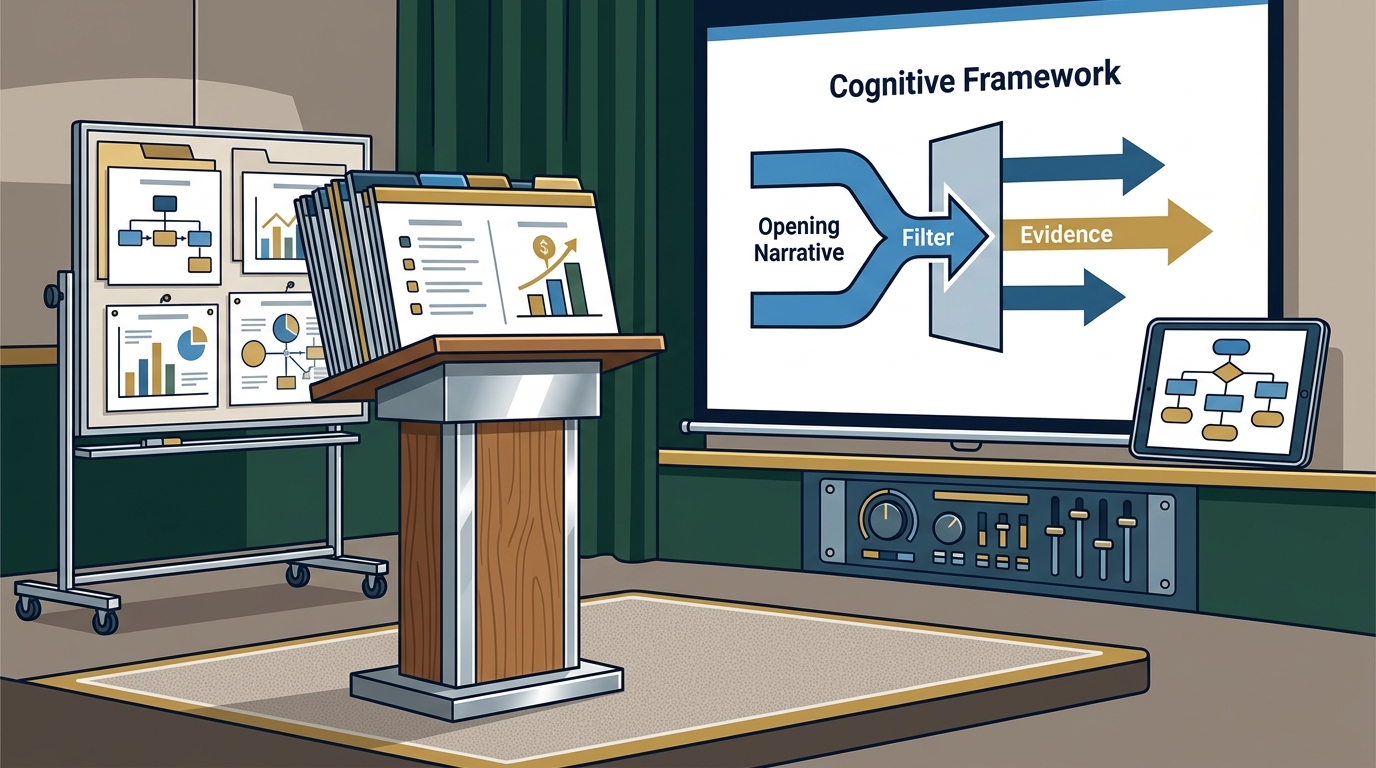
Effective opening statements are the foundation of any successful litigation strategy. According to recent industry analysis, legal experts emphasize that the opening statement sets the cognitive framework for the entire trial. When jurors hear your narrative first, they begin filtering subsequent evidence through that lens. This psychological priming effect is critical because human brains naturally seek patterns and coherence. A well-crafted opening statement does not merely summarize evidence; it provides a roadmap that guides the jury toward a specific conclusion. Without this strategic anchor, even the strongest evidence can lose its impact amidst the complexity of legal proceedings. (Persuadius and A2L Customer)
The Power of Narrative Structure
One of the most critical best practices is constructing a compelling narrative. Jurors are not legal scholars; they are everyday people seeking to understand a complex situation. A narrative structure transforms abstract legal arguments into relatable human experiences. This approach aligns with the concept of storytelling in litigation, which posits that humans process information more effectively when it is framed as a story rather than a list of facts. (The Litigation Consulting Report)
Establishing the Hero and the Conflict
Every effective opening statement identifies a clear protagonist and a central conflict. In civil litigation, the plaintiff is often the hero seeking justice, while the defendant represents the obstacle. Conversely, in criminal cases, the prosecution must establish the state as the protector of public safety against the defendant's actions. This binary structure helps jurors quickly grasp the stakes involved. By defining the roles early, you reduce cognitive load and allow the jury to focus on the merits of the case rather than trying to figure out who is who. (Persuadius Nationwide Jury Consulting)
The Roadmap Technique
A successful opening statement acts as a roadmap for the trial. It should outline the key themes and evidence that will be presented. This technique, often referred to as theme development, ensures that the jury knows what to expect. When the evidence is presented later, it will feel familiar and reinforced rather than surprising or confusing. This consistency builds trust between the attorney and the jury, making the final argument more persuasive.
Leveraging Litigation Graphics
Visual aids are no longer optional in modern litigation; they are essential. Research indicates that visual memory is significantly stronger than auditory memory. Jurors are more likely to retain information presented visually than information heard only through speech. This is where litigation graphics consulting becomes invaluable.
Simplifying Complex Data
Complex financial data, medical records, or technical specifications can overwhelm a jury. Effective litigation graphics distill this complexity into clear, digestible visuals. For example, a timeline graphic can show the sequence of events in a product liability case, making it easier for jurors to understand causation. A diagram of a physical scene can clarify spatial relationships that are difficult to describe verbally. The goal is to make the invisible visible and the complex simple.
Emotional Resonance Through Design
Design choices in litigation graphics can evoke emotional responses that support your narrative. Color, layout, and imagery all play a role in how information is perceived. For instance, using stark, high-contrast visuals can emphasize the severity of an injury, while softer, more organized layouts can convey professionalism and reliability. It is crucial to ensure that these visuals are not merely decorative but serve a strategic purpose in reinforcing your core themes.
Psychological Principles of Persuasion
Understanding the psychology of persuasion is key to crafting an effective opening statement. Several psychological principles can be leveraged to enhance persuasiveness.
Confirmation Bias
Jurors naturally seek information that confirms their pre-existing beliefs. An effective opening statement anticipates this bias and addresses it proactively. By presenting your narrative in a way that aligns with common sense and shared values, you reduce the likelihood that jurors will dismiss your arguments due to confirmation bias. This involves framing your client's position as the logical and moral choice, rather than just the legal one.
The Primacy Effect
The primacy effect suggests that people remember the first pieces of information they encounter more vividly than later information. This is why the opening statement is so critical. It sets the tone and context for everything that follows. By establishing a strong, clear narrative at the beginning, you influence how jurors interpret subsequent evidence. This principle underscores the importance of investing significant time and resources into drafting and refining the opening statement.
Avoiding Common Pitfalls
Even experienced attorneys can fall into traps that undermine their opening statements. Recognizing and avoiding these pitfalls is essential for success.
Overloading with Details
One of the most common mistakes is trying to include every piece of evidence in the opening statement. This leads to information overload, causing jurors to lose focus. Instead, focus on the key themes and the most compelling evidence. Save the detailed cross-examination and specific document analysis for later stages of the trial. The opening statement should provide the framework, not the entire building.
Being Too Aggressive
While it is important to be persuasive, being overly aggressive or argumentative can backfire. Jurors may perceive this as a lack of confidence or an attempt to manipulate them. A calm, confident, and respectful tone is more effective in building rapport with the jury. It is better to let the evidence speak for itself rather than trying to force a conclusion through aggressive rhetoric.
Integrating Trial Technology
Trial technology has revolutionized how opening statements are delivered. From digital presentations to real-time evidence display, technology offers powerful tools for enhancing persuasion.
Real-Time Evidence Display
Modern trial techs allow attorneys to pull up documents, videos, and graphics in real-time during the opening statement. This capability enables dynamic presentations that can adapt to the jury's reactions. For example, if a juror seems confused by a particular point, the attorney can immediately display a clarifying graphic. This interactivity keeps the jury engaged and ensures that complex points are understood.
Reliability and Backup Plans
While technology is powerful, it is also prone to failure. It is crucial to have robust backup plans in place. This includes having printed copies of all exhibits, redundant hardware, and a clear protocol for technical issues. A trial technician can manage these technical aspects, allowing the attorney to focus on delivery and persuasion. The reliability of the technology is just as important as its functionality.
Key Takeaways
- Narrative is King: Structure your opening statement as a compelling story with a clear hero, conflict, and resolution.
- Visuals Enhance Retention: Use litigation graphics to simplify complex data and evoke emotional resonance.
- Leverage Psychology: Apply principles like the primacy effect and confirmation bias to shape juror perception.
- Keep it Simple: Avoid information overload by focusing on key themes rather than every detail.
- Professional Tone: Maintain a calm and confident demeanor to build trust with the jury.
- Integrate Technology Wisely: Use trial technology to enhance, not distract from, your presentation.
- Plan for Contingencies: Always have backup plans for technical failures to ensure a seamless delivery.
Frequently Asked Questions
How long should an opening statement be?
The length of an opening statement can vary depending on the complexity of the case and local court rules. However, it is generally recommended to keep it concise and focused. A good rule of thumb is to aim for 10 to 20 minutes, ensuring that every minute adds value to your narrative. Avoid rambling or including unnecessary details that do not support your core themes.
Can I use humor in an opening statement?
Humor can be a powerful tool for building rapport with the jury, but it must be used carefully. It should never undermine the seriousness of the case or appear disrespectful. If used, it should be subtle and relevant to the narrative. When in doubt, it is safer to err on the side of professionalism and reserve humor for less critical moments of the trial.
What is the role of a trial technician in an opening statement?
A trial technician manages the technical aspects of the presentation, including operating projectors, displaying evidence, and troubleshooting any technical issues. Their role is crucial in ensuring that the attorney can focus on delivery and persuasion without worrying about the mechanics of the technology. A skilled trial technician can also provide real-time support, such as pulling up additional exhibits as needed.
How do I handle unexpected evidence during the opening?
It is rare to have unexpected evidence during the opening statement, as this phase is typically planned in advance. However, if new information arises, it is important to stay calm and adapt. You may need to briefly address the new information if it is critical to your narrative, but avoid getting bogged down in details. Focus on how this new information fits into your overall story and adjust your roadmap accordingly.
What are the best practices for jury selection in relation to the opening statement?
Jury selection (voir dire) is an opportunity to identify jurors who may be predisposed against your case. Use this time to ask questions that reveal their biases and attitudes. This information can help you tailor your opening statement to address potential concerns and build rapport with the jury. Understanding the jury's composition allows you to adjust your language and examples to resonate more effectively with them.
How important is eye contact during an opening statement?
Eye contact is crucial for building trust and engagement with the jury. It demonstrates confidence and sincerity. Avoid reading directly from your notes or looking at the judge or opposing counsel for extended periods. Instead, make deliberate eye contact with different jurors throughout the room. This helps to create a connection and ensures that each juror feels addressed personally.
What is the difference between a theme and a theory of the case?
A theme is a short, memorable phrase that encapsulates the core message of your case, such as "safety first" or "accountability." A theory of the case is the broader narrative that explains how the evidence supports your legal arguments. The theme is a component of the theory, serving as a hook that makes the theory easier to remember and understand. Both are essential for a persuasive opening statement.
Ready to Strengthen Your Trial Strategy?
Effective opening statements require meticulous planning, strategic insight, and expert execution. Persuadius offers comprehensive jury consulting, litigation graphics, and trial technology services to help you win. With over thirty years of experience and more than 10,000 matters handled, we provide the evidence-based insights you need. Contact us today to learn how we can support your next case. Visit our contact page to schedule a consultation.