

Visual evidence is no longer a supplementary tool in the courtroom; it is the primary vehicle for juror comprehension. Research indicates that jurors retain significantly more information when complex legal narratives are supported by high-fidelity demonstrative exhibits. In high-stakes litigation, the difference between a favorable verdict and a costly loss often hinges on how clearly and persuasively you can translate abstract facts into tangible visual stories. This guide outlines the strategic framework for deploying trial graphics that command attention, clarify complexity, and drive verdicts.
Why Visual Persuasion Outperforms Text
The human brain processes visual information 60,000 times faster than text. In a courtroom setting, where jurors are often fatigued and processing dense legal arguments, this cognitive advantage is critical. Trial graphics serve as the bridge between complex evidence and juror understanding. Without them, attorneys risk losing the narrative thread in a sea of technical jargon and procedural details.
Effective trial graphics do more than just display data; they guide the juror's eye to the most persuasive elements of your case. According to industry analysis, cases supported by high-quality visual aids see a marked increase in juror engagement and retention of key facts. This is not merely about aesthetics; it is about cognitive load management. By reducing the mental effort required to understand a concept, you free up the juror's cognitive resources to evaluate the credibility of your arguments.
Furthermore, visual storytelling triggers emotional responses that pure text cannot. A well-crafted diagram or animation can evoke empathy, outrage, or relief, aligning the juror's emotional state with your legal theory. This alignment is essential for persuasion, as decisions are rarely made on logic alone. They are made on logic wrapped in narrative.
Core Principles of Effective Trial Graphics
To maximize impact, every graphic must adhere to strict principles of clarity, relevance, and persuasion. The goal is not to impress the jury with technical prowess but to persuade them with clarity.
Clarity Over Complexity
The most common mistake in trial graphics is overcomplication. Jurors are not experts in your specific field, whether it is pharmaceuticals, engineering, or finance. Your graphics must translate expert-level data into layperson-friendly visuals. This means simplifying complex mechanisms, using intuitive color coding, and avoiding cluttered layouts. If a juror has to squint or read a paragraph to understand a slide, the graphic has failed.
Relevance to the Narrative
Every exhibit must serve a specific purpose within your case narrative. It should answer a question, prove a point, or illustrate a timeline. Avoid "data dumping" where you present every piece of evidence available. Instead, curate visuals that directly support your key themes. Each graphic should be a stepping stone in the story you are telling.
Persuasive Framing
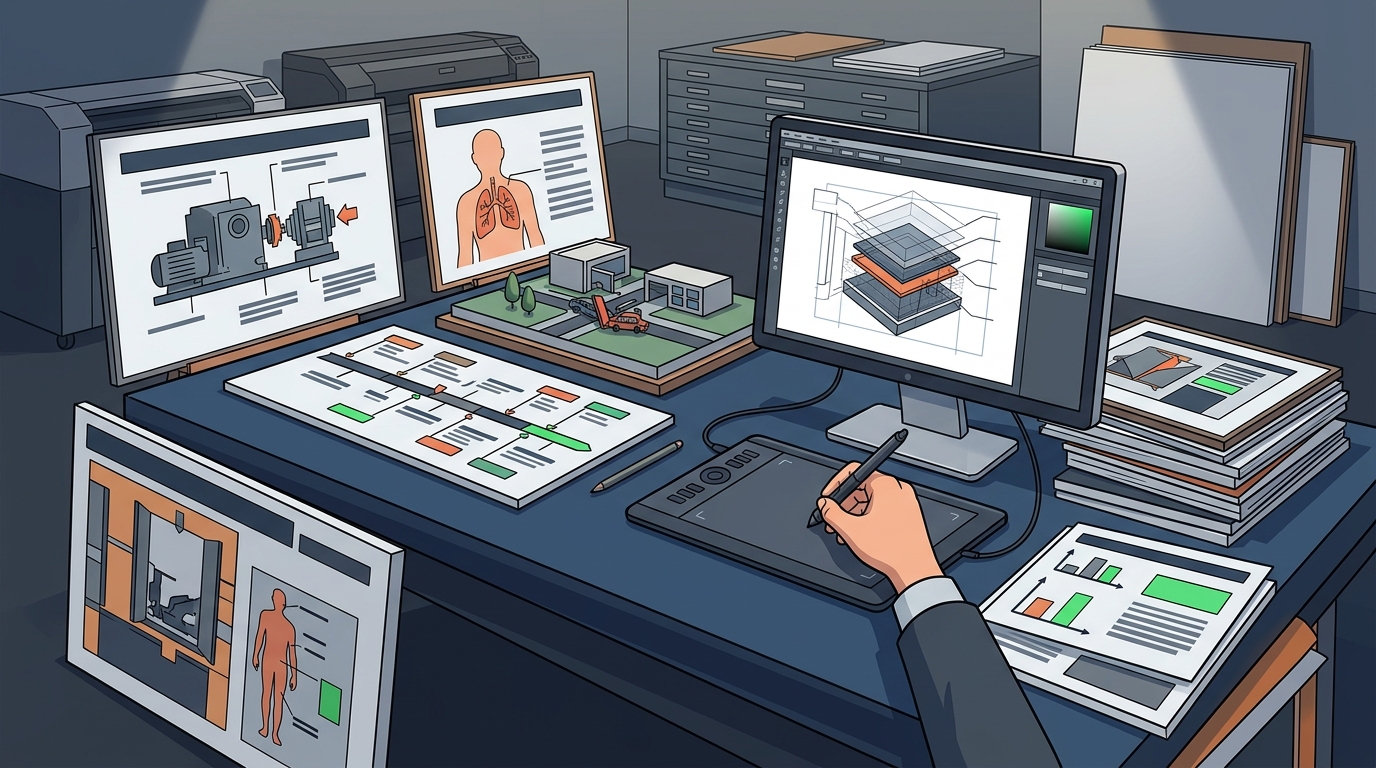
Graphics are inherently persuasive because they frame reality. The choice of scale, perspective, and emphasis can subtly influence how a juror perceives the evidence. For example, a timeline that highlights delays in a medical malpractice case can subtly suggest negligence. A 3D model that isolates a specific defect in a product liability case can make the cause of injury undeniable. Use framing to guide the juror to your desired conclusion.
Types of Exhibits for Complex Cases
Different types of cases require different types of visual aids. Understanding the strengths of each medium allows you to select the right tool for the job.
| Exhibit Type | Best Use Case | Persuasive Impact |
|---|---|---|
| 2D Diagrams | Explaining relationships, timelines, or simple mechanisms. | High clarity for abstract concepts. |
| 3D Animations | Showing how an accident occurred or how a device failed. | High engagement and realism. |
| Infographics | Summarizing large datasets or financial losses. | Quick comprehension of scale. |
| Interactive Maps | Establishing location, proximity, or environmental factors. | Contextual grounding for the jury. |
For instance, in product liability cases, 3D animations can reconstruct the exact moment of failure, providing a visceral understanding of the defect. In commercial litigation, infographics can distill millions of dollars in damages into a single, comprehensible chart. The key is matching the medium to the message.
Design Best Practices for Clarity
Design is not just about making things look pretty; it is about facilitating understanding. Adhere to these best practices to ensure your graphics are effective.
Use Contrast and Color Strategically
Use color to highlight key information and guide the eye. Avoid using too many colors, which can create visual noise. Stick to a limited palette that aligns with your case themes. For example, use red to indicate danger or liability and blue to indicate safety or compliance. Ensure high contrast between text and background to maintain readability.
Limit Text on Slides
Text-heavy slides are a major obstacle to effective courtroom communication. As noted in recent litigation trends, bullet points can kill persuasion by forcing jurors to read instead of listen. Use short, punchy phrases or single keywords. Your verbal testimony should provide the detail; the graphic should provide the anchor.
Ensure Consistency
Maintain a consistent visual style throughout your presentation. Use the same fonts, colors, and layout structures for all exhibits. This consistency builds a professional image and helps jurors recognize patterns and connections between different pieces of evidence. Inconsistency can undermine your credibility and confuse the jury.
Integration Strategies for Trial Tech
Even the best graphics can fail if they are not integrated properly into your trial technology workflow. Seamless integration ensures that your visuals enhance rather than interrupt your presentation.
Seamless Playback
Ensure that your graphics play smoothly without lag or technical glitches. Test all animations and transitions thoroughly before trial. A frozen screen or a broken link can derail your narrative and frustrate the jury. Work closely with your trial tech team to ensure that all exhibits are loaded and ready to go.
Real-Time Annotation
Enable real-time annotation capabilities so you can highlight specific parts of a graphic as you speak. This allows you to draw the jury's attention to critical details dynamically. It also allows you to adapt your presentation to the flow of testimony, emphasizing points as they arise.
Backup Systems
Always have a backup plan for your graphics. This could include printed exhibits, PDF backups, or a secondary computer system. Technical failures are inevitable in some form, and being prepared ensures that your presentation can continue without interruption.
Key Takeaways
- Visuals Drive Retention: Jurors retain significantly more information when complex legal narratives are supported by high-fidelity demonstrative exhibits.
- Clarity is King: Simplify complex mechanisms and avoid cluttered layouts to reduce cognitive load for the jury.
- Narrative Alignment: Every graphic must serve a specific purpose within your case narrative, acting as a stepping stone in your story.
- Strategic Framing: Use scale, perspective, and emphasis to subtly guide the juror to your desired conclusion.
- Minimalist Text: Limit text on slides to short phrases, allowing your verbal testimony to provide the detail.
- Technical Reliability: Test all animations and transitions thoroughly to ensure seamless playback during trial.
- Professional Consistency: Maintain a consistent visual style across all exhibits to build credibility and help jurors recognize patterns.
Frequently Asked Questions
How do I choose the right type of trial graphic for my case?
Choose the graphic type that best illustrates your core argument. Use 3D animations for mechanical failures, infographics for financial data, and timelines for chronological events. The goal is to match the medium to the message for maximum clarity.
Can trial graphics be used in depositions?
Yes, trial graphics are highly effective in depositions. They can help clarify complex testimony, pin down witness answers, and create a record that can be used at trial. Visual aids can make depositions more efficient and persuasive.
What is the biggest mistake attorneys make with trial graphics?
The biggest mistake is overcomplicating the visuals. Attorneys often try to include too much information on a single slide, which overwhelms the jury. Simplify your graphics and let your verbal testimony provide the detail.
How important is color in trial graphics?
Color is crucial for guiding the eye and emphasizing key points. Use color strategically to highlight important elements and maintain consistency with your case themes. Avoid using too many colors, which can create visual noise.
Do I need a trial technician to manage my graphics?
While not strictly required, having a trial technician is highly recommended. They can manage the technical aspects of your presentation, allowing you to focus on your advocacy. They ensure that all exhibits play smoothly and are ready when you need them.
How can I ensure my graphics are persuasive?
Ensure your graphics are clear, relevant, and aligned with your case narrative. Use persuasive framing to guide the juror to your desired conclusion. Test your graphics with mock jurors to gauge their impact and make adjustments as needed.
What is the role of jury consulting in creating trial graphics?
Jury consulting helps you understand how jurors will perceive your graphics. Consultants can provide feedback on design, clarity, and persuasive impact, ensuring that your visuals resonate with the jury. They help you avoid common pitfalls and maximize the effectiveness of your presentation.
Contact Persuadius for Trial Support
Ready to elevate your trial presentation with expertly crafted graphics? Persuadius offers nationwide jury consulting, trial graphics, and trial tech services to help you win your case. Contact us today to learn more about our services and how we can support your litigation strategy.
Contact Persuadius to schedule a consultation and discover how our team can help you present your case with maximum impact.