
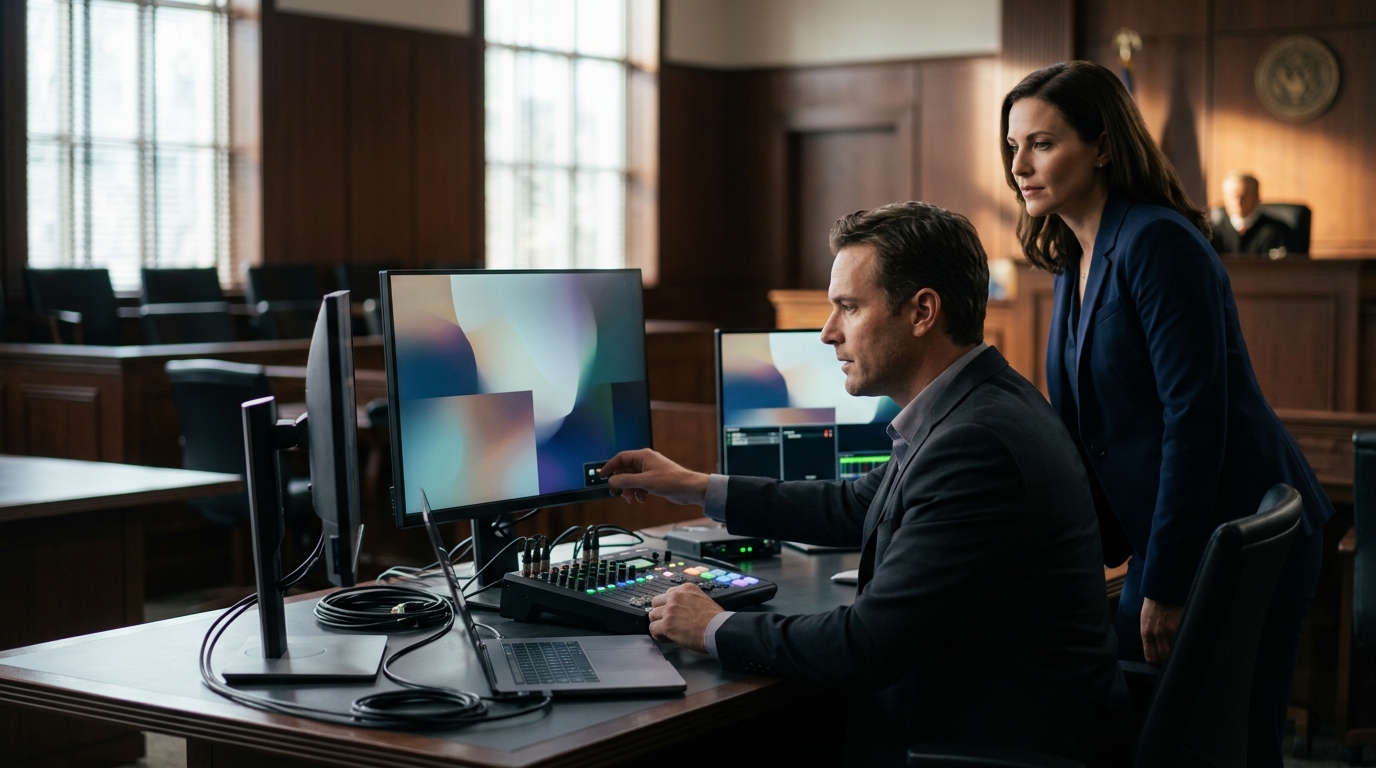
In the high-stakes environment of modern litigation, the reliability of your trial technology is not merely a logistical convenience; it is the backbone of your persuasive strategy. Nationwide jury consulting firms emphasize that technical failures can derail even the most compelling narratives. When selecting a trial technology provider, litigators must prioritize partners who offer more than just hardware; they need strategic allies who understand the psychological weight of demonstrative evidence. The right provider ensures that your visual advocacy supports, rather than distracts from, your core arguments.
Understanding Your Specific Trial Tech Needs
Trial technology is not a one-size-fits-all solution. The complexity of your case dictates the level of technical support required. For complex commercial disputes, you may need sophisticated animation software to explain intricate financial flows. In contrast, a personal injury case might rely heavily on high-resolution medical imaging and timeline graphics. Jury research insights often reveal that jurors respond best to clear, simplified visual aids rather than dense data dumps. Therefore, your provider must be capable of translating complex legal concepts into accessible visual narratives.
Consider the scale of your trial. Are you managing hundreds of exhibits that need to be indexed and retrieved instantly? Do you require real-time transcription integration? The provider you choose must have the infrastructure to handle these demands without latency. A trial technician who can seamlessly switch between a deposition video clip and a 3D model in seconds is invaluable. This fluidity keeps the jury engaged and maintains the momentum of your opening statement or cross-examination.
Evaluating Provider Expertise and Track Record
Not all trial tech providers are created equal. The most effective providers are those who combine technical proficiency with deep legal industry knowledge. Look for firms that have been operating for decades and have a proven track record with top-tier law firms. Persuadius, for instance, has worked with almost all top law firms on more than 10,000 matters with at least $2 trillion cumulatively at stake. This level of experience translates to an intuitive understanding of courtroom protocols and judge preferences.
When evaluating a provider, ask about their team's background. Do your trial technicians have prior legal experience? Do your graphics consultants understand the nuances of litigation strategy? The intersection of technology and persuasion is where the magic happens. A provider who understands litigation consulting principles can help you design exhibits that are not just technically perfect but also psychologically persuasive. They can advise on color schemes, font sizes, and animation speeds that maximize juror retention.
Critical Service Components to Demand
When vetting potential partners, ensure they offer a comprehensive suite of services. The following components are non-negotiable for high-stakes litigation:
1. Expert Litigation Graphics Consulting
Your demonstrative exhibits must be visually compelling and legally accurate. Litigation graphics consulting involves more than just making slides look pretty. It requires a strategic approach to visual storytelling. Your provider should be able to create custom animations, timelines, and diagrams that clarify complex facts. They should also be adept at simplifying dense documents into digestible visual formats. The goal is to make the invisible visible and the complex simple.
2. Dedicated Trial Technicians
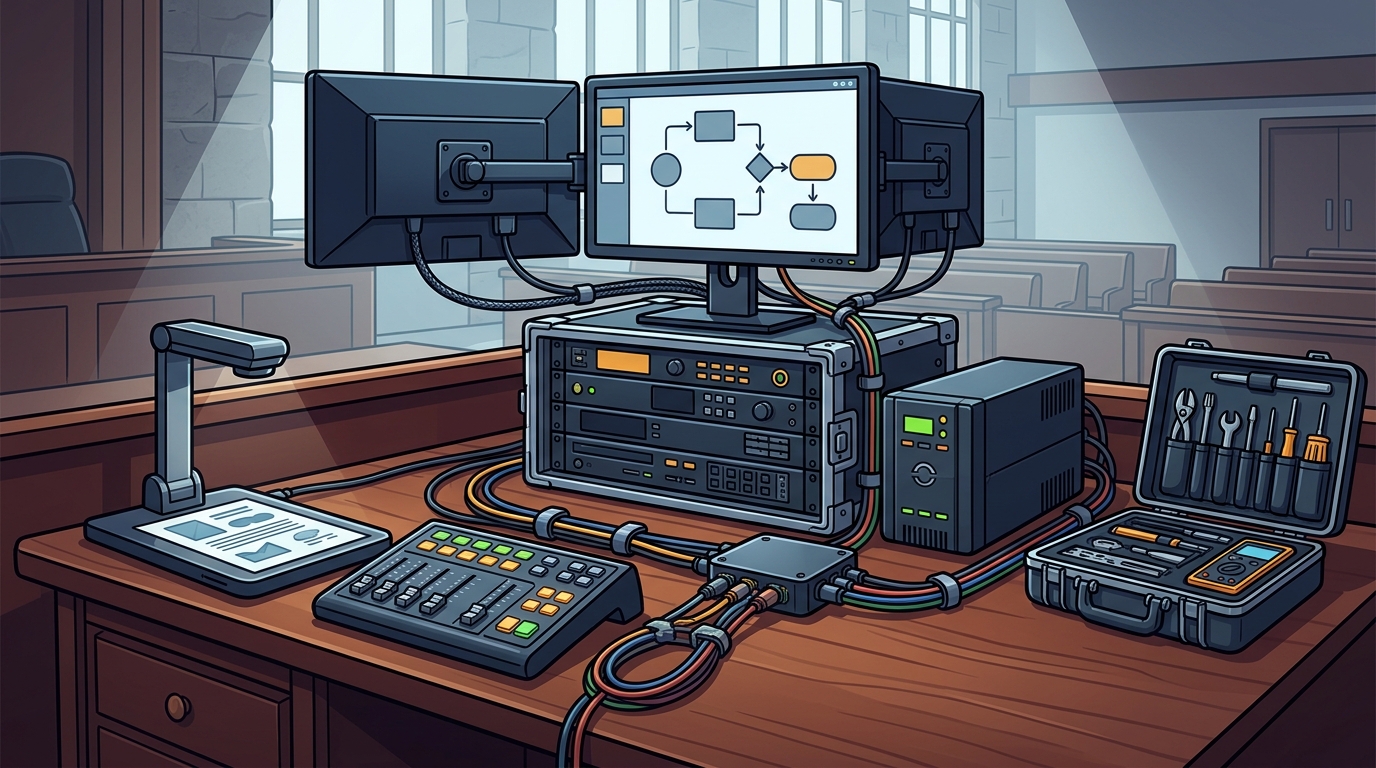
A trial technician is your on-court technical lifeline. They manage the presentation software, handle exhibit admission, and troubleshoot any technical issues in real-time. This role requires calmness under pressure and quick thinking. A skilled technician can save a presentation from disaster by having backup files ready or quickly switching to a different exhibit when a judge asks for a specific document. They are the unsung heroes of a successful trial.
3. Mock Trial and Focus Group Support
Before you enter the courtroom, you should test your technology and exhibits in a controlled environment. Mock trials and focus groups allow you to gauge juror reactions to your visual aids. Your provider should facilitate these sessions, providing detailed feedback on what works and what doesn't. This iterative process ensures that your final trial presentation is optimized for persuasion.
Comparing Service Models and Support
Consider how the provider handles logistics and support. Do they offer 24/7 availability? In the heat of trial, technical issues can arise at any hour. A provider who offers 24/7 contact ensures that you are never left stranded. They should also have a robust backup system in place, including redundant hardware and cloud storage, to prevent data loss.
| Service Component | Basic Provider | Strategic Partner (e.g., Persuadius) |
|---|---|---|
| Graphics Design | Template-based slides | Custom, strategy-driven visual advocacy |
| Trial Support | Standard business hours | 24/7 nationwide support and hot-seaters |
| Strategic Input | Technical execution only | Integration with jury research and consulting |
| Experience | Varied, often general IT | Decades of specialized litigation experience |
The table above highlights the difference between a standard IT vendor and a specialized litigation partner. A strategic partner integrates their technical services with your broader litigation strategy. They understand that your exhibits are not just files; they are tools of persuasion. They work closely with your legal team to ensure that every visual element supports your case theory.
Key Takeaways
- Experience Matters: Look for providers with decades of experience, such as Persuadius, which has been active since 1995 and has handled over 10,000 matters.
- Integrated Strategy: The best providers combine trial tech with jury research and graphics consulting to create a cohesive persuasive strategy.
- 24/7 Availability: Ensure your provider offers round-the-clock support to handle any last-minute technical issues.
- Custom Graphics: Avoid template-based solutions. Demand custom, strategy-driven visual advocacy that clarifies complex facts.
- Proven Track Record: Choose a firm that has worked with top law firms and has a history of success in high-stakes cases.
- Dedicated Technicians: Your trial team should include skilled technicians who can manage exhibits and troubleshoot in real-time.
- Mock Trial Support: Utilize mock trials to test your technology and exhibits before the actual trial begins.
Frequently Asked Questions
What is the difference between a trial tech provider and an IT vendor?
A trial tech provider specializes in the unique demands of litigation, offering strategic input on visual persuasion, jury psychology, and courtroom protocols. An IT vendor typically provides general technical support without this specialized legal context.
Why is 24/7 support important for trial technology?
Trials often involve late-night preparation and unexpected technical issues. 24/7 support ensures that you have immediate assistance with any problems, preventing delays and maintaining the integrity of your presentation.
How do trial graphics consultants improve case outcomes?
Trial graphics consultants design exhibits that are not only visually appealing but also strategically aligned with your case theory. They help simplify complex information, making it easier for jurors to understand and remember your arguments.
What should I look for in a trial technician?
Look for a technician who is calm under pressure, technically proficient, and experienced in courtroom procedures. They should be able to manage exhibits seamlessly and troubleshoot issues quickly without disrupting the flow of the trial.
Can trial tech providers help with mock trials?
Yes, many providers offer mock trial support, including setting up the technology, facilitating the presentation, and providing feedback on juror reactions to your visual aids. This feedback is invaluable for refining your trial strategy.
How does jury research influence trial technology choices?
Jury research reveals how jurors process information and what visual formats they find most persuasive. This data informs the design of your exhibits, ensuring that they are optimized for clarity and impact.
What is the role of a hot-seater in a trial?
A hot-seater is a trial technician who sits at the counsel table, ready to operate the presentation technology in real-time. They manage exhibit admission, switch between slides, and handle any technical requests from the judge or opposing counsel.
Ready to Elevate Your Trial Strategy?
Don't leave your trial technology to chance. Partner with a provider that understands the intersection of law, psychology, and technology. Contact Persuadius today to discuss your upcoming trial needs. Our team of experts is ready to help you craft a persuasive, technically flawless presentation that wins in the courtroom.