

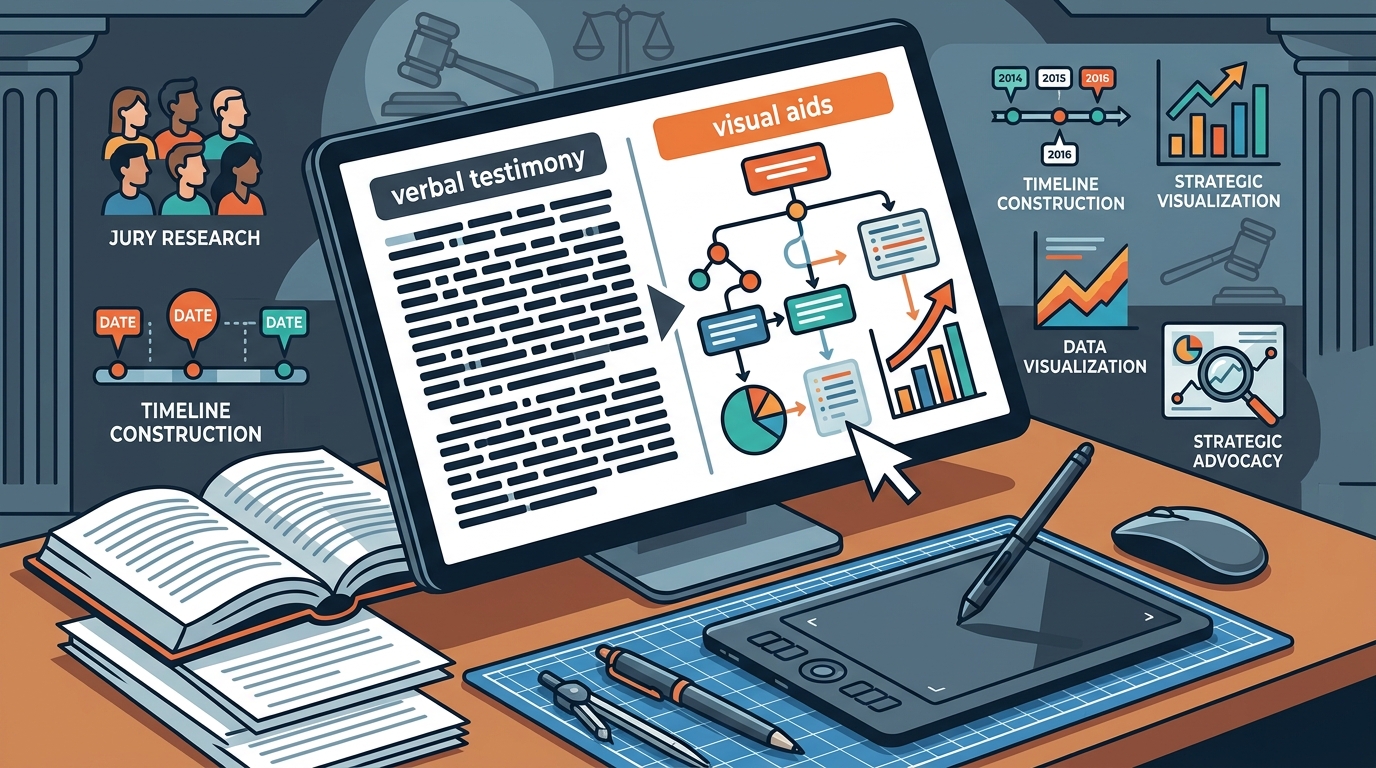
Modern litigation is increasingly visual, with data showing that jurors retain significantly more information when it is presented through compelling visual aids rather than verbal testimony alone. According to industry benchmarks, effective trial graphics can increase juror engagement and comprehension by up to 40 percent during complex proceedings. This statistic underscores the critical need for litigators to move beyond traditional text-heavy presentations and embrace strategic visual advocacy. At Persuadius, we have spent over thirty years refining the science of persuasion through meticulous jury research and cutting-edge trial technology. Our approach ensures that every exhibit serves a clear strategic purpose, transforming abstract legal arguments into tangible, memorable narratives that resonate with the jury box.
Why Trial Graphics Matter in Modern Litigation
The landscape of courtroom communication has shifted dramatically. Jurors today are accustomed to high-definition media and instant information retrieval. When presented with dense legal jargon or complex financial data, cognitive load increases, leading to disengagement. Trial graphics serve as a cognitive bridge, simplifying complexity without sacrificing accuracy. This is not merely about aesthetics; it is about clarity and persuasion.
Persuadius has worked with almost all top law firms on more than 10,000 matters with at least $2 trillion cumulatively at stake. Our experience demonstrates that the most successful cases are those where visual evidence is integrated early in the litigation process. By aligning graphics with the core narrative, attorneys can guide the jury’s attention to critical facts. This strategic alignment is what separates effective trial consultants from those who simply produce pretty pictures. For a deeper understanding of how visual persuasion works, you can explore our Litigation Consulting Report.
Core Principles of Persuasive Visuals
Creating effective trial graphics requires adherence to specific design and psychological principles. These principles ensure that the visuals support the argument rather than distract from it.
1. Simplicity and Clarity
Complexity is the enemy of persuasion. Each slide or exhibit should convey a single, clear idea. If a graphic requires more than three seconds to understand, it is likely too complex. Use high-contrast colors and large, readable fonts. Avoid cluttering the screen with unnecessary details. The goal is to make the evidence undeniable and easy to digest. As noted in our recent analysis of bullet points in litigation, text-heavy slides often kill persuasion by overwhelming the jury.
2. Narrative Alignment
Every graphic must serve the overarching story of the case. Visuals should not exist in isolation but should flow logically from one to the next. This creates a cohesive narrative arc that guides the jury through the facts. Persuadius utilizes jury research to test these narratives before trial, ensuring that the visual story resonates with diverse demographic groups.
3. Credibility and Accuracy
Visuals must be factually accurate and defensible. Any distortion of scale, color, or data can be exploited by opposing counsel to undermine credibility. Our team of trial strategists works closely with legal teams to verify every data point and visual representation. This rigorous attention to detail ensures that your graphics withstand cross-examination.
Types of Effective Trial Exhibits
Different types of cases require different types of visual aids. Understanding the strengths of each medium is crucial for effective trial preparation.
| Exhibit Type | Best Use Case | Strategic Benefit |
|---|---|---|
| Animated Demonstratives | Accident reconstruction, medical procedures | Shows dynamic processes and causation clearly. |
| Infographics | Financial damages, complex timelines | Simplifies large datasets into digestible visuals. |
| 3D Models | Product liability, structural defects | Allows jurors to explore evidence from multiple angles. |
| Photographic Enhancements | Personal injury, property damage | Highlights critical details often missed by the naked eye. |
For instance, in product liability cases, 3D models can be particularly powerful. They allow the jury to visualize the defect in a way that photographs cannot. Persuadius specializes in creating these high-fidelity models using advanced trial technology. This ensures that the exhibit is not only visually stunning but also scientifically accurate.
Integration Strategies for Trial Tech
Having great graphics is only half the battle. How you present them is equally important. This is where trial technicians and hot seaters play a crucial role. They manage the technical aspects of the presentation, ensuring that transitions are smooth and that the graphics appear exactly when needed.
Effective integration requires seamless coordination between the attorney and the trial tech. The attorney should focus on the narrative, while the technician handles the technical execution. This division of labor allows for a more dynamic and engaging presentation. For more insights on the role of trial technicians, read our blog post on trial technology.
Additionally, the use of opening statement drafting support can help align your visual strategy with your verbal argument. By integrating graphics into the opening statement, you set the stage for the evidence that follows. This creates a powerful first impression that can influence the jury’s perception throughout the trial.
Common Mistakes to Avoid
Even experienced litigators can fall into traps when creating trial graphics. Avoiding these common mistakes can significantly enhance the effectiveness of your presentation.
1. Overloading Slides
One of the most common errors is putting too much information on a single slide. This overwhelms the jury and dilutes the key message. Stick to one idea per slide. Use animations to reveal information gradually, keeping the jury’s attention focused on the current point.
2. Ignoring Juror Demographics
Different jurors have different levels of visual literacy. What works for a tech-savvy jury may confuse a more traditional group. Persuadius uses mock trials to test graphics with representative demographics. This ensures that your visuals are accessible and persuasive to your specific audience.
3. Lack of Rehearsal
Technical glitches can undermine even the best graphics. Rehearse the presentation multiple times with the trial tech to ensure smooth operation. Familiarity with the technology builds confidence and allows for a more natural delivery.
Key Takeaways
- Visual Persuasion: Effective trial graphics increase juror retention and engagement by simplifying complex data.
- Strategic Alignment: Graphics must align with the core narrative and be tested through jury research.
- Simplicity: Avoid clutter; use one clear idea per slide to prevent cognitive overload.
- Technical Integration: Seamless coordination with trial technicians is essential for smooth delivery.
- Accuracy: All visuals must be factually defensible to maintain credibility.
- Demographic Testing: Use mock trials to ensure graphics resonate with specific jury demographics.
- Early Integration: Incorporate graphics into opening statements to set a strong foundation.
Frequently Asked Questions
What is the role of a trial consultant in creating graphics?
A trial consultant helps align visual aids with the case narrative, tests them with mock jurors, and ensures they are persuasive and defensible. They bridge the gap between legal strategy and visual design.
How early should I start working on trial graphics?
Graphics should be developed early in the litigation process. Early integration allows for testing and refinement based on jury feedback, ensuring maximum impact at trial.
What is the difference between trial graphics and litigation graphics?
While often used interchangeably, litigation graphics can refer to a broader range of visual aids used throughout the case, including discovery and depositions. Trial graphics specifically refer to exhibits used during the trial itself.
Can trial graphics be used in depositions?
Yes, trial graphics can be highly effective in depositions to clarify testimony and lock in favorable facts. They help witnesses understand questions and provide clearer answers.
How do I choose the right type of graphic for my case?
The choice depends on the nature of the evidence and the case narrative. Persuadius offers jury consulting to help determine the most effective visual strategy for your specific case.
What is the cost of hiring a trial graphics consultant?
Costs vary based on the complexity of the case and the type of graphics required. Persuadius provides customized quotes based on the specific needs of each matter.
How do trial technicians support the presentation?
Trial technicians manage the technical aspects of the presentation, including operating the software, managing transitions, and troubleshooting any issues in real-time.
Contact Persuadius
Ready to elevate your trial presentation with strategic, persuasive graphics? Persuadius is here to help. With over thirty years of experience and a track record of success in complex litigation, we provide the expertise you need to win. Contact our team today to discuss your case and learn more about our jury consulting and trial technology services.
Call us at 800.847.9330 or email contact@persuadius.com to schedule a consultation. Let us help you tell your story effectively.