
The opening statement is the single most critical moment in any litigation. It sets the narrative framework that jurors will use to interpret every piece of evidence presented later. Research indicates that jurors form initial impressions within the first few minutes of a trial, and these early anchors heavily influence their final verdict. According to legal psychology studies, the opening statement establishes the "story" that jurors subconsciously test against the evidence. If your story is weak, confusing, or unsupported, the jury will struggle to find coherence in the trial, often defaulting to the opposing counsel's narrative. This guide details the proven methodologies used by top litigation consultants to craft opening statements that persuade, clarify, and win. (Persuadius and A2L Customer)
The Narrative Structure of Persuasion
Effective opening statements are not recitations of the law. They are compelling stories that explain why the law applies to the facts. A strong narrative follows a clear cause-and-effect structure. Jurors are natural storytellers. They want to understand who did what, why it matters, and what the consequences should be. Your opening statement must provide a roadmap for this journey. (The Litigation Consulting Report)
Persuasion is the art of guiding the jury to a specific conclusion through logical and emotional engagement. To achieve this, you must introduce your characters (the parties), the conflict (the dispute), and the resolution (your desired verdict) early and often. Avoid starting with dry legal definitions. Instead, start with the human element. Who is affected? What is at stake? This approach humanizes the case and builds immediate rapport with the jury. (Persuadius Nationwide Jury Consulting)
For over thirty years, Persuadius has worked with top law firms to refine these narratives. Our experience shows that cases with a clear, emotionally resonant story outperform those relying solely on technical arguments. We help litigators identify the core theme of their case and weave it throughout the opening statement. This theme acts as a cognitive hook, making it easier for jurors to remember key points during deliberation.
The Role of Visual Advocacy
Visual aids are not just decorative. They are essential tools for clarity and retention. The human brain processes visual information 60,000 times faster than text. In a trial setting, this means that well-designed graphics can convey complex information quickly and effectively. Litigation graphics consulting is a critical component of modern trial preparation.
Consider the power of a simple list. In one high-stakes antitrust matter, a slowly scrolling list of airline bankruptcies was used to illustrate market instability. The exhibit was not a 3D animation or a sophisticated economic model. It was just a list of names. Eastern. Pan Am. TWA. Braniff. As the list scrolled, jurors began to see the industry differently. They understood the risk and the urgency of the case without needing a single word of explanation. This demonstrates that simplicity often trumps complexity in visual advocacy.
When designing your trial graphics, focus on clarity and relevance. Avoid clutter. Use high-contrast colors to highlight key data points. Ensure that every visual element serves a specific purpose in your narrative. If a graphic does not support your story, do not use it. Our team specializes in creating demonstrative exhibits that capture the essence of your presentation under extreme time pressure. We understand that trial graphics must be both accurate and persuasive.
Why Bullet Points Kill Persuasion
One of the most common mistakes attorneys make is using text-heavy PowerPoint slides with bullet points. This approach is fundamentally flawed. Bullet points fragment the narrative. They force jurors to read instead of listen. This creates a cognitive disconnect. The brain cannot effectively process written text and auditory information simultaneously. As a result, jurors miss critical nuances in your spoken argument.
Bullet points are one of the biggest obstacles to effective courtroom communication. They reduce complex ideas to fragmented lists, stripping away the emotional and logical flow that makes a story persuasive. Instead of bullet points, use full sentences or short phrases that guide the jury through your narrative. Use visuals to illustrate your points, not text to replace your speech.
This insight comes from extensive research and practical experience in litigation consulting. We have analyzed thousands of opening statements and found that those using narrative-driven visuals consistently outperform those relying on text-heavy slides. The key is to let your words do the heavy lifting while your visuals provide support. This approach keeps jurors engaged and focused on your message.
Aligning with Voir Dire Insights
Your opening statement should not be a static script. It should be a dynamic tool that adapts to the jury you have been selected. Voir dire is not just about eliminating biased jurors. It is about understanding the perspectives, values, and experiences of the people who will decide your case. Use this information to tailor your narrative.
If your jury is skeptical of corporate defendants, emphasize the human impact of the case. If they are financially savvy, focus on the economic consequences. This alignment builds trust and credibility. It shows that you understand their worldview and are speaking their language. Our jury research services help litigators uncover these insights through mock trials and focus groups. We test different narrative approaches to see which resonates most with the target jury pool.
By integrating voir dire insights into your opening statement, you create a personalized connection with the jury. This connection is crucial for persuasion. It makes your story more relatable and your arguments more compelling. Remember, the goal is not to win the jury over with clever tricks. It is to present a clear, honest, and persuasive account of the facts that aligns with the jury's values.
Strategic Approaches Compared
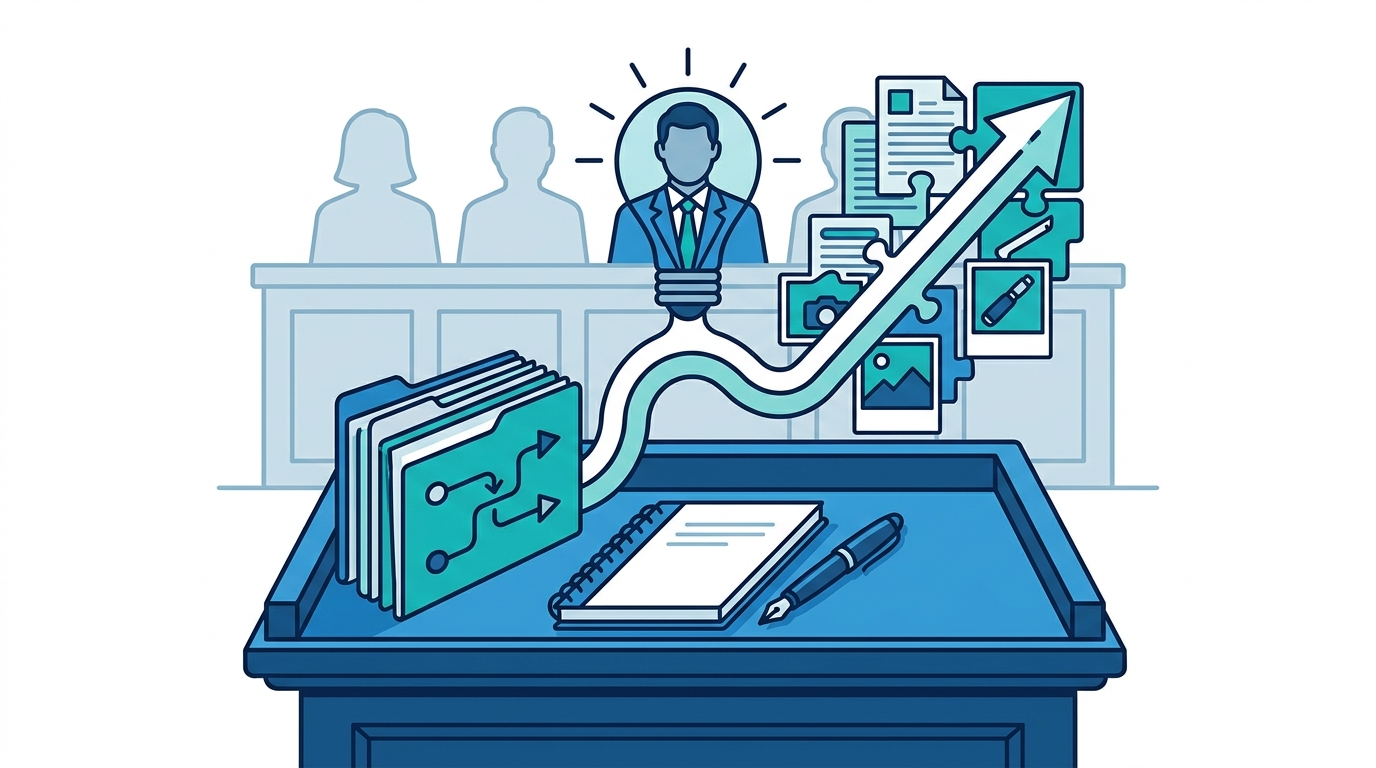
Different cases require different strategic approaches. Below is a comparison of common opening statement strategies to help you choose the best fit for your case.
| Strategy | Best For | Key Benefit | Risk |
|---|---|---|---|
| Narrative-Driven | Complex commercial disputes, personal injury | High engagement, easy to remember | May oversimplify legal nuances |
| Chronological | Fact-heavy cases, contract disputes | Clear timeline, logical flow | Can become boring or dry |
| Issue-Based | Technical or scientific cases | Focuses on key legal questions | May lack emotional appeal |
| Visual-Heavy | Cases with clear visual evidence | Enhances retention, clarifies complexity | Requires high-quality production |
Choosing the right strategy depends on the nature of your case, the jury, and your client's goals. There is no one-size-fits-all solution. However, all effective strategies share a common core: clarity, coherence, and connection. Your opening statement must be easy to understand, logically consistent, and emotionally resonant.
Key Takeaways
- Narrative is King: Jurors decide cases based on stories, not just facts. Craft a compelling narrative that explains the "why" behind the "what."
- Visuals Support, Not Replace: Use litigation graphics to clarify complex information, not to replace your spoken argument. Avoid text-heavy slides.
- Avoid Bullet Points: Bullet points fragment the narrative and force jurors to read instead of listen. Use full sentences or visuals instead.
- Adapt to the Jury: Use voir dire insights to tailor your narrative to the jury's values and perspectives. This builds trust and credibility.
- Start Strong: Begin with the human element. Who is affected? What is at stake? This hooks the jury immediately.
- Theme Your Case: Identify a core theme and weave it throughout your opening statement. This acts as a cognitive hook for jurors.
- Practice and Refine: Test your opening statement in mock trials and focus groups. Refine it based on feedback to ensure maximum impact.
Frequently Asked Questions
How long should an opening statement be?
There is no fixed length, but it should be concise enough to maintain attention while comprehensive enough to cover key points. Typically, it ranges from 10 to 30 minutes, depending on the complexity of the case. The goal is to be clear and engaging, not exhaustive.
Can I use bullet points in my opening statement slides?
It is generally advised to avoid bullet points. They can fragment the narrative and force jurors to read instead of listen. Use visuals or full sentences to guide the jury through your story more effectively.
How do I know which narrative structure to use?
The best structure depends on your case facts and jury demographics. Chronological structures work well for fact-heavy cases, while narrative-driven approaches are better for emotional appeals. Use jury research to test different structures and see which resonates most.
What role does litigation graphics play in an opening statement?
Litigation graphics clarify complex information and enhance retention. They should support your narrative, not replace it. Use high-quality, relevant visuals to illustrate key points and make your story more memorable.
How can I make my opening statement more persuasive?
Focus on clarity, coherence, and connection. Start with a strong hook, use a compelling narrative, and tailor your message to the jury's values. Practice your delivery to ensure confidence and engagement.
Is it important to align my opening statement with my closing argument?
Yes, absolutely. Your opening statement sets the stage for your closing argument. It should outline the story you will prove and the evidence you will present. Consistency between the two reinforces your narrative and builds credibility.
What is the most common mistake in opening statements?
The most common mistake is being too legalistic or dry. Jurors are not lawyers. They need a human story, not a legal lecture. Focus on the people involved and the impact of the dispute to keep them engaged.
Ready to Win Your Next Case?
Effective opening statements are not written in a vacuum. They are crafted through rigorous research, strategic planning, and expert consultation. Persuadius provides nationwide jury consulting, trial graphics, and trial technology services to help you build a winning case. Our team of psychologists, trial strategists, and litigation consultants works side by side with elite law firms to uncover what will persuade real people in the box.
Whether you need help with jury research, mock trials, or visual advocacy, we are here to support you. Contact us today to learn more about how we can help you craft an opening statement that wins hearts and minds. Visit our contact page to schedule a consultation or call us at 800.847.9330. Let us help you turn your case into a compelling story that resonates with jurors.