

In high-stakes litigation, the difference between a favorable verdict and a costly loss often hinges on how clearly a jury comprehends complex evidence. Nationwide jury consulting firms report that visual aids are not merely decorative; they are cognitive anchors that guide juror attention and retention. When legal arguments are abstract, jurors struggle to maintain focus. However, when those arguments are translated into compelling visual narratives, the path to persuasion becomes significantly clearer. This guide explores how to leverage trial graphics to transform complex data into undeniable courtroom truths.
Why Visuals Drive Verdicts
The human brain processes visual information 60,000 times faster than text. In a courtroom setting, where jurors are often fatigued and overwhelmed by dense testimony, visual aids serve as essential cognitive shortcuts. Litigation consulting experts emphasize that the goal of trial graphics is not to entertain, but to clarify. When a juror can see a timeline of events or a diagram of a mechanical failure, they are no longer relying solely on memory. They are engaging with the evidence in real-time.
According to research on juror comprehension, legal advocacy studies show that cases presented with high-quality demonstrative exhibits result in higher verdict consistency. This is because visuals reduce ambiguity. They allow the attorney to control the narrative flow, ensuring that the jury focuses on the most critical aspects of the case rather than getting lost in procedural details.
Core Principles of Effective Design
Creating trial graphics that persuade requires adherence to strict design principles. Unlike marketing materials, courtroom exhibits must prioritize clarity over creativity. The following principles are foundational to effective visual advocacy.
1. Simplicity is King
Complexity is the enemy of persuasion. A slide cluttered with text, multiple charts, and dense data points will confuse jurors rather than enlighten them. Effective trial graphics strip away the noise. Each exhibit should communicate one single idea. If you need to explain a complex mechanism, break it down into sequential steps. Persuadius blog insights frequently highlight that the simplest slides often have the most profound impact. Avoid bullet points where possible, as they encourage reading rather than listening.
2. Visual Hierarchy and Focus
Your graphics must guide the juror's eye. Use size, color, and contrast to highlight the most important elements. For example, if you are demonstrating a point of failure in a product liability case, the failed component should be the largest and most brightly colored element on the screen. The surrounding context should be muted or grayed out. This technique ensures that when you ask a question, the juror is looking exactly where you want them to look.
3. Consistency Builds Trust
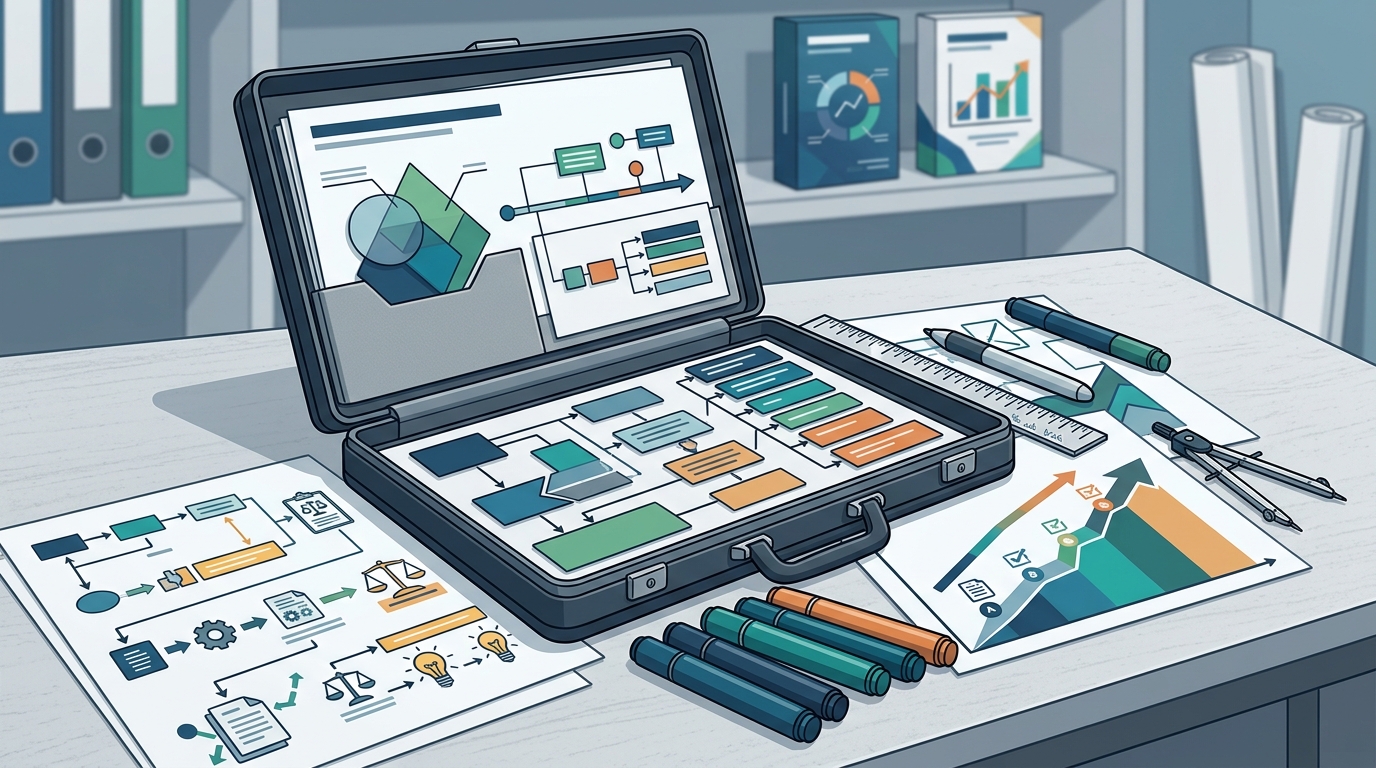
Inconsistent styling can undermine your credibility. Use a consistent color palette, font family, and diagrammatic style throughout your presentation. If you use a specific color to represent the plaintiff's vehicle in an accident reconstruction, that color must remain consistent in every subsequent slide. Inconsistency creates cognitive dissonance, causing jurors to question the reliability of your evidence.
Types of Persuasive Exhibits
Different cases require different types of visual aids. Understanding the strengths of each format allows you to select the right tool for the job. Below is a comparison of common trial graphics types.
| Exhibit Type | Best Use Case | Persuasive Advantage |
|---|---|---|
| Timelines | Causation and Chronology | Establishes a clear narrative arc and sequence of events. |
| 3D Animations | Accident Reconstruction | Provides a dynamic, realistic view of physical interactions. |
| Infographics | Financial Damages | Simplifies complex data into digestible visual chunks. |
| Diagrams | Technical Mechanisms | Breaks down internal components of complex systems. |
Timelines and Chronologies
Timelines are the backbone of most litigation narratives. They provide structure to the story you are telling. A well-designed timeline does more than list dates; it highlights gaps, overlaps, and critical turning points. Jury research data indicates that jurors rely heavily on chronological order to make sense of causal relationships. By visually emphasizing key dates, you can subtly influence how jurors perceive the weight of specific events.
3D Animations and Reconstructions
In personal injury and product liability cases, 3D animations are powerful tools for demonstrating how an accident occurred. These animations allow you to show what the jury could not see with the naked eye. However, they must be grounded in expert testimony and factual data. Overly dramatic animations can be challenged as prejudicial. The goal is accuracy, not Hollywood spectacle. Legal technology reports confirm that accurate 3D reconstructions significantly increase juror confidence in expert testimony.
Trial Tech and Hot Seaters
Even the most beautifully designed graphics are ineffective if they are not delivered seamlessly. This is where trial technology and skilled hot seaters become critical. A hot seater is a trained technician who manages the presentation software in real-time, allowing the attorney to focus entirely on the witness and the jury.
Technical glitches can destroy credibility. A frozen screen or a misaligned slide can distract jurors and undermine the attorney's authority. Persuadius trial tech services emphasize the importance of rigorous pre-trial testing. Every exhibit must be tested on the actual courtroom hardware to ensure compatibility and performance. Hot seaters also manage the flow of evidence, ensuring that exhibits appear exactly when needed and disappear when they are no longer relevant.
The Role of the Hot Seater
A skilled hot seater acts as an extension of the attorney. They anticipate needs, such as zooming in on a specific detail or switching between exhibits. They also handle unexpected challenges, such as a judge's ruling or a witness's request to see a document more clearly. This seamless integration of technology and advocacy is what separates professional litigation support from amateur presentations.
Common Pitfalls to Avoid
Even experienced litigators can fall into traps when designing trial graphics. Avoiding these common mistakes is essential for maintaining persuasive power.
1. Overloading Slides
One of the most frequent errors is trying to put too much information on a single slide. Jurors cannot read and listen simultaneously. If a slide requires reading, they are not listening to your argument. Break complex information into multiple slides. Use animation to reveal information step-by-step.
2. Ignoring the Judge
While the jury is the ultimate decision-maker, the judge controls the admissibility of your evidence. Graphics that are overly prejudicial or confusing may be excluded. Always discuss your visual aids with the judge during pre-trial conferences. Litigation consulting reports suggest that early collaboration with the court can prevent last-minute surprises and ensure your visuals are admitted.
3. Lack of Practice
Using trial graphics requires practice. Attorneys who do not rehearse their transitions often appear awkward or hesitant. This hesitation can signal uncertainty to the jury. Practice your presentation until the technology becomes invisible. Your focus should remain on the narrative, not the mechanics.
Key Takeaways
- Visuals Reduce Cognitive Load: Jurors process visual information 60,000 times faster than text, making graphics essential for comprehension.
- Simplicity Drives Persuasion: Complex slides confuse jurors. Focus on one idea per slide to maintain clarity.
- Consistency Builds Trust: Use consistent colors and styles to reinforce your narrative and avoid cognitive dissonance.
- Technology Requires Support: Hot seaters and trial techs ensure seamless delivery, preventing technical glitches that undermine credibility.
- 3D Animations Must Be Accurate: In product liability cases, accurate reconstructions increase juror confidence in expert testimony.
- Timelines Structure Narratives: Chronological visuals help jurors understand causation and sequence of events.
- Pre-Trial Testing is Critical: Test all graphics on courtroom hardware to ensure compatibility and performance.
Frequently Asked Questions
What is the primary purpose of trial graphics?
Trial graphics are designed to clarify complex evidence and guide juror attention. They serve as cognitive anchors that help jurors understand and retain critical information during testimony.
How do hot seaters improve trial presentations?
Hot seaters manage the presentation software in real-time, allowing attorneys to focus on advocacy. They ensure smooth transitions, handle technical issues, and anticipate the needs of the legal team.
Why are timelines important in litigation?
Timelines provide a clear narrative structure. They help jurors understand the sequence of events and establish causation, which is often central to the case.
Can 3D animations be used in all types of cases?
3D animations are most effective in cases involving physical interactions, such as personal injury or product liability. They must be grounded in factual data and expert testimony to be admissible.
How do I avoid overloading my slides?
Break complex information into multiple slides. Use animation to reveal information step-by-step. Ensure that each slide communicates only one core idea.
What is the role of jury consulting in graphic design?
Jury consultants test graphics with mock jurors to assess clarity and persuasiveness. They provide feedback on design elements that may confuse or distract the audience.
Why is pre-trial testing of graphics necessary?
Pre-trial testing ensures that all graphics are compatible with courtroom hardware. It prevents technical glitches that can undermine the attorney's credibility and distract the jury.
How do consistent design elements help persuasion?
Consistent colors and styles reinforce the narrative. They help jurors associate specific visual cues with key concepts, reducing cognitive load and increasing retention.
Contact Persuadius for Expert Trial Support
Effective trial graphics are not just about design; they are about strategy. At Persuadius, we combine decades of litigation consulting experience with cutting-edge trial technology to help you win. Our team of jury consultants, trial techs, and graphic designers work together to ensure your presentation is clear, compelling, and credible. Contact Persuadius today to schedule a consultation and learn how we can support your next case.