
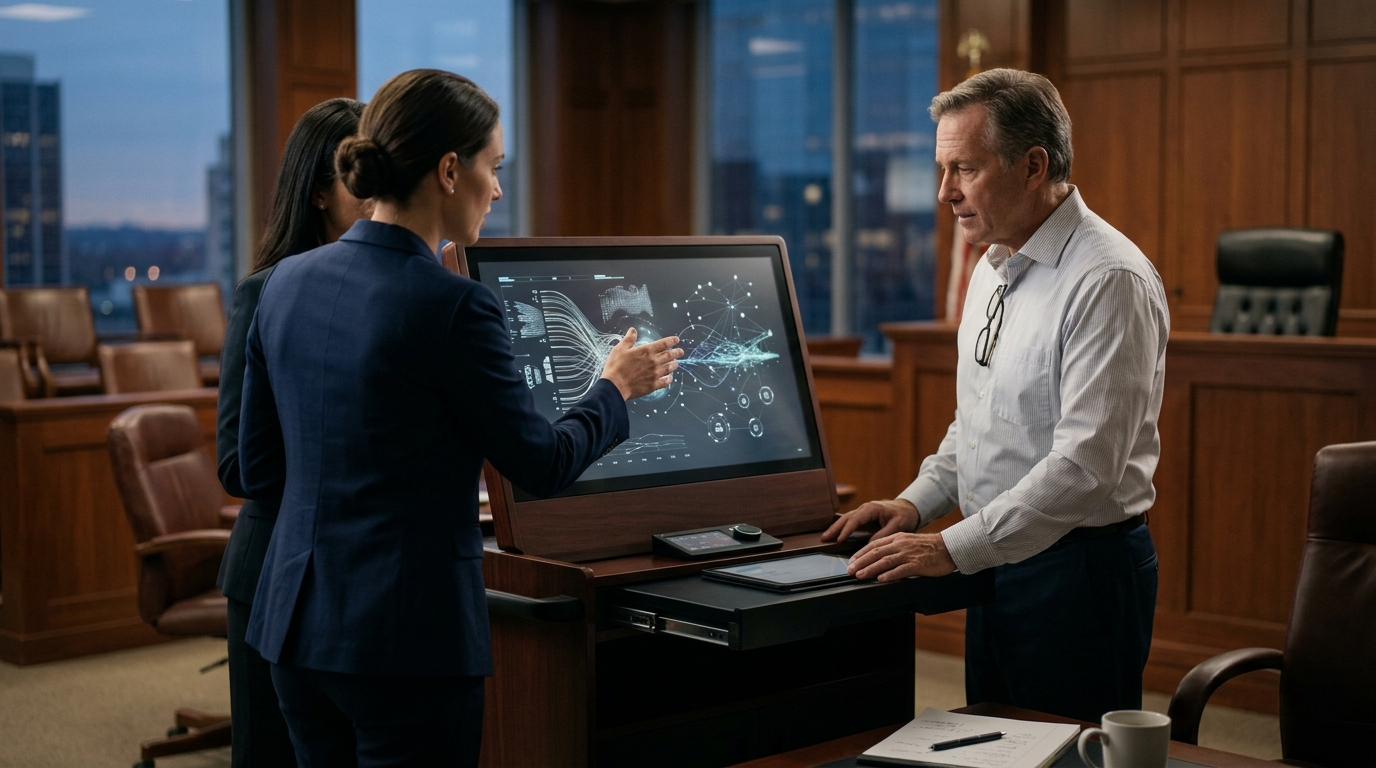
The landscape of modern litigation is no longer defined solely by the strength of legal arguments but by the clarity of their presentation. Trial technology has evolved from a simple support function into a strategic asset that can dictate the outcome of high-stakes disputes. According to industry data, firms utilizing advanced visual advocacy tools report a significant increase in juror engagement and comprehension during complex trials. This shift demands that legal teams carefully evaluate potential partners based on technical reliability, creative capability, and seamless courtroom integration. (Persuadius and A2L Customer)
Understanding the Scope of Trial Technology
Trial technology encompasses a broad spectrum of services designed to enhance the presentation of evidence and arguments in a courtroom setting. It is not merely about having the right hardware but involves the strategic application of visual aids, digital exhibits, and real-time data visualization. Trial technology is the systematic use of digital tools to support legal advocacy, ensuring that complex information is accessible and persuasive to judges and juries.
Providers in this space often offer a hybrid model of services. For instance, jury consulting and litigation graphics are frequently bundled with technical support to create a cohesive narrative strategy. When selecting a provider, it is crucial to understand whether they offer a unified approach or if they require you to coordinate between separate vendors for graphics, consulting, and technical execution. A unified provider reduces communication gaps and ensures that the visual strategy aligns perfectly with the technical delivery.
Technical Reliability and Redundancy
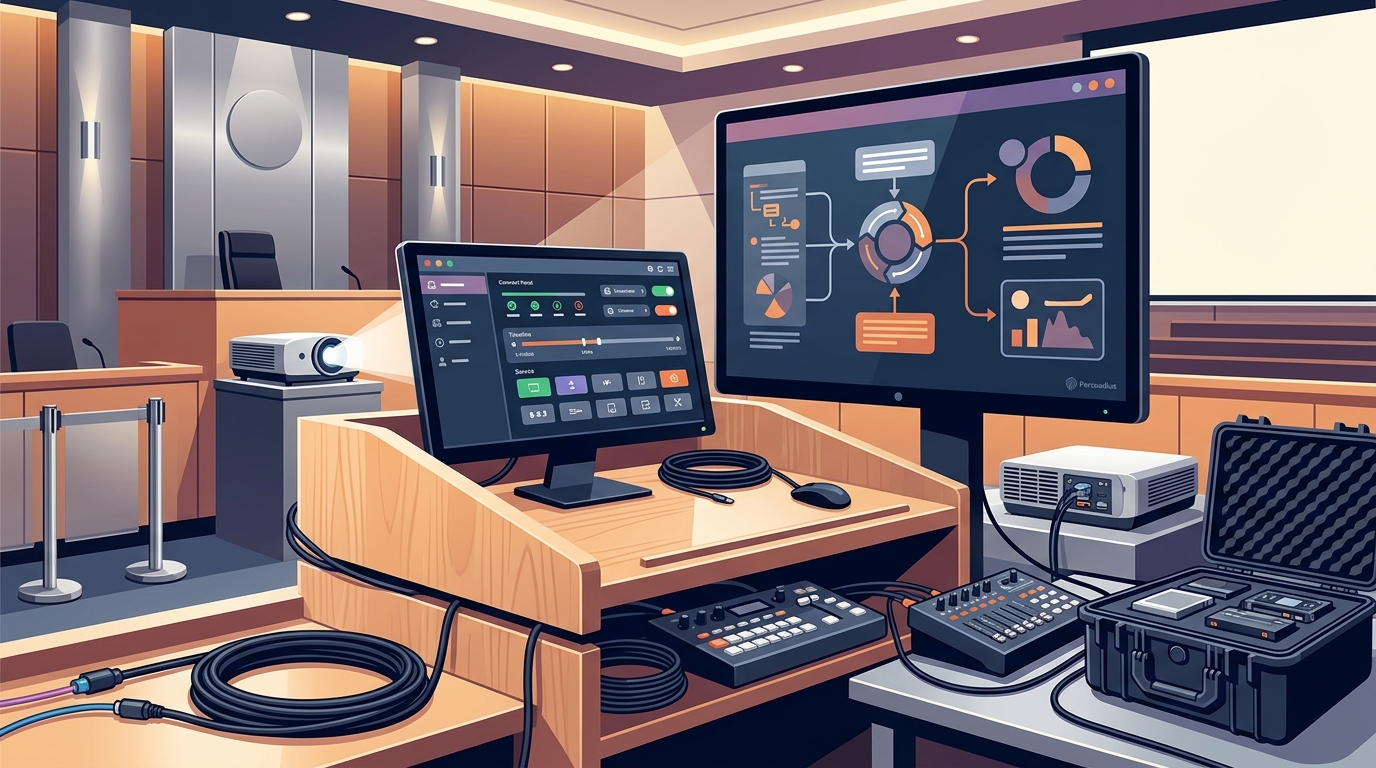
In the high-pressure environment of a trial, technical failure is not an option. The primary factor in selecting a provider is their ability to guarantee 100% uptime and seamless operation. This requires a robust infrastructure that includes redundant systems, backup power, and multiple internet connections. Providers must also have a proven track record of handling last-minute changes without compromising system stability.
Look for providers who employ dedicated trial technicians who are present in the courtroom to manage technology in real time. These professionals, often referred to as "hot seaters," are trained to troubleshoot issues instantly, allowing attorneys to focus on advocacy rather than technical glitches. The presence of a skilled technician is a critical differentiator between a standard tech vendor and a true litigation partner.
The Role of Creative Advocacy
Technology is only as effective as the strategy behind it. The best trial tech providers do not just execute orders; they contribute to the persuasive narrative of the case. This involves creating custom graphics, animations, and demonstrative exhibits that simplify complex data and highlight key facts. Litigation graphics are visual aids designed to clarify complex information and enhance juror retention.
When evaluating creative capabilities, review the provider's portfolio for examples of work in your specific area of law. Whether it is a complex patent dispute requiring detailed technical diagrams or a personal injury case needing realistic accident reconstructions, the provider must demonstrate expertise in translating your specific subject matter into compelling visuals. Providers like Persuadius emphasize the importance of creative diligence, ensuring that every graphic serves a strategic purpose in the overall case narrative.
Integration with Existing Workflows
Seamless integration with your firm's existing case management and document review systems is essential for efficiency. The provider should be able to ingest large volumes of documents, images, and video evidence without causing delays in the preparation timeline. They must also support various file formats and ensure that exhibits are easily searchable and organized for quick access during trial.
Consider the provider's ability to support both in-person and remote trial formats. With the rise of hybrid proceedings, the technology must facilitate clear communication between physical and virtual participants. This includes high-quality audio and video streaming, secure document sharing, and interactive capabilities for remote witnesses. A provider that lacks robust remote support capabilities may leave your firm vulnerable in an increasingly digital legal landscape.
Evaluating Team Expertise and Availability
The human element of trial technology is just as important as the hardware. The expertise of the team managing your case will determine the success of your presentation. Look for providers with a team of experienced professionals who have extensive experience in high-stakes litigation. This includes not only technicians but also jury consultants, graphic designers, and case strategists.
Availability is another critical factor. Trials often require last-minute adjustments and extended hours. A provider that offers 24/7 support ensures that your team has access to assistance whenever needed. Contact Persuadius to discuss your specific needs and ensure that their team is available to support your case from preparation through verdict.
Understanding Cost Structures and Value
While cost is a significant consideration, it should not be the sole deciding factor. Trial technology is an investment in the outcome of your case. Evaluate the provider's pricing model to understand what is included in the base fee and what constitutes additional charges. Some providers offer bundled packages that include consulting, graphics, and technical support, while others charge separately for each service.
Consider the value proposition of each provider. A lower-cost option may seem attractive initially, but if it lacks the necessary expertise or reliability, the potential cost of a technical failure or ineffective presentation could far outweigh the savings. Focus on providers who demonstrate a clear return on investment through improved juror comprehension and persuasive impact.
Key Takeaways
- Unified Strategy: Choose providers that integrate jury consulting, graphics, and tech to ensure narrative cohesion.
- Redundancy is Key: Ensure the provider has robust backup systems and dedicated in-court technicians.
- Creative Expertise: Evaluate the provider's portfolio for specific industry experience and persuasive design.
- 24/7 Support: Verify availability for last-minute changes and extended trial hours.
- Remote Capabilities: Confirm support for hybrid and remote trial formats.
- Value Over Cost: Prioritize reliability and strategic impact over initial price points.
- Proven Track Record: Look for providers with experience in high-stakes, complex litigation.
Frequently Asked Questions
What is the difference between trial tech and litigation graphics?
Litigation graphics refers specifically to the design and creation of visual aids, while trial tech encompasses the hardware, software, and technical support used to display those graphics during a trial.
Why is a dedicated trial technician important?
A dedicated technician manages the technology in real time, allowing attorneys to focus on advocacy and ensuring that any technical issues are resolved instantly without disrupting the proceedings.
Can trial tech providers support remote trials?
Yes, many modern providers offer robust support for remote and hybrid trials, including secure streaming, interactive exhibits, and seamless communication tools.
How do I evaluate a provider's creative capabilities?
Review their portfolio for examples of work in your specific area of law, and ask for case studies that demonstrate how their visuals improved case outcomes.
What should I look for in a provider's support structure?
Look for 24/7 availability, a dedicated point of contact, and a team with extensive experience in high-stakes litigation.
Is it better to hire separate vendors for graphics and tech?
Generally, no. A unified provider ensures better communication, strategic alignment, and technical reliability, reducing the risk of coordination gaps.
How does jury consulting fit into trial technology?
Jury consulting helps shape the narrative and visual strategy based on juror psychology, ensuring that the technology and graphics used are persuasive and effective.
What is the typical cost of trial technology services?
Costs vary widely based on the scope of services, duration of the trial, and complexity of the case. It is best to request a detailed quote based on your specific needs.
Contact Persuadius for Trial Support
Selecting the right trial technology provider is a critical decision that can influence the outcome of your case. By prioritizing reliability, creative expertise, and strategic integration, you can ensure that your presentation is both technically flawless and persuasively powerful. Contact Persuadius today to discuss how our comprehensive litigation consulting services can support your next trial.