

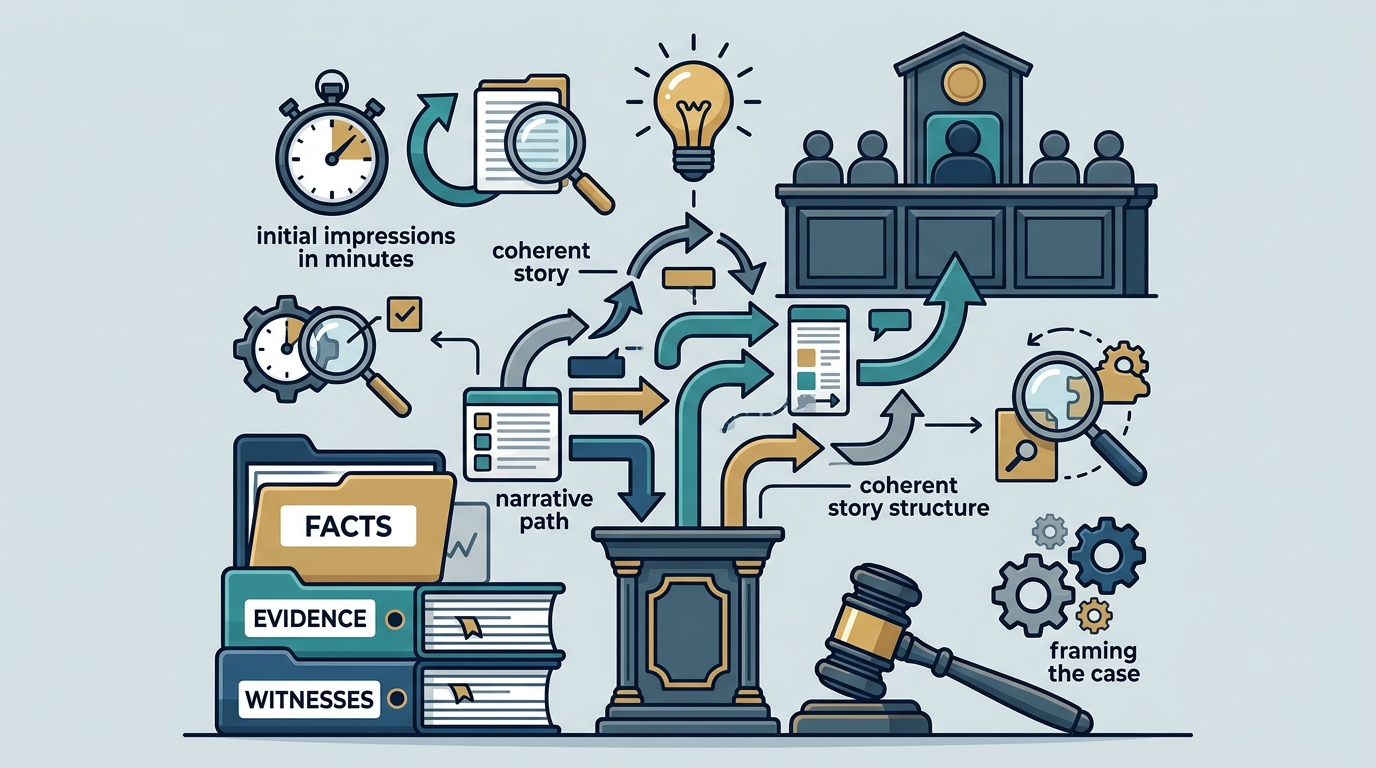
Opening statements set the narrative foundation for the entire trial, influencing how jurors interpret evidence before it is even presented. Research indicates that jurors form initial impressions within the first few minutes of a trial, making the opening statement a critical tool for framing the case. According to legal communication studies, effective opening statements can significantly sway juror decision-making by providing a coherent story structure. This guide outlines the essential strategies for crafting persuasive openings that resonate with diverse audiences. (24 7 Contact Persuadius)
The Power of Narrative Structure
A compelling opening statement must function as a roadmap for the jury. It should not merely list facts but weave them into a coherent story. Narrative structure is the backbone of persuasive legal advocacy. Jurors are natural storytellers; they seek cause and effect, motivation, and resolution. When attorneys present a disjointed list of evidence, jurors struggle to connect the dots. Conversely, a well-structured narrative allows jurors to fill in gaps with favorable assumptions.
Effective narratives often follow a chronological or thematic progression. Chronological structures help jurors understand the timeline of events, which is crucial in complex litigation. Thematic structures, on the other hand, group evidence by key issues or arguments, which can be more effective in cases with multiple distinct claims. The choice between these approaches depends on the specific facts of the case and the strengths of the evidence.
Consider the case of opening statement drafting support provided by specialized consultants. These experts help attorneys refine their narrative to ensure it aligns with the evidence while remaining emotionally resonant. By focusing on the human elements of the story, attorneys can create a more memorable and persuasive opening.
Integrating Litigation Graphics
Visual aids play a pivotal role in enhancing the impact of an opening statement. Litigation graphics transform abstract concepts into tangible, understandable visuals. Jurors are more likely to retain information when it is presented visually rather than verbally alone. This is particularly true in complex cases involving technical data, financial records, or spatial relationships.
Effective litigation graphics include timelines, diagrams, charts, and animations. Timelines help clarify the sequence of events, reducing confusion and preventing jurors from misinterpreting the order of occurrences. Diagrams can illustrate relationships between parties, objects, or events, making complex interactions easier to grasp. Charts and graphs are essential for presenting financial data or statistical evidence in a clear and concise manner.
For instance, litigation graphics consulting services can help attorneys design visuals that are not only informative but also aesthetically pleasing and easy to understand. The goal is to create visuals that support the narrative without overwhelming the jury. Overly complex or cluttered graphics can distract from the main message and reduce the effectiveness of the opening statement.
Psychological Principles of Persuasion
Understanding the psychological principles of persuasion is crucial for crafting an effective opening statement. Confirmation bias is the tendency to search for, interpret, and recall information in a way that confirms one's preexisting beliefs. Jurors often enter the courtroom with preconceived notions about the case, and the opening statement is an opportunity to address and counter these biases.
One effective strategy is to acknowledge potential counterarguments early in the opening statement. By addressing these points proactively, attorneys can reduce the impact of opposing arguments later in the trial. This approach demonstrates confidence and transparency, which can enhance the attorney's credibility in the eyes of the jury.
Another key principle is the use of emotional appeal. While logic and evidence are essential, emotions play a significant role in decision-making. Emotional resonance can make a case more memorable and persuasive. Attorneys should strive to connect with the jury on an emotional level by highlighting the human impact of the case. This can be achieved through storytelling, vivid language, and relatable examples.
For more insights into the psychology of persuasion in legal contexts, refer to American Bar Association resources on courtroom psychology.
Avoiding Common Pitfalls
Even experienced attorneys can fall into common traps when preparing opening statements. One frequent mistake is overloading the jury with too much information. Information overload can overwhelm jurors and obscure the key messages. It is essential to prioritize the most critical points and present them clearly and concisely.
Another pitfall is failing to adapt the opening statement to the specific jury. Jurors come from diverse backgrounds and have varying levels of legal knowledge. Attorneys should tailor their language and examples to ensure that the jury can understand and relate to the case. Avoiding legal jargon and using plain language can help bridge this gap.
Additionally, attorneys should avoid being overly aggressive or confrontational in their opening statements. While it is important to be persuasive, an aggressive tone can alienate the jury and damage the attorney's credibility. Instead, focus on building rapport and establishing trust with the jury through respectful and professional communication.
For guidance on avoiding these pitfalls, consider consulting jury consulting experts who specialize in trial strategy and communication.
Leveraging Trial Technology
Trial technology has revolutionized the way opening statements are delivered. Trial technology enhances the clarity and impact of visual presentations. Modern trial tech tools allow attorneys to present dynamic, interactive visuals that can be updated in real-time during the trial. This flexibility is invaluable for addressing new evidence or adjusting the narrative as the case progresses.
Key components of trial technology include presentation software, digital whiteboards, and multimedia integration. Presentation software enables attorneys to create polished, professional slides that can be easily updated and displayed. Digital whiteboards allow for spontaneous annotations and explanations, making the presentation more engaging and interactive. Multimedia integration supports the inclusion of videos, audio clips, and other media to enrich the narrative.
For example, trial techs and hot seaters provide on-site support to ensure that technology runs smoothly during the trial. This support is crucial for minimizing technical disruptions and allowing attorneys to focus on their presentation. By leveraging trial technology effectively, attorneys can create a more compelling and memorable opening statement.
Key Takeaways
- Narrative Structure: Use a coherent story structure to guide jurors through the case, focusing on cause and effect.
- Visual Aids: Integrate litigation graphics to clarify complex information and enhance retention.
- Psychological Principles: Address confirmation bias and use emotional appeal to connect with the jury.
- Avoid Overload: Prioritize key points and avoid information overload to maintain juror engagement.
- Trial Technology: Leverage modern trial tech tools for dynamic and interactive presentations.
- Professional Support: Consult with jury consultants for specialized insights and strategies.
- Adaptability: Tailor the opening statement to the specific jury and case context for maximum impact.
Frequently Asked Questions
How long should an opening statement be?
The length of an opening statement can vary depending on the complexity of the case and local court rules. Generally, it should be concise enough to maintain juror attention but comprehensive enough to cover all key points. Aim for a balance that allows for clarity without overwhelming the jury.
What role do visuals play in an opening statement?
Visuals enhance understanding and retention by transforming abstract concepts into tangible representations. They help clarify complex information, illustrate relationships, and support the narrative. Effective visuals are clear, relevant, and integrated seamlessly into the presentation.
How can I address juror bias in my opening statement?
Address juror bias by acknowledging potential counterarguments early and providing evidence that counters these biases. Use clear, logical reasoning and relatable examples to build credibility and trust. Demonstrating transparency and confidence can help mitigate the impact of preconceived notions.
Why is trial technology important for opening statements?
Trial technology enables dynamic, interactive presentations that can be updated in real-time. It enhances the clarity and impact of visual aids, supports multimedia integration, and ensures smooth delivery. Professional trial tech support minimizes technical disruptions, allowing attorneys to focus on their message.
What are the common mistakes to avoid in opening statements?
Common mistakes include information overload, failing to adapt to the jury, using overly aggressive tones, and neglecting the power of storytelling. Avoid these pitfalls by prioritizing key points, tailoring the message to the audience, and maintaining a professional and respectful demeanor.
How can jury consulting improve my opening statement?
Jury consulting provides specialized insights into juror psychology, communication strategies, and trial dynamics. Consultants can help refine the narrative, design effective visuals, and anticipate potential challenges. Their expertise ensures that the opening statement is persuasive, clear, and impactful.
What is the difference between a thematic and chronological opening statement?
A thematic opening statement groups evidence by key issues or arguments, which can be effective for complex cases with multiple claims. A chronological opening statement follows the timeline of events, which helps jurors understand the sequence of occurrences. The choice depends on the case facts and the strengths of the evidence.
How do I ensure my opening statement is memorable?
Make your opening statement memorable by using vivid language, relatable examples, and emotional appeal. Focus on the human impact of the case and create a coherent narrative that resonates with the jury. Visual aids and storytelling techniques can also enhance memorability.
Ready to Transform Your Trial Strategy?
Effective opening statements are the cornerstone of successful litigation. By mastering narrative structure, integrating powerful visuals, and leveraging psychological principles, you can create a compelling case that resonates with jurors. At Persuadius, we specialize in providing comprehensive litigation consulting services, including jury research, trial graphics, and trial technology support. Our team of experts has decades of experience helping attorneys win complex cases. Contact us today to schedule a consultation and discover how we can help you achieve your litigation goals.