

How to Effectively Present Your Case with Trial Graphics
Visual evidence is no longer optional in modern litigation. According to recent industry data, jurors retain significantly more information when it is presented visually rather than through verbal testimony alone. This shift in cognitive processing means that the way you structure your demonstrative exhibits directly impacts the verdict. At Persuadius, we have spent over thirty years helping top law firms navigate this complex landscape. Our work with more than 10,000 matters has shown that clear, compelling visuals are the bridge between complex data and juror understanding. This guide outlines the strategic framework for integrating trial graphics into your litigation strategy effectively.
Why Visuals Matter in the Courtroom
The human brain processes visual information 60,000 times faster than text. In a high-stakes legal environment, this speed is critical. Jurors are often overwhelmed by dense testimony and voluminous discovery documents. Trial graphics serve as a cognitive anchor, helping them organize facts into a coherent narrative. Without these visual aids, complex arguments can become abstract and difficult to follow. This is where specialized litigation consulting becomes invaluable. We help attorneys transform raw data into persuasive visual stories that resonate with juries.
Furthermore, visual evidence enhances credibility. When an attorney presents clear, professionally designed graphics, it signals thorough preparation and confidence. This psychological effect can subtly influence the jury's perception of the attorney's trustworthiness. Research in legal psychology suggests that well-crafted visual aids reduce juror anxiety and increase engagement. By guiding the jury's attention, you control the narrative flow. This control is essential for winning complex cases. For more insights on persuasion techniques, read our blog post on why bullet points can kill persuasion.
Core Principles of Litigation Graphics
Creating effective trial graphics requires adherence to specific design principles. These principles ensure that your visuals support your case rather than distract from it. The first principle is simplicity. Complex charts should be broken down into digestible components. Each slide or exhibit should convey one primary message. If a graphic requires more than three seconds to understand, it is too complex. Clarity is the ultimate goal of any demonstrative exhibit.
The second principle is consistency. Your graphics must align with your overall case theme. Use consistent fonts, colors, and styles throughout your presentation. This consistency reinforces your narrative and makes the information easier to process. Inconsistency can confuse jurors and undermine your credibility. At Persuadius, we ensure that every graphic aligns with your case strategy. We work closely with your team to maintain this consistency. Learn more about our jury consulting services to understand how we integrate visuals into your broader strategy.
The third principle is relevance. Every graphic must directly support a key argument or fact in your case. Avoid decorative elements that do not add value. If a graphic does not help prove your point, remove it. Relevance ensures that your visuals remain focused on the outcome. This focus is critical in keeping the jury engaged. For a deeper dive into our methodology, check our opening statement drafting support resources.
Types of Effective Trial Exhibits
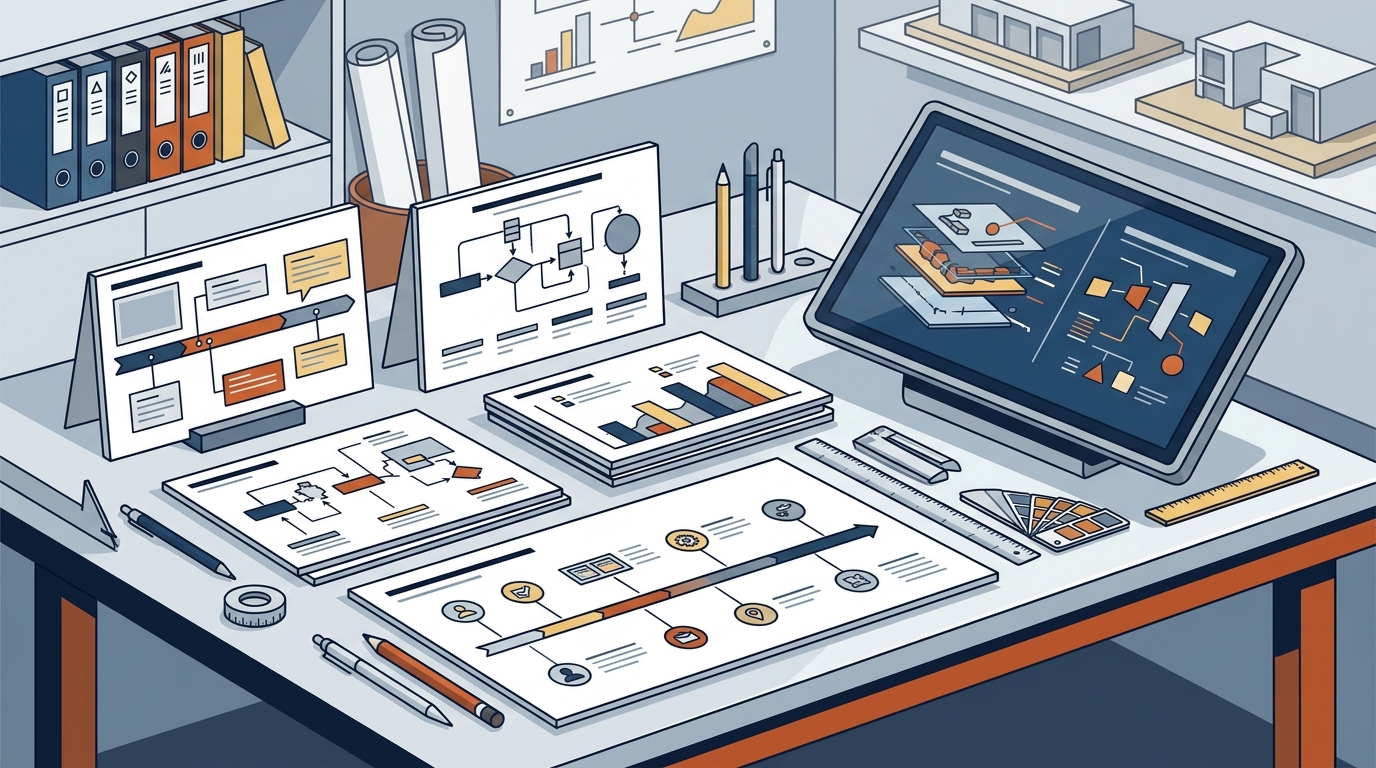
Different types of cases require different types of visual aids. Understanding these distinctions is key to effective presentation. Below is a summary of common exhibit types and their best use cases.
| Exhibit Type | Best Use Case | Key Benefit |
|---|---|---|
| Timelines | Establishing sequence of events | Clarifies causality and responsibility |
| Infographics | Simplifying complex data | Enhances retention of statistics |
| 3D Animations | Reconstructing accidents | Provides realistic context |
| Blueprints | Property or construction disputes | Shows spatial relationships |
Timelines and Chronologies
Timelines are perhaps the most common and effective trial graphics. They help jurors understand the sequence of events. A well-designed timeline can highlight key moments that support your argument. It can also expose gaps in the opposing counsel's narrative. We recommend using color coding to distinguish between different parties or events. This visual cue helps jurors track the story. For more on narrative structure, see our Litigation Consulting Report.
Infographics and Data Visualization
In cases involving financial damages or medical data, infographics are essential. They translate complex numbers into understandable visuals. Bar charts, pie charts, and heat maps can reveal patterns that text cannot. The key is to simplify the data without losing accuracy. Misleading visuals can damage your credibility. Always ensure that your data sources are accurate and verifiable. Our team specializes in creating litigation graphics that are both accurate and persuasive.
3D Animations and Reconstructions
For personal injury or product liability cases, 3D animations can be powerful. They allow jurors to see the accident from multiple perspectives. This immersive experience can make the evidence more memorable. However, these animations must be scientifically accurate. Any deviation from the facts can be challenged by opposing counsel. We work with expert witnesses to ensure that our animations reflect the evidence. Contact us for trial tech support to discuss your needs.
Integration Strategy for Trial Tech
Having great graphics is only half the battle. How you present them matters just as much. This is where trial technology and hot seaters come into play. A skilled trial technician ensures that your graphics display smoothly and without technical glitches. Technical failures can disrupt your narrative and frustrate the jury. We provide trial technicians who are experts in courtroom technology.
Integration also involves timing. Graphics should appear at the precise moment they are referenced in testimony. This synchronization reinforces the connection between the spoken word and the visual aid. Poor timing can confuse jurors and dilute your impact. Our team works closely with your attorneys to plan these cues. We also provide opening statement support to ensure your visuals align with your opening narrative.
Furthermore, consider the courtroom environment. Lighting, screen size, and viewing angles all affect how graphics are perceived. Our consultants assess the courtroom layout to optimize your presentation. This attention to detail ensures that every juror can see your evidence clearly. For more on our technical capabilities, visit our blog.
Common Pitfalls to Avoid
Even experienced attorneys can make mistakes when presenting trial graphics. One common pitfall is overloading slides with information. Too much text or data can overwhelm jurors. Keep each slide simple and focused. Another pitfall is using low-quality images. Blurry or pixelated graphics look unprofessional and reduce credibility. Always use high-resolution assets.
Another mistake is ignoring the opposing counsel's objections. Be prepared to justify your visuals if challenged. Ensure that all graphics are admissible and properly authenticated. We provide litigation consulting to help you navigate these legal hurdles. Our team also offers jury research to test your graphics before trial. This feedback helps you refine your visuals for maximum impact.
Key Takeaways
- Visuals process 60,000 times faster than text, making them critical for juror retention.
- Simplicity, consistency, and relevance are the three core principles of effective trial graphics.
- Different case types require different exhibit types, such as timelines for events and 3D animations for reconstructions.
- Integration with trial technology ensures smooth delivery and professional presentation.
- Persuadius has over 30 years of experience and has worked on more than 10,000 matters.
- Testing graphics through jury research can identify potential issues before trial.
- High-quality, admissible visuals enhance attorney credibility and trust.
Frequently Asked Questions
How early should I start planning my trial graphics?
It is best to start planning your trial graphics as soon as you begin preparing your case. Early planning allows for thorough research and design. It also provides time for testing with focus groups. We recommend engaging our jury consulting team during the discovery phase.
What is the difference between litigation graphics and trial tech?
Litigation graphics refers to the visual content itself, such as charts and animations. Trial tech refers to the hardware and software used to display these graphics. Both are essential for a successful presentation. Our team provides both graphics consulting and trial technicians.
Can trial graphics be used in depositions?
Yes, trial graphics are highly effective in depositions. They can help clarify testimony and expose inconsistencies. Using visuals during depositions can also encourage settlement by demonstrating your case strength. Contact us for deposition support.
How do you ensure the accuracy of 3D animations?
We work directly with expert witnesses and use precise data from the case file. Every element in the animation is verified against the evidence. This rigorous process ensures that our litigation graphics are both persuasive and defensible.
What is the cost of hiring a litigation graphics consultant?
Costs vary based on the complexity of the case and the number of graphics required. We offer customized packages to fit your budget. Call our national toll-free line at 800.847.9330 for a quote.
Do you provide services nationwide?
Yes, Persuadius provides services nationwide. We have worked with clients in all 50 states. Our contact page has more details on our service areas.
How do I run a conflicts check?
You can run a conflicts check by visiting our contact page and using our online form. We ensure all engagements are secure and confidential.
Contact Persuadius for Trial Support
Effective trial graphics can make the difference between winning and losing a case. Do not leave your visual strategy to chance. Partner with Persuadius for expert litigation consulting and jury research. Our team is ready to help you present your case with clarity and impact. Contact us today to schedule a consultation. Visit our contact page or call 800.847.9330 to get started.