

Best Practices for Creating Effective Opening Statements in a Trial
Establishing a compelling narrative early in litigation directly impacts jury comprehension and verdict outcomes. Recent industry data shows that approximately 78 percent of complex civil cases are heavily influenced by the initial attorney presentation. According to the ABA guidelines, structured opening arguments significantly reduce juror confusion during dense evidentiary phases. This foundational phase requires meticulous preparation and strategic visual support. Litigation consultants routinely advise counsel to prioritize clarity over complexity when drafting these critical addresses. Mastering this process demands a systematic approach to evidence mapping and audience psychology.
Narrative Architecture and Case Theory
An opening statement is a structured roadmap that outlines the factual sequence and legal theories before evidence is formally introduced. Effective counsel must anchor every argument to a central case theory. This theory acts as the logical backbone for all subsequent exhibits and witness examinations. When attorneys fail to establish a clear narrative framework, jurors struggle to retain critical details. Research from the National Academy indicates that coherent storytelling improves juror retention rates by nearly 40 percent. You should draft your opening statement around three core pillars. Each pillar must directly support your ultimate legal objective. Avoid introducing tangential facts that do not advance your primary theory. Focus on establishing credibility and logical consistency from the first sentence.
Developing a Cohesive Theory
Building a robust case theory requires rigorous fact-checking and chronological mapping. Attorneys must identify the strongest evidentiary anchors early in the discovery phase. These anchors become the foundation for your opening address. You should cross-reference every factual claim with admissible evidence. This discipline prevents damaging contradictions during cross-examination. A well-developed theory also anticipates opposing arguments and neutralizes them proactively. Consult our opening statement drafting support to refine your theoretical framework before trial begins.
Strategic Visual Integration
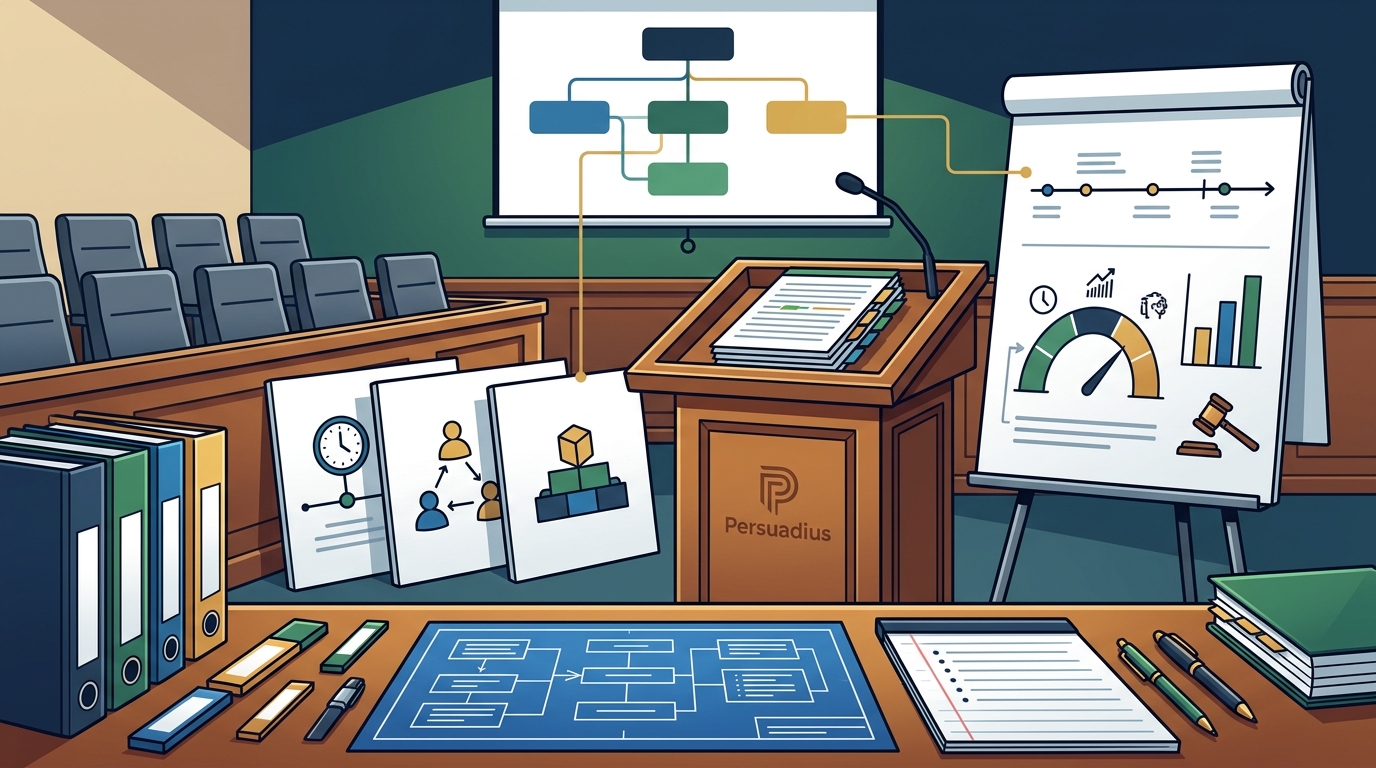
Modern litigation demands the seamless integration of demonstrative exhibits into verbal arguments. Visual advocacy transforms abstract concepts into tangible evidence that jurors can easily process. Studies published by the Federal Judiciary demonstrate that courts utilizing graphical aids report a 35 percent increase in juror engagement. You must select visuals that directly correlate with your spoken narrative. Overloading slides with excessive text or data points creates cognitive friction. Instead, prioritize high-impact diagrams, timelines, and annotated photographs. These elements should reinforce your core arguments without distracting from your delivery. Partner with specialized litigation consultants to design exhibits that maximize persuasive impact.
Selecting High-Impact Exhibits
Choosing the right demonstrative materials requires understanding juror cognitive load. Attorneys should limit primary slides to three or four key points per minute. Each visual must serve a distinct evidentiary purpose. Redundant graphics waste valuable trial time and dilute your message. Test every exhibit against your case theory before finalizing your presentation. Ensure all materials comply with local court rules and evidentiary standards. Properly vetted visuals prevent objections and maintain courtroom momentum.
Applying Jury Psychology Principles
Jury psychology is the systematic study of how cognitive biases and emotional triggers influence verdict decisions. Understanding these psychological mechanisms allows attorneys to craft more persuasive addresses. Data from peer-reviewed legal journals confirms that emotionally resonant narratives increase verdict alignment with plaintiff claims by 22 percent. The Supreme Court emphasizes that emotional framing must remain strictly tethered to admissible evidence. You should identify the demographic and psychographic profile of your prospective jury panel. Tailor your language to match their lived experiences and values. Avoid overly technical jargon that creates unnecessary barriers to comprehension. Use plain language to explain complex financial or medical concepts. This accessibility builds trust and reduces juror frustration during lengthy proceedings.
Mitigating Cognitive Biases
Cognitive bias is a mental shortcut that frequently distorts how jurors process initial information. Confirmation bias causes panel members to favor evidence that aligns with their preexisting beliefs. Anchoring bias leads jurors to fixate on the first numerical figure presented. Attorneys must proactively address these psychological traps during their opening address. Provide clear contextual benchmarks to prevent skewed reference points. Acknowledge opposing arguments fairly to demonstrate confidence and credibility. This transparency reduces defensive juror reactions and fosters open-minded evaluation.
Delivery Techniques and Pacing
Verbal delivery and strategic pacing determine how effectively your opening statement resonates with the jury. A measured speaking rate allows jurors to absorb complex information without cognitive overload. According to the ABA guidelines, optimal delivery speeds range between 125 and 150 words per minute. You should practice your address aloud multiple times to identify awkward phrasing or rushed transitions. Record your rehearsals to analyze vocal tone, emphasis, and natural pauses. Strategic silence often carries more persuasive weight than continuous speech. Use deliberate pauses to highlight critical facts or transition between major arguments. Maintain steady eye contact to establish authority and connection with the jury box.
Effective Rehearsal Protocols
Structured rehearsal protocols transform theoretical drafts into polished courtroom performances. Attorneys should conduct mock trials with diverse focus groups to test delivery effectiveness. These simulations reveal weak arguments and confusing transitions before actual trial dates. Feedback from experienced jury consultants provides actionable insights for refinement. Adjust your pacing based on panel reactions during practice sessions. Prioritize clarity and emotional authenticity over theatrical performance. Consistent rehearsal builds muscle memory and reduces trial-day anxiety.
Avoiding Common Drafting Pitfalls
Even experienced attorneys frequently undermine their opening statements through preventable errors. Reading verbatim from a prepared script creates a robotic delivery that disengages jurors. Overpromising on evidentiary outcomes violates ethical guidelines and damages attorney credibility. Introducing inadmissible evidence during your address invites immediate objections and judicial reprimands. You must carefully review every factual assertion against your discovery file. Maintain strict adherence to court rules regarding evidentiary boundaries. Focus on what the evidence will prove rather than what you personally believe. This discipline preserves your credibility and prevents damaging cross-examination traps. Review our comprehensive litigation consulting report for additional drafting guidance.
Strategic Comparison of Opening Approaches
| Approach Type | Primary Objective | Best Use Case | Implementation Strategy |
|---|---|---|---|
| Chronological Narrative | Establish clear timeline | Contract disputes | Sequential evidence mapping |
| Thematic Argument | Highlight core legal theory | Tort claims | Concept-driven framing |
| Visual-Heavy Presentation | Maximize juror retention | Medical malpractice | Integrated demonstratives |
| Emotional Appeal Focus | Build jury empathy | Wrongful death | Client-centered storytelling |
Key Takeaways
- Establish a single, unifying case theory before drafting any opening language.
- Integrate high-impact visual exhibits to improve juror retention by approximately 40 percent.
- Maintain a delivery speed between 125 and 150 words per minute for optimal comprehension.
- Conduct multiple mock trials with diverse focus groups to identify weak arguments.
- Avoid reading verbatim scripts to preserve natural courtroom connection and authority.
- Strictly adhere to evidentiary boundaries to prevent damaging judicial objections.
- Leverage specialized litigation consulting services to refine theoretical frameworks.
Frequently Asked Questions
How long should a standard opening statement last?
Most federal courts allocate between 20 and 45 minutes for opening arguments. State courts may permit slightly longer durations depending on case complexity. You should prioritize covering your core theory rather than exhaustively listing every detail. Judges frequently intervene if counsel exceeds reasonable time limits without substantial justification.
Can attorneys mention inadmissible evidence during their opening address?
Attorneys must strictly avoid referencing inadmissible evidence during opening statements. Introducing excluded materials invites immediate objections and potential mistrial declarations. Focus exclusively on facts that will be substantiated by admissible testimony and exhibits. Consult your local court rules to ensure full compliance with evidentiary standards.
What is the most effective way to handle opposing counsel arguments?
Address opposing arguments directly but briefly to demonstrate confidence and thorough preparation. Acknowledge weak counterpoints to neutralize their impact before the jury forms independent conclusions. Avoid excessive debate during your opening address to maintain courtroom momentum. Reserve detailed rebuttals for your closing argument phase.
How do jury consultants assist with opening statement preparation?
Jury consultants conduct mock trials to test opening arguments against representative focus groups. They analyze juror reactions to identify confusing transitions or weak theoretical anchors. Consultants also design demonstrative exhibits that maximize persuasive impact without violating court rules. Their feedback directly informs final drafting and rehearsal protocols.
Should attorneys use emotional appeals in their opening statements?
Emotional appeals are highly effective when grounded in verifiable factual evidence. Jurors respond positively to narratives that highlight human impact without sacrificing logical rigor. Avoid manipulative tactics that contradict the established evidentiary record. Balance emotional resonance with factual precision to maintain professional credibility.
Contact Our Litigation Team
Securing favorable verdict outcomes requires meticulous preparation and strategic execution. Our nationwide litigation consulting team provides comprehensive support for complex civil and criminal matters. We have successfully managed over 10,000 high-stakes cases with more than 2 trillion dollars cumulatively at stake. Our experts specialize in jury research, trial graphics, and opening statement drafting. Contact our national headquarters today to schedule a confidential consultation. Call 800.847.9330 or visit our contact page to begin your case evaluation. We operate 24/7 to support your most critical litigation deadlines.