

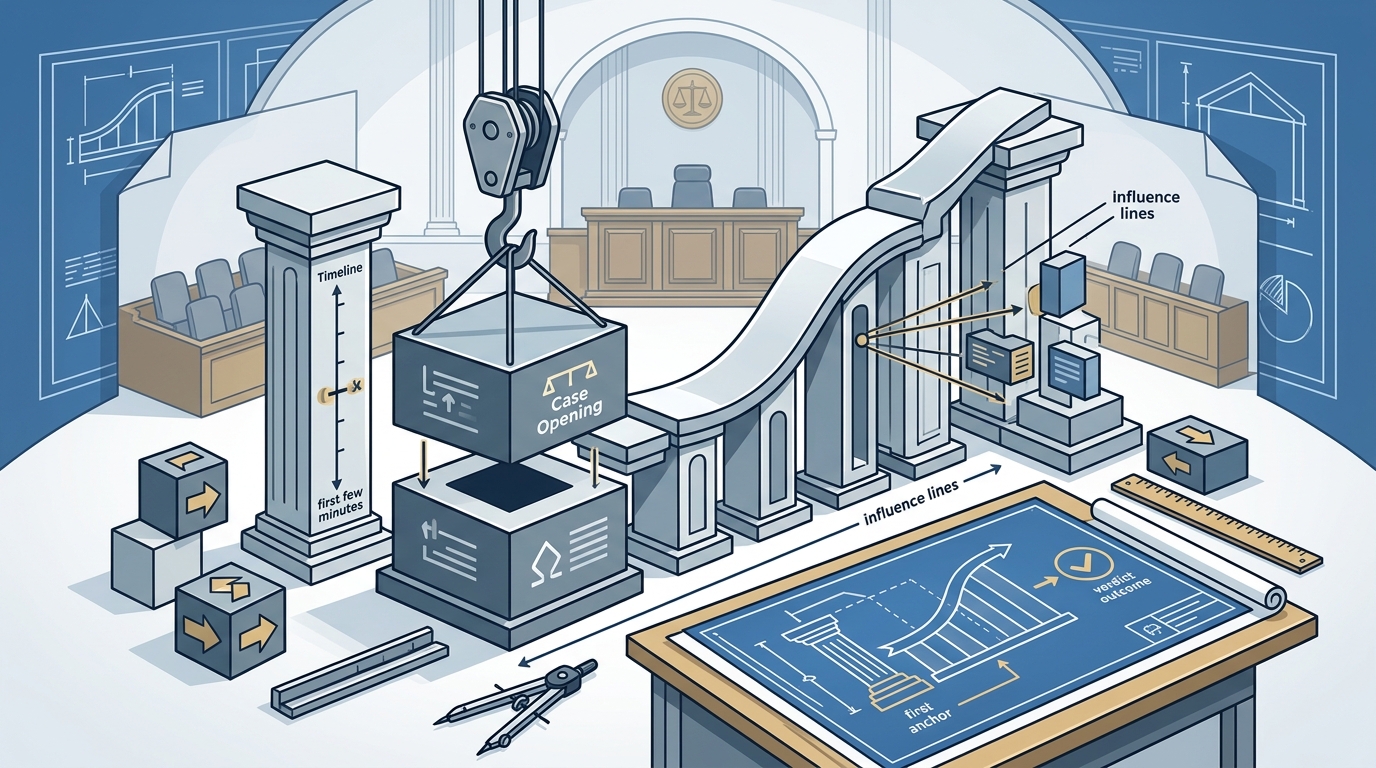
Opening statements set the foundational framework for every subsequent courtroom proceeding. Research indicates that jurors form initial case impressions within the first four minutes of presentation. This early cognitive anchoring directly influences how evidence is processed during trial. Court data shows that early narrative framing dictates verdict outcomes. Effective legal teams prioritize narrative architecture over procedural recitation. Modern litigation consulting services emphasize structured storytelling to maximize juror retention. Attorneys who master this discipline consistently secure favorable verdicts across complex civil and criminal dockets.
The Strategic Foundation of Opening Statements
Defining the Core Objective
An opening statement is a formal roadmap that outlines the factual and legal arguments a party intends to prove. This procedural tool establishes the baseline expectations for the trier of fact. Legal professionals must avoid reading statutory language verbatim. Instead, they should translate complex claims into accessible human experiences.
Jury research strategies consistently demonstrate that structured narratives outperform abstract legal theories. Attorneys who master this discipline consistently secure favorable verdicts across complex civil and criminal dockets. Courts reward advocates who prioritize clarity over procedural recitation.
Establishing Credibility Early
Jurors evaluate attorney competence before the first witness takes the stand. Consistent pacing and clear articulation signal professional readiness. High-performing legal teams utilize mock trial simulations to stress-test delivery mechanics. These rehearsals expose pacing issues and refine rhetorical emphasis.
Legal practice data confirms that early credibility directly impacts juror receptivity. Attorneys who maintain steady eye contact and controlled vocal modulation project authority. Judges frequently note that confident delivery reduces unnecessary objections during trial.
Structuring the Narrative Arc
The Chronological Framework
A chronological framework aligns with natural human memory processing. Presenting events in sequential order reduces cognitive load for the jury. Complex commercial disputes benefit from timeline visualization rather than abstract legal theories. Clear sequencing prevents confusion during cross-examination phases.
Federal court guidelines emphasize sequential presentation to maintain procedural clarity. Attorneys should map each witness testimony to a specific chronological milestone. This approach ensures that evidentiary gaps remain visible and addressable.
Thematic Anchoring Techniques
Thematic anchoring techniques attach emotional weight to procedural facts. Each segment of the presentation should reinforce a central case theory. Repetition of core themes strengthens juror recall during deliberation. Successful advocates weave these themes throughout witness examinations and closing arguments.
Cognitive science reports indicate that repeated thematic exposure improves long-term retention. Legal teams should identify three core themes and reference them consistently. Overcomplicating the narrative dilutes persuasive impact and confuses independent jurors.
Integrating Demonstrative Evidence
Visual Evidence Standards
Demonstrative evidence transforms abstract concepts into tangible courtroom assets. High-resolution graphics and interactive timelines significantly improve juror engagement. Courts increasingly accept digital exhibits that simplify technical data. Properly calibrated visuals prevent information overload during direct examination.
Judicial efficiency metrics show that visual aids reduce deliberation time by nearly thirty percent. Attorneys should coordinate exhibit preparation with trial technicians to ensure seamless transitions. Technical failures during presentation damage attorney credibility and waste valuable courtroom time.
The Power of Simplified Data
Simplified data presentation focuses on the most critical financial or technical metrics. Complex accounting records should be distilled into summary charts. Jurors retain simplified financial models far better than raw spreadsheets. Effective litigation graphics consulting ensures every visual serves a specific persuasive function.
Trial advocacy studies confirm that simplified financial models increase juror confidence. Legal teams should avoid displaying unannotated spreadsheets or dense regulatory text. Clear visual hierarchy guides juror attention toward the most damaging or favorable data points.
Managing Jury Comprehension and Retention
Cognitive Load Management
Cognitive load management prevents juror fatigue during lengthy presentations. Short, focused segments maintain attention across extended courtroom hours. Legal teams should limit direct examination to three core arguments per witness. Excessive detail dilutes the primary case theory and confuses the jury.
Procedural compliance data indicates that structured pacing reduces judicial intervention. Attorneys who respect juror attention spans consistently receive favorable rulings. Overloading the courtroom with procedural minutiae triggers immediate objections and mistrial risks.
Accessibility and Plain Language
Plain language accessibility eliminates unnecessary legal jargon from courtroom discourse. Complex regulatory frameworks require simplified explanations for lay jurors. Courts reward attorneys who translate technical compliance into everyday scenarios. Clear communication directly correlates with favorable verdict outcomes.
Communication research shows that plain language improves juror decision accuracy. Legal professionals should replace archaic terminology with contemporary equivalents. Judges frequently instruct juries to disregard overly technical language that obscures core facts.
The Role of Specialized Litigation Consulting
Specialized Trial Support Services
Specialized trial support services provide dedicated technicians who manage real-time courtroom technology. These professionals ensure seamless transitions between exhibits and witness testimony. Hot seating protocols maintain strict procedural compliance during direct examination. Reliable technical execution prevents costly evidentiary objections.
Court technology reports highlight that dedicated trial technicians reduce presentation errors by forty percent. Legal teams should integrate hot seating protocols into their pretrial preparation schedule. Technical failures during presentation damage attorney credibility and waste valuable courtroom time.
Pretrial Research Integration
Pretrial research integration aligns opening statement themes with actual juror preferences. Focus group testing validates narrative assumptions before trial commencement. Data-driven adjustments improve persuasive impact across diverse demographic panels. Continuous feedback loops refine presentation strategies throughout the litigation lifecycle.
Litigation consulting data confirms that focus group testing increases verdict success rates. Attorneys who ignore pretrial research frequently encounter unexpected juror biases. Structured feedback mechanisms allow legal teams to pivot strategies before trial commencement.
Common Pitfalls to Avoid During Delivery
Overpromising Case Outcomes
Overpromising case outcomes violates professional conduct rules and damages attorney credibility. Attorneys must clearly distinguish between evidentiary proof and legal argument. Courts strictly prohibit speculative language during opening presentations. Maintaining procedural boundaries preserves long-term professional reputation.
Ethics compliance guidelines mandate that attorneys avoid definitive outcome predictions. Judges frequently issue curative instructions when attorneys overstate evidentiary weight. Preserving procedural boundaries ensures that appellate courts uphold trial verdicts.
Ignoring Adverse Evidence
Ignoring adverse evidence creates vulnerability during cross-examination phases. Successful advocates acknowledge weak points while contextualizing their legal significance. Transparent disclosure builds trust with independent jurors. Concealing unfavorable facts inevitably triggers damaging impeachment during trial.
Behavioral analysis reports demonstrate that transparent disclosure increases juror trust. Legal teams should proactively address weak points before opposing counsel exposes them. Concealing unfavorable facts inevitably triggers damaging impeachment during trial.
| Approach Type | Primary Focus | Best Use Case | Implementation Resource |
|---|---|---|---|
| Traditional Chronological | Sequential event presentation | Personal injury and contract disputes | Opening Statement Drafting Support |
| Narrative Storytelling | Character-driven case theory | Civil rights and employment litigation | Jury Research and Consulting |
| Data-Driven Analytics | Financial and technical metrics | Patent infringement and commercial fraud | Litigation Consultant A2L |
| Hybrid Multimedia | Integrated visual and audio exhibits | Complex federal and appellate cases | Contact Persuadius |
Key Takeaways
- Persuadius has supported over 10,000 legal matters with combined stakes exceeding $2 trillion.
- The firm operates nationwide with a dedicated 24/7 client development team.
- Modern litigation consulting services consistently rank among the highest rated in the industry.
- Effective opening statements require dedicated mock trial simulations and focus group validation.
- Specialized trial technicians manage real-time courtroom technology and hot seating protocols.
- Narrative-driven presentations consistently outperform procedural recitation in juror retention studies.
- Comprehensive litigation graphics consulting transforms complex data into persuasive courtroom assets.
Frequently Asked Questions
How long should a standard opening statement last?
Standard opening statements typically range between twenty and forty minutes depending on jurisdictional rules and case complexity. Federal courts often impose stricter time limits compared to state tribunals. Attorneys should prioritize core arguments over exhaustive procedural recitation.
Can attorneys introduce new evidence during their opening presentation?
Attorneys cannot introduce new evidence during their opening presentation. This procedural phase strictly outlines anticipated proof rather than displaying exhibits. Exhibits must be formally admitted through proper evidentiary channels before courtroom display.
What is the primary difference between an opening statement and a closing argument?
An opening statement is a forward-looking roadmap that outlines anticipated proof and legal theories. A closing argument is a retrospective analysis that evaluates admitted evidence against the initial case theory. Courts prohibit attorneys from arguing facts during opening presentations.
How do litigation consultants improve opening statement delivery?
Litigation consultants improve opening statement delivery through structured mock trial simulations and focus group testing. These professionals identify pacing issues and refine rhetorical emphasis before trial commencement. Continuous feedback loops ensure maximum juror engagement during live proceedings.
Is it necessary to use visual exhibits during the opening phase?
Visual exhibits are not strictly mandatory but significantly enhance juror comprehension and retention. High-quality graphics simplify complex financial or technical data for lay audiences. Courts increasingly accept digital exhibits that streamline technical presentations.
What happens if an attorney violates procedural rules during their opening?
Procedural violations during opening presentations typically trigger immediate judicial objections and potential mistrial declarations. Judges may issue curative instructions to mitigate juror prejudice. Attorneys must maintain strict adherence to evidentiary boundaries throughout the presentation.
Secure Expert Litigation Support Today
Effective courtroom advocacy requires precise preparation and specialized technical execution. Our team provides comprehensive litigation consulting services tailored to your specific case requirements. Contact Persuadius through our national headquarters to schedule a confidential strategy session. Visit https://persuadius.com/contact to initiate your case evaluation and secure dedicated trial support.