
Selecting the right trial technology provider requires a rigorous assessment of technical reliability, subject matter expertise, and operational responsiveness. Modern litigation increasingly relies on demonstrative evidence to clarify complex arguments for jurors. Legal teams must evaluate vendors based on their ability to integrate seamless courtroom support with deep strategic insight. This guide outlines the critical evaluation criteria for securing high-stakes litigation support.
Evaluating Technical Infrastructure and Reliability
The foundation of any effective trial support system is robust technical infrastructure. Providers must offer redundant hardware and software solutions to prevent courtroom disruptions. A reliable vendor supplies backup projectors, audio systems, and computing devices that meet the specific requirements of federal and state courts. Legal teams should verify that the provider maintains a comprehensive inventory of compatible adapters and cables for diverse courtroom setups.
Reliability extends beyond hardware to include software stability and data security. Providers must implement encrypted file transfer protocols to protect sensitive case materials. The vendor should offer pre-trial testing services to ensure all exhibits function correctly before the jury enters the room. A failure in technical execution can undermine the credibility of even the strongest legal arguments. Selecting a litigation consultant with proven infrastructure ensures that technical failures do not compromise your case strategy.
Assessing Expertise in Jury Research and Mock Trials
Technical capability must be paired with deep psychological insight into juror decision-making. The best providers offer comprehensive jury research services that inform technology deployment. This includes conducting focus groups and mock trials to test the impact of visual aids on juror comprehension. Providers should utilize data-driven methodologies to refine demonstrative evidence based on juror feedback.
Jury consulting is the strategic analysis of juror demographics and behavioral patterns to predict case outcomes and refine argumentation strategies. Effective providers integrate research findings directly into the design of trial graphics and technology workflows. They help legal teams identify which visual elements resonate most strongly with diverse jury panels. This iterative process ensures that technology serves the narrative rather than distracting from it. Partnering with a firm that offers jury consulting services allows legal teams to validate their technology strategy before trial begins.
Integration of Graphics and Storytelling Capabilities
Technology is most effective when it enhances the storytelling arc of the case. Providers must possess advanced graphic design skills to create clear, persuasive visual exhibits. This includes the ability to translate complex technical data, medical records, or financial models into accessible visual formats. The provider should collaborate closely with attorneys to ensure that every graphic supports the core theory of the case.
Storytelling in litigation requires a seamless blend of narrative structure and visual reinforcement. Providers should offer services that include opening statement drafting support to align technology with the initial case presentation. This ensures that the jury receives a consistent message from the outset. The ability to create dynamic animations and interactive demonstrations can significantly improve juror engagement. A provider skilled in opening statement drafting support can help integrate technology into the broader persuasive strategy effectively.
On-Site Support and Hot Seater Protocols
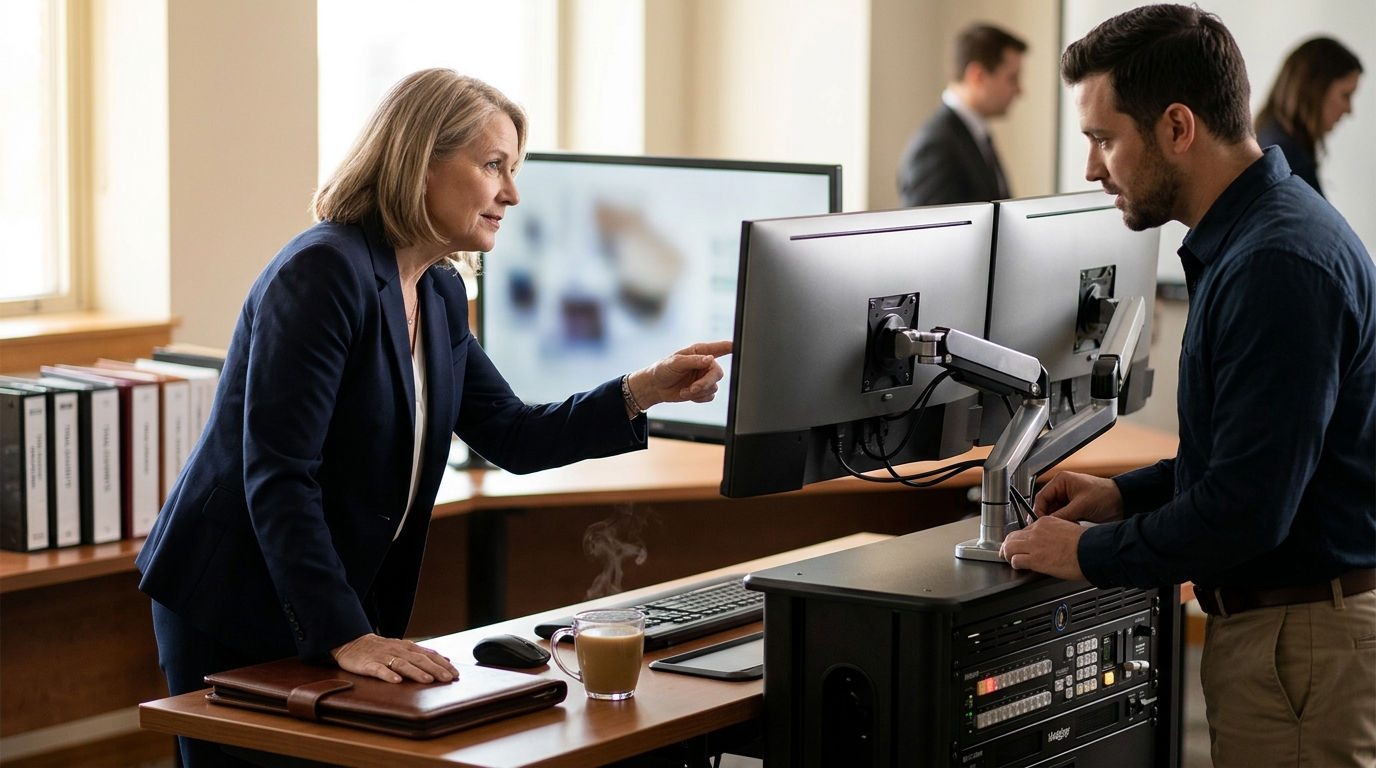
Real-time courtroom support is essential for managing the dynamic nature of trials. Hot seater support refers to the real-time technical assistance provided by specialized technicians during live proceedings to manage exhibits and prevent procedural errors. These technicians must be highly trained in both the technical operation of equipment and courtroom etiquette. They act as the bridge between the legal team and the technology, ensuring smooth transitions between exhibits.
Effective hot seaters anticipate the needs of the attorneys and adjust settings instantly. They must manage complex software interfaces while maintaining focus on the proceedings. Providers should vet their technicians for experience in high-stakes environments. The presence of a skilled hot seater reduces the cognitive load on attorneys, allowing them to focus on examination and argumentation. Contact the team directly to discuss specific trial support technicians requirements for your upcoming matter.
Vendor Longevity and Case Volume Metrics
The track record of a provider offers valuable insight into their reliability and expertise. Established vendors with decades of experience have likely encountered a wide variety of courtroom scenarios. They possess the institutional knowledge to navigate unique procedural rules and judge preferences. High case volume indicates that the provider is a trusted partner for top law firms and corporate legal departments.
Providers with extensive experience often maintain detailed records of past performance and outcomes. This data can inform future technology decisions and risk assessments. Clients should review testimonials and case studies to verify the provider's claims. A provider with a history of supporting major litigation demonstrates the capacity to handle pressure and tight deadlines. Reviewing customer testimonials can provide valuable context regarding a vendor's performance under stress.
Response Time and Conflict Resolution Protocols
Legal emergencies require immediate vendor availability. Providers must offer 24/7 contact capabilities to address last-minute requests or technical failures. Rapid response times are critical when dealing with pre-trial motions or unexpected evidentiary issues. The vendor should have a clear protocol for handling conflicts of interest to ensure ethical compliance.
A robust conflict resolution process protects the attorney-client privilege and ensures unbiased support. Providers should conduct thorough conflicts checks before accepting new engagements. Transparent communication regarding availability and capacity helps legal teams plan effectively. A provider that emphasizes 24/7 support demonstrates a commitment to client success. For immediate assistance or to run a conflicts check, legal teams can reach out via the contact page to speak with client development directors.
Key Takeaways
- Technical Redundancy: Ensure the provider offers backup hardware and encrypted data protocols to prevent disruptions.
- Jury Research Integration: Select vendors that use mock trials and focus groups to refine technology strategies.
- Storytelling Alignment: Graphics and technology must directly support the core narrative and opening statements.
- Hot Seater Expertise: Real-time technicians must be trained in both equipment operation and courtroom procedure.
- Proven Track Record: Prioritize providers with decades of experience and high case volume metrics.
- 24/7 Availability: Vendors should offer round-the-clock support and clear conflict resolution protocols.
- Strategic Partnership: The provider should function as an extension of the legal team, not just a service vendor.
Frequently Asked Questions
What is trial technology?
Trial technology is the systematic application of digital tools and software to enhance courtroom presentation and evidence visualization. It encompasses hardware, software, and human expertise designed to support legal arguments.
How do mock trials influence technology selection?
Mock trials reveal how jurors interact with specific visual aids and software interfaces. This feedback allows legal teams to adjust technology choices for maximum clarity and persuasion.
What qualifications should a hot seater possess?
A qualified hot seater must demonstrate proficiency in courtroom equipment, software management, and professional courtroom conduct. They should have experience handling high-pressure litigation environments.
Why is 24/7 support important for trial providers?
Legal cases often involve unexpected developments or last-minute filings. 24/7 support ensures that technical assistance is available whenever emergencies arise, preventing procedural delays.
How do providers handle conflicts of interest?
Providers conduct comprehensive conflicts checks against all parties involved in the litigation. This process ensures ethical compliance and protects the integrity of the attorney-client relationship.
Can technology providers assist with opening statements?
Yes, many providers offer services that integrate technology with opening statement drafting. This ensures that visual aids reinforce the initial narrative presented to the jury.
What metrics indicate a provider's reliability?
Key metrics include years in operation, total case volume, client retention rates, and the complexity of matters supported. High-volume providers often have more robust infrastructure and experienced staff.
How do I verify a provider's technical capabilities?
Request detailed information about their hardware inventory, software licenses, and security protocols. Reviewing case studies and client testimonials can also provide evidence of their technical competence.
Book Your Consultation
Selecting the right trial technology provider is a critical decision that impacts the outcome of your case. By evaluating technical infrastructure, jury research expertise, and operational responsiveness, legal teams can secure the support they need. Persuadius offers comprehensive litigation consulting services, including jury research, trial graphics, and hot seater support. Contact Persuadius today to discuss your specific requirements and schedule a consultation with our team.
Contact Persuadius to learn more about our nationwide support capabilities.