
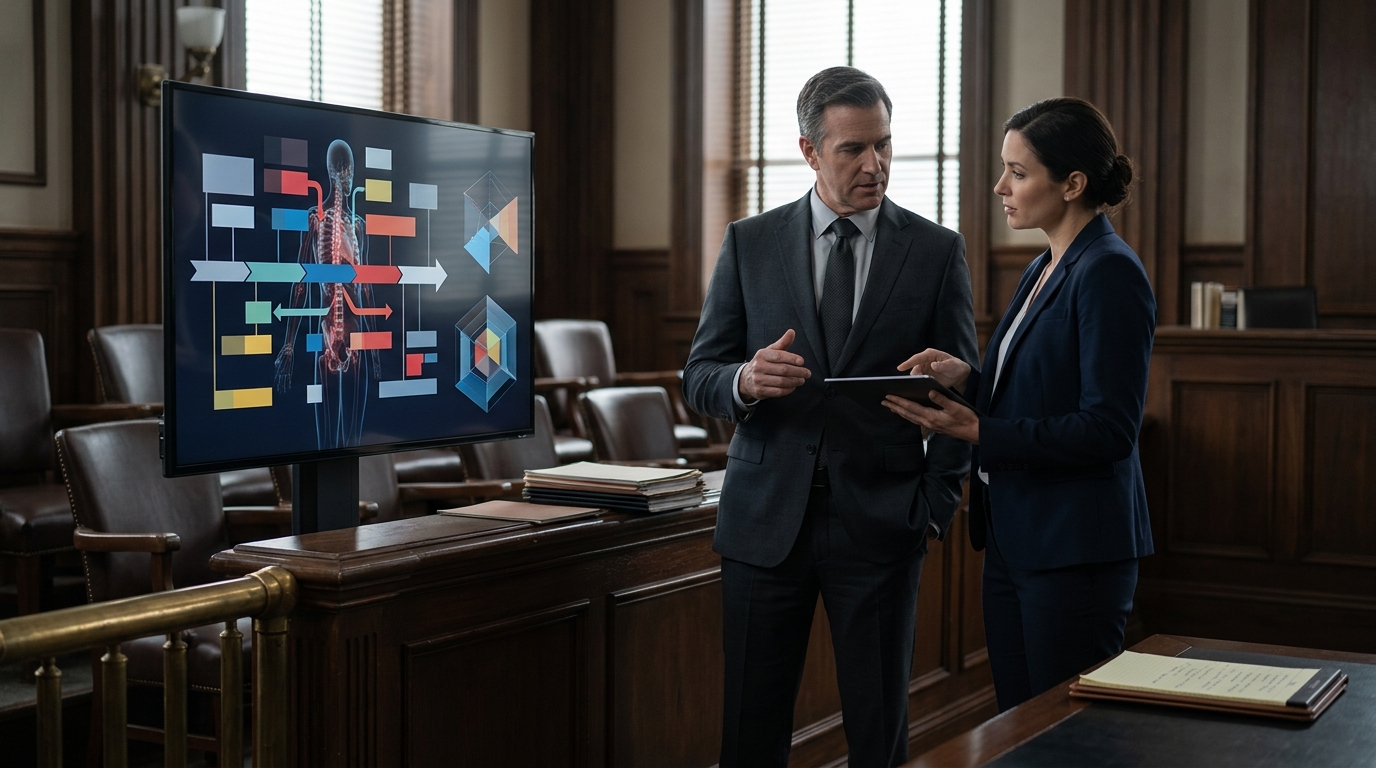
Trial graphics are visual exhibits and demonstrative evidence used in courtroom presentations to help judges and jurors understand complex facts quickly. When designed well, they do more than illustrate; they persuade. Research shows that about two-thirds of jurors are visual learners, and combining oral testimony with visual aids can boost jury recall to 85% after several days. Whether you are preparing for a bench trial, a jury trial, or an arbitration, understanding how to use trial graphics strategically can be the difference between a favorable verdict and a lost opportunity. This guide walks you through every step of building and deploying effective trial graphics.
Why Trial Graphics Matter in Modern Litigation
Jurors today are shaped by a media-rich world. The average juror expects visual information, not just spoken testimony. According to a peer-reviewed study published in PMC, the use of 3D imaging improves juror understanding of technical language, which in turn leads to better-informed decision-making.
A separate body of research cited by the National Law Review confirms that visual presentations have become the most effective communication tools for explaining complex stories to courtroom audiences. Jurors who feel confused may respond with resentment toward the presenting attorney, making clarity a strategic imperative.
The Retention Advantage
People remember only about 10% of audio-only information after 72 hours. When visuals and oral testimony are combined, retention rates surge dramatically. This is precisely why litigation graphics consulting has become a core part of trial preparation for top law firms nationwide.
Types of Trial Graphics Every Litigator Should Know
Litigation graphics is the service category that describes visual work product used before and during trial. Trial graphics is the term most often applied to the courtroom exhibits themselves. Demonstrative evidence is the legal label that encompasses both. Understanding the differences helps you plan the right assets at the right time.
| Graphic Type | Best Use Case | Format |
|---|---|---|
| Timeline | Sequencing events for chronological clarity | Electronic or printed |
| Document Call-Out | Highlighting key contract or email language | Electronic |
| Animated Reconstruction | Demonstrating a dynamic process or incident | Electronic (video) |
| Data Visualization / Chart | Simplifying financial or statistical evidence | Electronic or foam-core board |
| Illustrative Diagram | Explaining technical concepts (e.g., patent claims) | Electronic or printed |
| Physical Model | Tangible exhibit for product liability cases | 3D printed or fabricated |
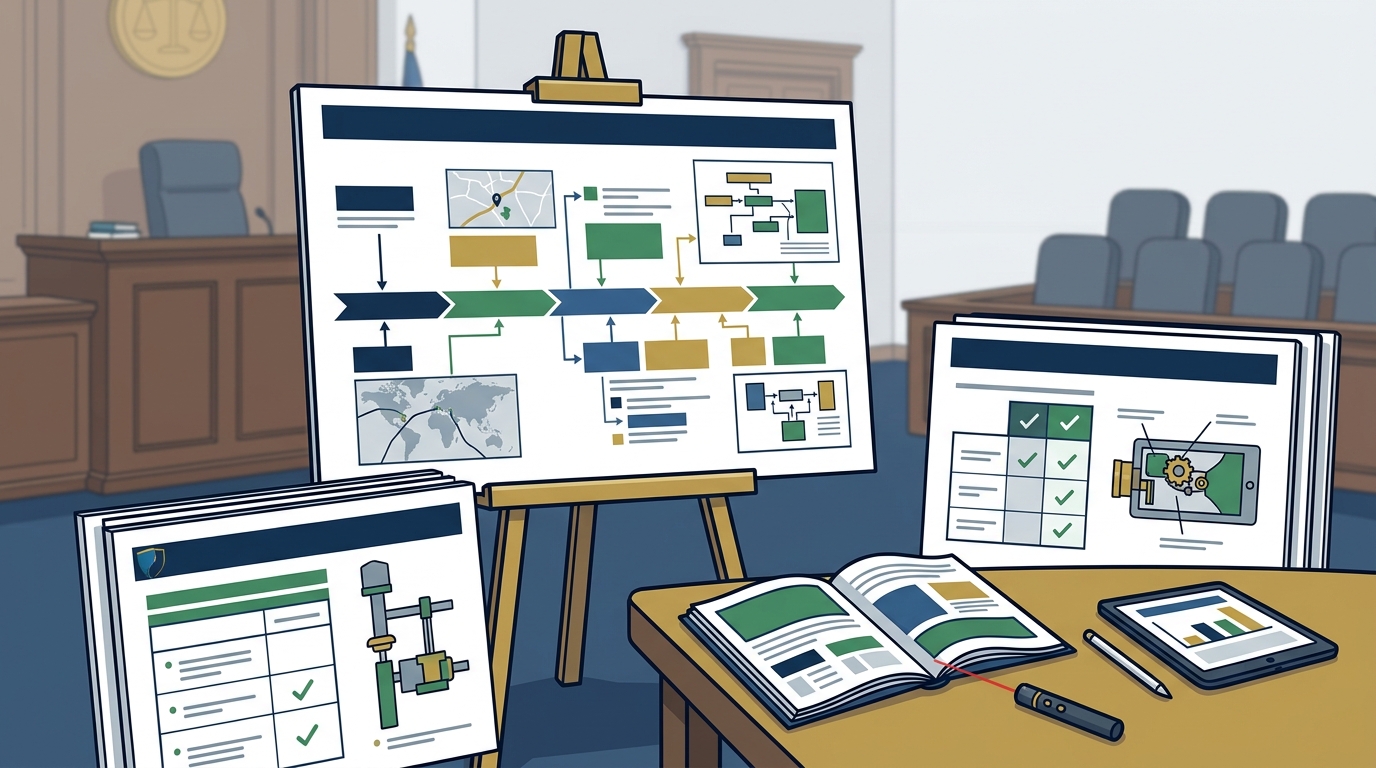
Firms like Persuadius routinely create a mix of print and electronic exhibits, and no two are exactly alike. You can explore real-world samples on the trial graphics examples page.
Design Principles That Drive Juror Comprehension
Effective trial graphics are not about flashy aesthetics. They are about reducing cognitive load so jurors can absorb your argument quickly and recall it during deliberations.
Simplicity Over Complexity
Every slide or board should communicate one idea. Overloading a single graphic with multiple data points forces jurors to decode rather than absorb. Color theory, layout balance, and typography all play crucial roles in keeping the message focused.
Consistency Builds Credibility
Using a unified color palette, consistent fonts, and a clear visual hierarchy across all exhibits signals professionalism. High-quality, professionally designed visuals lend credibility to the attorney's overall presentation and reinforce trust with the jury.
Accessibility for All Learners
Because juror panels include auditory, visual, and kinesthetic learners, the strongest presentations pair spoken narrative with on-screen visuals. This dual-channel approach serves the broadest audience and maximizes retention. Learn more about how trial graphics bridge the gap between information and persuasion.
Using Storytelling to Transform Data into Persuasion
Jurors do not decide cases based on raw information alone. They decide based on what makes sense, what feels credible, and what they can recall in the jury room. That is why storytelling is the engine behind every effective trial graphic.
A timeline linking events, for example, helps a jury comprehend a sequence at a glance and reduces the chances of misunderstanding. Weaving data into a narrative transforms abstract numbers into a story that resonates emotionally and logically.
Persuadius consultants, many of whom hold law degrees, approach every graphic with a persuasion-first mindset. The firm's free 559-page e-book on trial graphics and persuasion compiles nearly 200 expert articles on this very topic.
When to Engage a Trial Graphics Consultant
One of the most frequent mistakes litigators make is hiring a trial presentation firm too late. Many lawyers wait until weeks before trial, when exhibits are disorganized and themes are still untested. Starting early yields two advantages: higher-quality visuals and the ability to let graphics shape your discovery and deposition strategy.
Ideally, you should engage a graphics consultant during the case development phase, well before dispositive motions. This gives the team time to iterate on visual themes and test them in mock trials and focus groups. Persuadius, which has supported more than 10,000 cases since 1995, recommends integrating graphics planning into your initial case strategy meeting.
Common Mistakes That Undermine Trial Graphics
Even experienced trial teams stumble. Here are pitfalls to avoid:
- Information overload: Cramming too much data onto a single exhibit overwhelms jurors instead of clarifying your point.
- Inconsistent branding: Switching styles between exhibits erodes the professional impression you need to maintain.
- Ignoring the rules of evidence: Every jurisdiction has admissibility requirements for demonstrative evidence. Graphics should support your argument, not distract from it or invite objection.
- Relying on PowerPoint alone: While PowerPoint is a popular and versatile tool, professional litigation graphics software like TrialDirector or Sanction offers courtroom-specific functionality that PowerPoint lacks.
- Late engagement: Bringing in a consultant days before trial limits what can be achieved and increases cost pressure.
For a deeper look at what a full-service firm actually does behind the scenes, read what a trial presentation company really does.
Key Takeaways
- About two-thirds of jurors are visual learners; combining oral and visual evidence can boost retention to 85% after several days.
- Trial graphics is the visual work product itself, while litigation graphics describes the broader service category, and demonstrative evidence is the courtroom label for both.
- Effective graphics follow one-idea-per-slide discipline, consistent design, and dual-channel (visual plus auditory) delivery.
- Storytelling transforms raw data into a persuasive narrative jurors can recall during deliberations.
- Engage a trial graphics consultant early, ideally during case development, not weeks before trial.
- Always verify admissibility requirements for demonstrative evidence in your jurisdiction.
- Professional litigation consulting firms staff attorneys and Ph.D.s who align graphics with overall trial strategy.
Frequently Asked Questions
What are trial graphics?
Trial graphics are visual exhibits, such as timelines, charts, animations, and document call-outs, used in court to help judges and jurors understand complex evidence. They function as demonstrative evidence designed to clarify and persuade.
How do trial graphics improve jury comprehension?
Research shows that visual aids improve juror attention, recall, and understanding of quantitative information. Charts and diagrams clarify numbers, while animations explain dynamic processes, reducing the risk of juror confusion.
When should I start working with a trial graphics consultant?
The best practice is to engage a consultant during the case development phase, well before motions or depositions. Early involvement allows the visual strategy to inform discovery and creates time for iteration and testing.
Can I just use PowerPoint for trial graphics?
PowerPoint is a viable starting point, but professional courtroom software like TrialDirector or Sanction offers exhibit management, real-time annotation, and seamless video synchronization that PowerPoint cannot match. For high-stakes litigation, professional tools and designers are strongly recommended.
What is the difference between trial graphics and litigation graphics?
Trial graphics typically refers to the visual work product presented during trial. Litigation graphics is the broader service category that includes pretrial visuals for motions and hearings. Demonstrative evidence is the formal courtroom term for both.
How much do trial graphics cost?
Costs vary widely based on case complexity, number of exhibits, and format (electronic versus physical models). Simple document call-outs are relatively inexpensive, while 3D animations and large exhibit sets for multi-week trials require a significantly larger investment. A consultation with a firm like Persuadius can help you scope and budget appropriately.
Do trial graphics really influence verdicts?
Yes. Studies confirm that jurors exposed to immersive use of graphics during courtroom presentations show better comprehension and more favorable reactions compared to presentations with occasional or no visuals. Well-designed graphics can be the deciding factor in how jurors interpret evidence.
What should I look for in a trial graphics firm?
Look for a firm that staffs attorneys and design professionals, has deep courtroom experience, and integrates graphics into overall trial strategy rather than treating them as a last-minute add-on. Persuadius, for instance, has worked on over 10,000 cases with top law firms and offers full-service litigation consulting.
Ready to Elevate Your Next Courtroom Presentation?
If you have a trial, arbitration, or high-stakes hearing on the horizon, now is the time to start planning your visual strategy. Request a free consultation with Persuadius to discuss how trial graphics, jury consulting, and trial technology can strengthen your case from discovery through verdict.