

Trial graphics are visual representations used in courtrooms to help explain complex legal concepts and evidence to judges and juries. When deployed strategically, they can transform a dense, document-heavy case into a clear and compelling narrative. Research consistently shows that jurors retain far more information when it is paired with visuals, making trial graphics one of the most powerful tools in a litigator's arsenal. This guide walks you through the essential steps, types, and best practices for using trial graphics to present your case with maximum impact.
Why Trial Graphics Matter
The science behind visual communication in the courtroom is well established. According to a study referenced by the National Trial Lawyers, humans retain only about 10 percent of what they hear after 72 hours but roughly 20 percent of what they see. When visuals and spoken words are combined, retention rates climb dramatically.
A widely cited 1992 Weiss-McGrath report found a 600 percent increase in juror retention when visual and oral presentations were used together compared to oral presentations alone. These numbers make a clear case: if you want jurors to remember your arguments during deliberation, you need effective trial graphics.
Modern jurors also arrive with expectations shaped by digital media and interactive content. They process information visually by default, which means a purely verbal presentation risks losing their attention and, ultimately, their verdict.
Types of Trial Graphics for Litigation
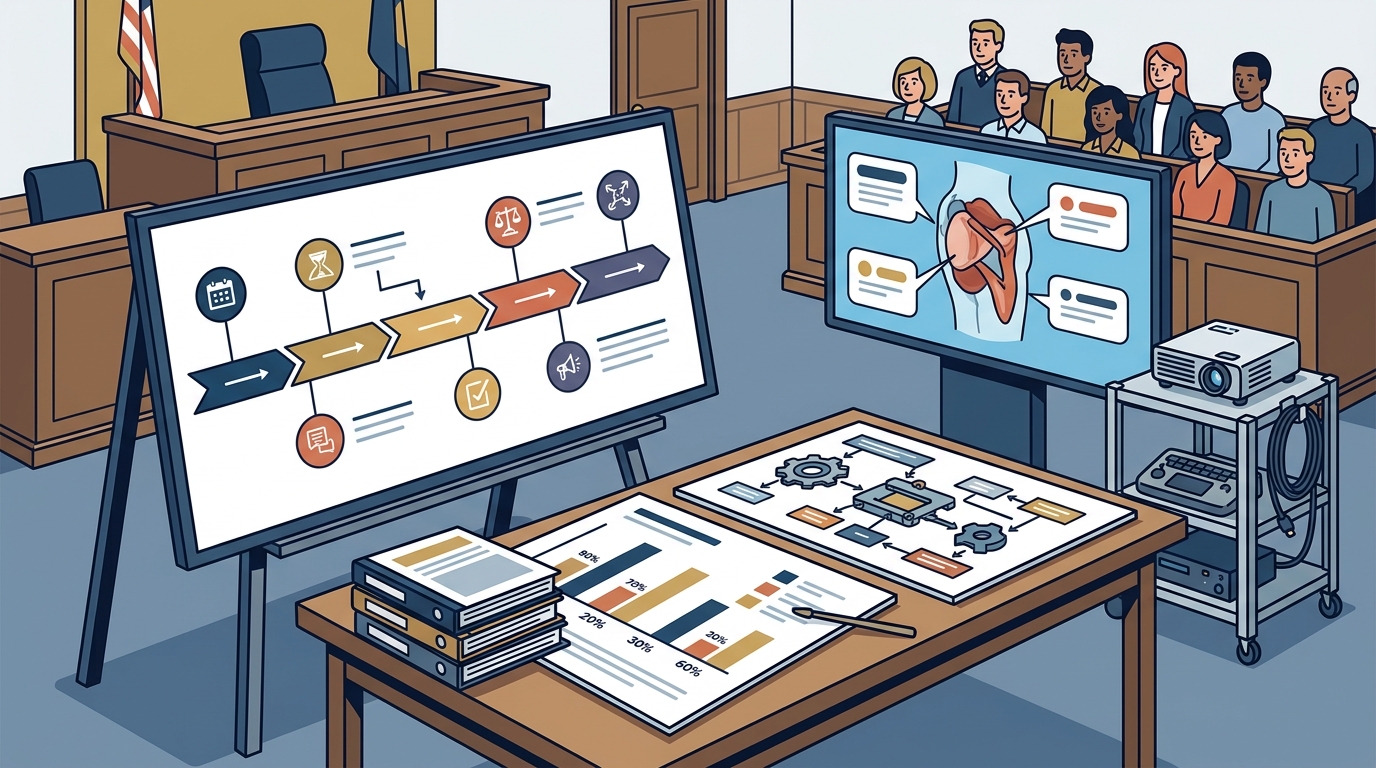
Demonstrative evidence is the courtroom label that captures visual work product used to assist the jury in understanding real evidence. The range of available formats has grown significantly with advances in technology.
| Graphic Type | Best Use Case | Courtroom Impact |
|---|---|---|
| Timeline Graphics | Establishing sequence of events | Helps jurors follow complex chronologies at a glance |
| 3D Animations | Accident or patent reconstructions | Provides realistic visual context for technical testimony |
| Infographics & Charts | Financial data, statistical evidence | Distills dense data into digestible visuals |
| Document Callouts | Highlighting key contract or email language | Focuses jury attention on critical text |
| Interactive Exhibits | Multi-layered evidence sets | Engages jurors and accommodates multiple learning styles |
Each type serves a distinct strategic purpose. The best trial teams match graphic formats to the specific arguments they need to reinforce, rather than using a one-size-fits-all approach. Learn more about the full range of options at the Persuadius litigation graphics consulting page.
Step-by-Step: Building an Effective Visual Strategy
1. Identify Your Core Narrative
Every case has a central story. Before any graphic is designed, define the two or three themes you want jurors to carry into deliberation. Mock trials and focus groups are excellent tools for testing which themes resonate most with representative jurors.
2. Map Graphics to Key Arguments
Assign at least one visual to every pivotal argument or piece of testimony. Timelines work well for causation narratives, while charts and infographics support damages arguments. Review trial graphics examples to see how different formats align with various case types, including patent, antitrust, and construction matters.
3. Integrate Visuals With Testimony
Graphics should complement, not compete with, your spoken presentation. A visual displayed while an attorney reads bullet points aloud forces the jury to split attention. Instead, use graphics to illustrate a single point while you narrate its significance. This aligns with Richard Mayer's Multimedia Learning Theory, which demonstrates that coordinated audio-visual presentations produce the deepest learning.
Design Principles That Win Cases
Design principles such as color theory, layout balance, and typography are crucial to effective trial graphics. A cluttered slide packed with text is worse than no slide at all because it creates cognitive overload, which is the enemy of comprehension.
Keep It Simple
Each graphic should communicate one idea. If a juror cannot understand the visual within five seconds, it needs to be simplified.
Use Color Strategically
Color is not decoration. It should guide the eye to the most important element. Consistent color coding across all exhibits helps jurors track recurring themes or parties throughout the trial.
Design for the Deliberation Room
Jurors often request exhibits during deliberation. Graphics that are self-explanatory and labeled clearly will continue persuading even when no attorney is present to narrate them.
Common Mistakes to Avoid
One of the most frequent errors is overloading slides with bullet points. When attorneys read bullet points aloud while the jury reads the same text on screen, both channels compete rather than reinforce. This phenomenon is well documented in cognitive load research and undermines persuasion.
Another mistake is starting graphic development too late. Rushed visuals look rushed, and they often fail to align with the trial narrative. Beginning graphic development early, ideally during the discovery phase, ensures that visuals are tested, refined, and integrated into the overall case strategy.
Finally, avoid using generic stock graphics. Jurors can tell the difference between a custom visual designed for their case and a template pulled from a library. Custom graphics signal preparation and credibility.
Working With Trial Graphics Specialists
A trial graphics specialist is a professional who specializes in creating visual aids and presentations for use in legal proceedings. At firms like Persuadius, specialists typically work in pairs: one person with legal training handles the conceptual strategy while a team of artists executes the design. This pairing ensures that every graphic is both legally accurate and visually compelling.
Persuadius, formerly A2L Consulting, has supported trial teams nationwide on more than 10,000 matters since 1995. Their litigation graphics consultants are attorneys who understand both the big picture behind litigation and the importance of detail. Explore the firm's unique approach on the Why Choose Persuadius page.
For litigators who also need courtroom technology support, a dedicated trial graphics specialist team can manage exhibit presentation, synced deposition video, and real-time changes so your advocacy never misses a beat.
Key Takeaways
- Jurors retain approximately 10% of what they hear but up to 65% when visuals are added, making trial graphics essential for persuasion.
- Trial graphics is the umbrella term for visual work product, while demonstrative evidence is the formal courtroom designation.
- Match each graphic type (timeline, animation, infographic, callout) to the specific argument it supports.
- Begin graphic development during discovery, not the week before trial, to allow time for testing and refinement.
- Design each visual to communicate a single idea that a juror can grasp within seconds.
- Work with specialists who combine legal expertise with design skill to ensure accuracy and impact.
- Graphics should complement narration, never duplicate it, to avoid cognitive overload.
Frequently Asked Questions
What are trial graphics?
Trial graphics are visual representations designed by expert graphic artists for use in legal trials and procedures. They include timelines, charts, 3D animations, and infographics that help judges and juries understand complex evidence.
How do trial graphics improve jury comprehension?
Research shows people retain far more information when it is presented visually alongside spoken words. The Weiss-McGrath report documented a 600% increase in retention for combined visual and oral presentations versus oral alone.
When should I start developing trial graphics?
Ideally, begin during the discovery phase. Early development allows time for mock trial testing, iterative design, and strategic alignment with your case narrative.
What is the difference between trial graphics and litigation graphics?
Trial graphics usually describes the visual work product itself, while litigation graphics often describes the broader service category. Both terms are frequently used interchangeably in practice.
How much do trial graphics cost?
Costs vary depending on case complexity, the number of exhibits, and graphic formats required. Custom 3D animations cost more than static timeline charts. A consultation with a litigation graphics firm can provide a tailored estimate based on your specific needs.
Can trial graphics be used in arbitration or mediation?
Yes. Visual aids are effective in any adjudicative setting. As cases move to mediation, arbitration, or trial, the progress of a case becomes increasingly dependent on its visual impact and presentation quality.
What makes Persuadius different from other trial graphics firms?
Persuadius pairs attorney-trained litigation consultants with professional artists, ensuring every graphic is both legally precise and visually persuasive. The firm has supported more than 10,000 matters and has been voted best litigation graphics consultants by multiple legal publications.
Ready to Strengthen Your Case With Trial Graphics?
If you have a trial, arbitration, or hearing on the horizon, now is the time to invest in visuals that will help jurors understand and remember your arguments. Schedule a free, confidential consultation with Persuadius to discuss your case timeline and courtroom needs. With more than 10,000 cases and decades of experience, Persuadius delivers trial graphics that clarify complexity and increase persuasion.