
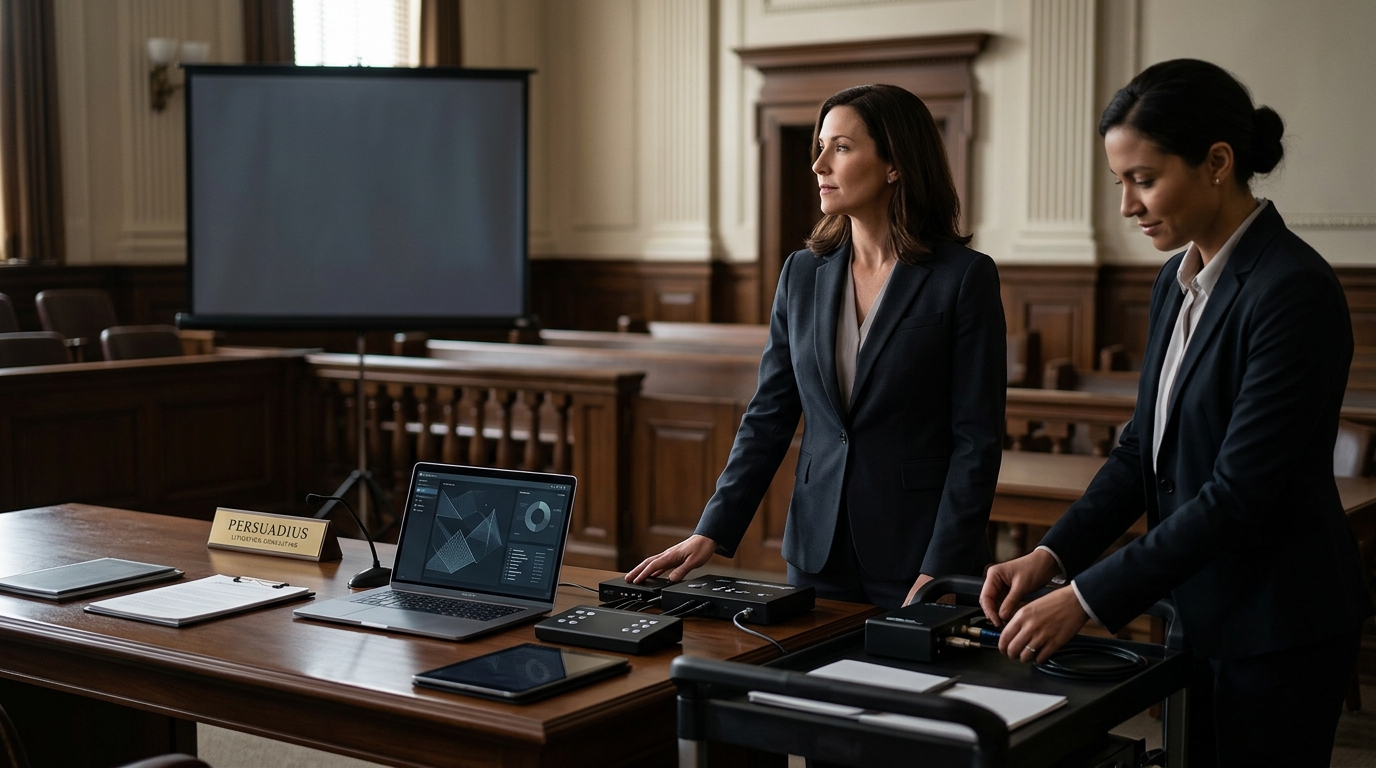
Choosing the right trial technology provider can determine whether your courtroom presentation runs flawlessly or falls apart at the worst possible moment. A trial technology provider is a specialized firm that supplies the hardware, software, technicians, and strategic support needed to present digital evidence to judges and juries. With 21% of law firms now using outside trial presentation vendors and that number growing each year, the decision deserves careful evaluation. This guide walks you through the seven most important factors to weigh before signing an engagement letter, so your trial team can focus on advocacy instead of cables and projectors.
1. Depth of Real Courtroom Experience
Nothing substitutes for time spent inside actual courtrooms. A provider with hundreds or thousands of trials under its belt will anticipate problems that a newer vendor simply cannot. Look for firms that understand different courtroom procedures, judge preferences, and how to integrate smoothly with trial teams.
Persuadius (formerly A2L Consulting) has supported litigators from virtually every Am Law 100 firm on more than 10,000 matters since 1995. That depth of experience means your team benefits from pattern recognition that only comes from decades of high-stakes trials.
2. Full-Spectrum Service Scope
A trial technology provider is only as valuable as the breadth of problems it can solve. The best providers offer a complete trial presentation approach covering pre-trial, trial, and post-trial needs. Services should include document imaging, video encoding, deposition synchronization, electronic briefs (e-briefs), equipment rental, and courtroom setup.
Firms that handle the entire workflow eliminate handoff errors between vendors. Persuadius, for example, provides cradle-to-grave trial technology solutions so trial teams never have to coordinate multiple providers under pressure.
3. Quality of Hot-Seat Operators and Trial Technicians
A hot-seat operator is the technician who sits beside the trial team and controls the real-time display of exhibits, depositions, and demonstrative evidence during proceedings. This role demands composure under extreme pressure and split-second responsiveness.
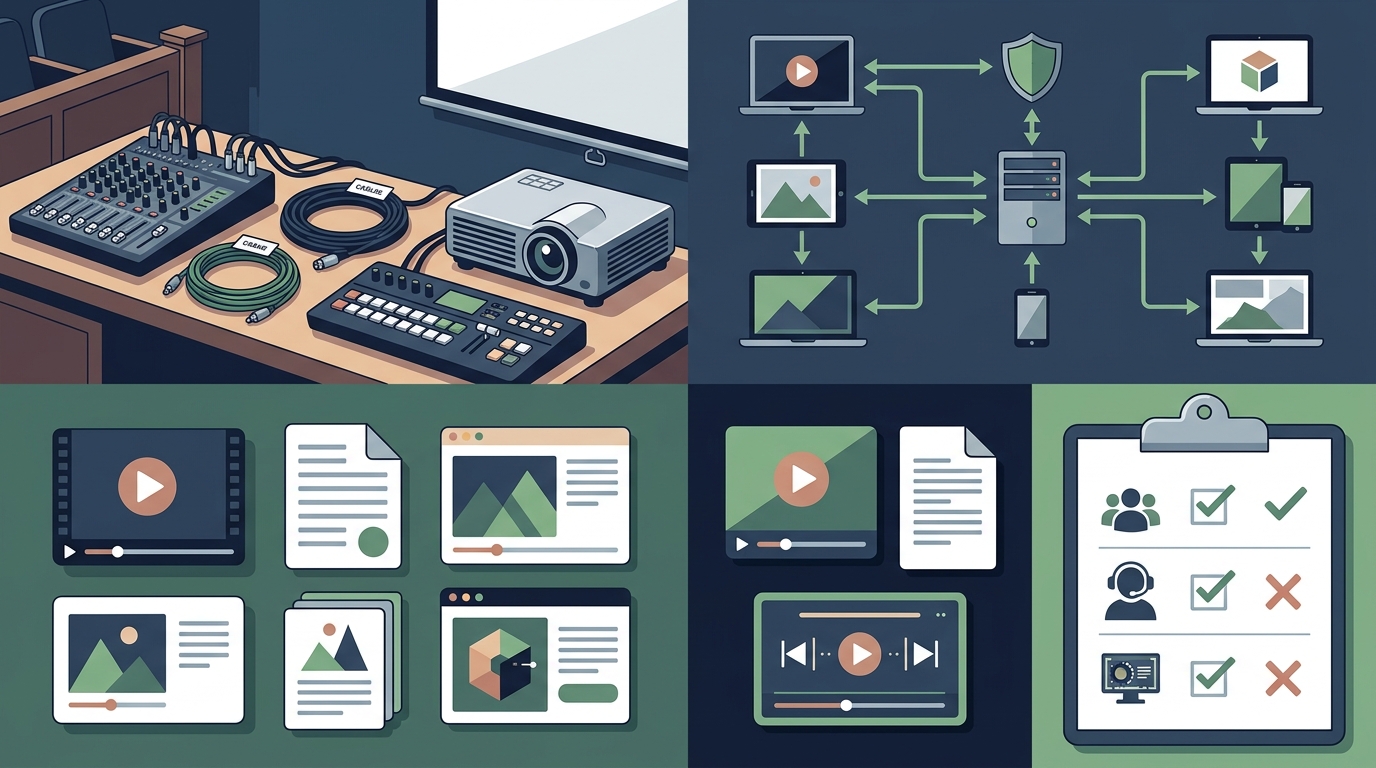
What to Look for in a Trial Technician
Screen candidates for their ability to locate and display documents instantly, annotate exhibits live, and troubleshoot hardware failures without disrupting the flow of testimony. Persuadius provides deeply experienced trial technicians whose role is to manage courtroom technology so the display of evidence is effortless.
Availability and Scheduling
Finding a competent trial technician during peak trial months like May and October can be challenging because most experienced operators are already booked on long trials. Start your search early and confirm availability before locking in trial dates.
4. Technology Stack and Software Proficiency
Your provider should be fluent in industry-standard platforms such as TrialDirector, OnCue, and Sanction. Software proficiency is the ability to operate trial presentation tools at an expert level under live courtroom conditions. Beyond software, evaluate the provider's hardware capabilities, including high-resolution monitors, projection systems, annotation displays, and backup equipment.
Courts increasingly expect digital evidence presentation. Many federal courts now require attorneys to preload exhibits before trial and coordinate equipment approval weeks in advance. Your provider should know these procedures cold.
5. Nationwide Reach and Courthouse Familiarity
High-stakes litigation does not stay in one city. Your provider should have personnel or a presence in major legal markets. Persuadius routinely supports trials in New York, Los Angeles, Chicago, Dallas, Houston, Washington DC, Miami, Atlanta, and dozens of other cities nationwide.
Why Local Courthouse Knowledge Matters
A technician who has worked in a specific courthouse may know the clerk, understand the courtroom layout, and anticipate AV quirks unique to that venue. While expertise should always outweigh proximity, local familiarity provides a meaningful edge on trial day.
6. Integration With Litigation Graphics and Jury Consulting
Trial technology does not operate in isolation. The most effective courtroom presentations happen when technology, jury consulting insights, and litigation graphics are developed together. When your trial technology provider also understands visual persuasion and juror psychology, every exhibit is designed to both display correctly and persuade effectively.
Research shows that people retain roughly 10% of what they hear, 20% of what they see, but up to 50% of information that is both seen and heard. A provider that integrates graphics, consulting, and technology maximizes that retention advantage.
7. Client References and Track Record
Ask every prospective provider for references from attorneys who have used them on similar cases. Testimonials from litigators at peer firms offer the most reliable signal of real-world performance. A provider should be willing to discuss notable engagements and share specifics about how they handled challenges.
Persuadius has earned recognition from publications such as the National Law Journal and LegalTimes, where readers have voted the firm best in categories including jury consulting, trial consulting, and demonstrative evidence. These independent endorsements confirm a pattern of excellence across thousands of matters.
Provider Evaluation Comparison Table
| Evaluation Factor | Questions to Ask | Red Flags |
|---|---|---|
| Courtroom Experience | How many trials have you supported? In which practice areas? | Fewer than 50 trials; no complex litigation background |
| Service Scope | Do you handle pre-trial, in-court, and post-trial needs? | Requires you to coordinate separate vendors for each phase |
| Hot-Seat Operators | Can I meet my assigned technician before trial? | Subcontracts technicians at the last minute |
| Software Proficiency | Which platforms do you support? Do you carry backup systems? | Limited to one platform; no redundancy plan |
| Geographic Reach | Have you worked in the courthouse where my trial will be held? | No presence outside a single metro area |
| Graphics Integration | Do you also create litigation graphics or partner with a graphics team? | No understanding of visual persuasion principles |
| References | Can you provide references from attorneys at Am Law 100 firms? | Unwilling to share client testimonials or case examples |
Key Takeaways
- Prioritize providers with extensive real-trial experience over those with only demo-room credentials.
- Choose a firm offering end-to-end services from pre-trial database building through post-trial support.
- Evaluate hot-seat operators individually; insist on meeting your assigned technician before trial.
- Confirm proficiency in TrialDirector, OnCue, Sanction, and other courtroom presentation platforms.
- Select a provider with nationwide reach and familiarity with your specific courthouse.
- Look for integration between trial technology, litigation graphics, and jury consulting for maximum persuasive impact.
- Always check references and independent industry recognition before making your decision.
Frequently Asked Questions
What is a trial technology provider?
A trial technology provider is a firm that supplies courtroom presentation hardware, software, and trained technicians to help litigators display evidence clearly and persuasively to judges and juries.
How early should I engage a trial technology provider?
Ideally, engage your provider at least six to eight weeks before trial. During peak months like May and October, experienced trial technicians book up quickly, so earlier outreach is strongly recommended.
What does a hot-seat operator do during trial?
A hot-seat operator manages real-time exhibit display, pulls up documents on cue, annotates evidence live, plays synchronized deposition video, and troubleshoots any technical issues during proceedings.
Should my trial technology provider also handle litigation graphics?
Working with a single provider for both trial technology and litigation graphics ensures tighter coordination, fewer handoff errors, and visuals optimized for the exact presentation system being used in court.
How much does trial technology support typically cost?
Costs vary based on trial length, complexity, equipment needs, and geographic location. Most providers offer custom proposals after an initial case assessment. Request a detailed scope-of-work document before comparing quotes.
What software platforms should a provider support?
At minimum, look for proficiency in TrialDirector and Sanction. Many modern providers also support OnCue and other litigation-focused tools for exhibit management, annotation, clip editing, and transcript syncing.
Can a trial technology provider help with remote or hybrid proceedings?
Yes. Many providers now support remote witness testimony, virtual courtroom setups, and hybrid proceedings that combine in-person and remote participation.
Why does courthouse familiarity matter when choosing a provider?
Every courthouse has unique AV configurations, power setups, and procedural requirements. A provider who has worked in your specific venue can anticipate logistical challenges and avoid costly surprises on trial day.
Get Started With Persuadius
Ready to ensure your next trial presentation is flawless? Persuadius has supported more than 10,000 cases for the nation's leading law firms since 1995. Contact Persuadius today for a free consultation on trial technology, litigation graphics, or jury consulting for your upcoming matter.